



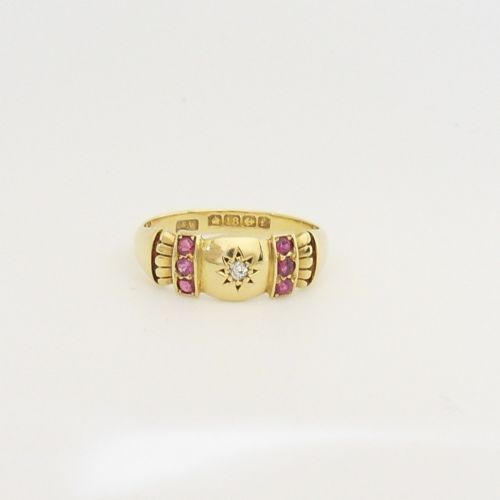
Red Ruby Ring
A red ruby ring brings together rich crimson stones and bright diamonds, offering a striking piece of jewellery from eras spanning the Victorian period to the mid-twentieth century.
Red Ruby Ring
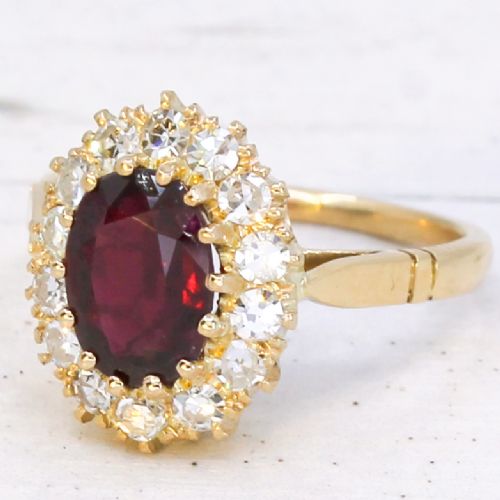
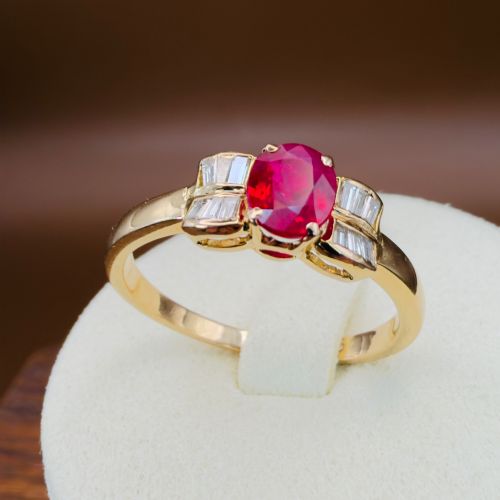
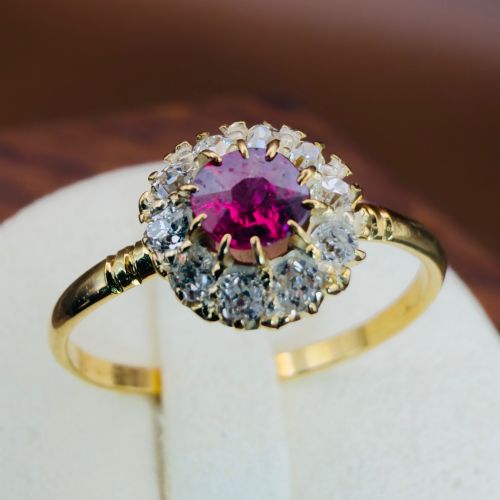
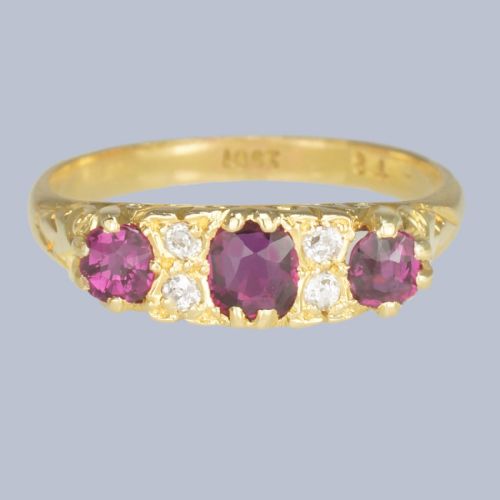
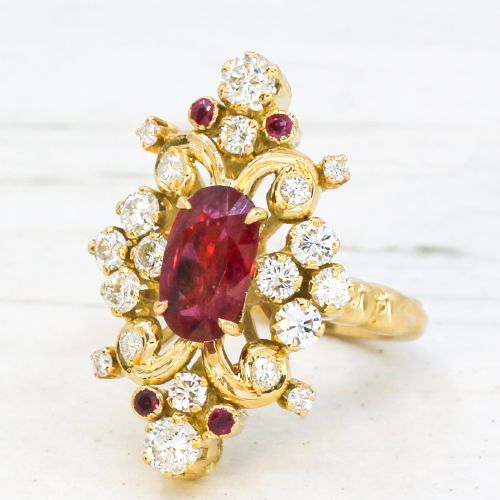
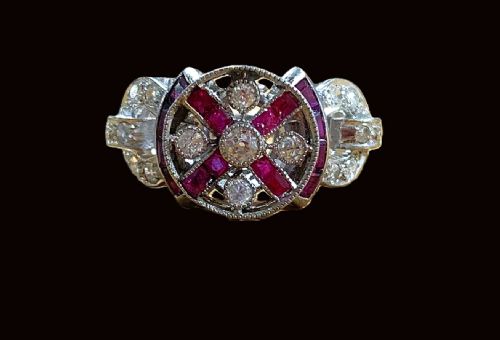
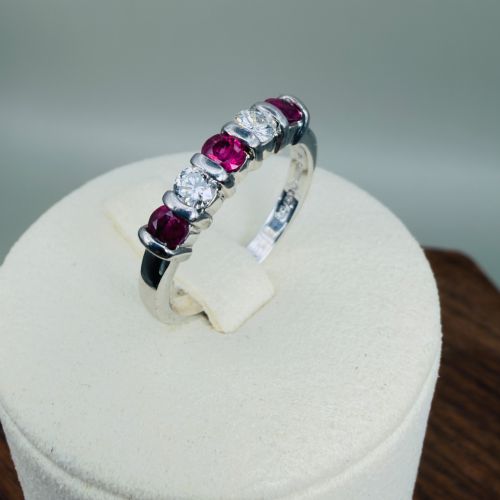
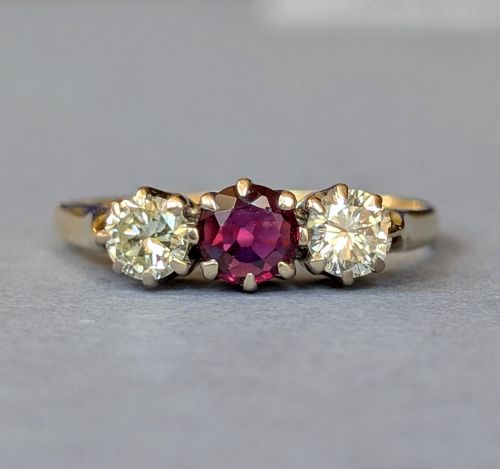
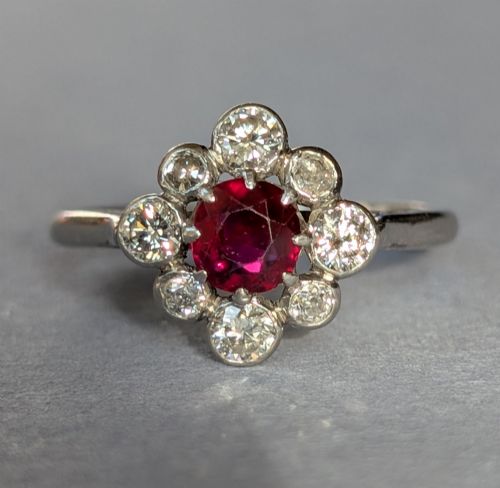
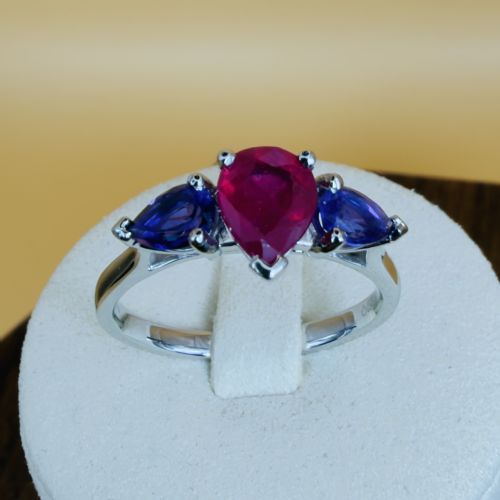
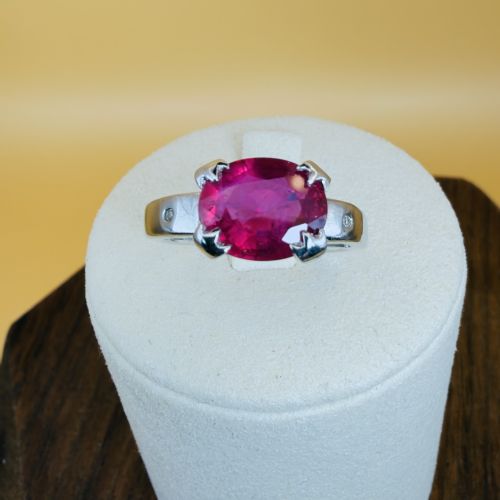
A red ruby ring encompasses styles from Victorian starburst bands to sleek Art Deco platinum settings and mid-century cluster designs. Buyers seeking a red ruby ring will find pieces featuring central red stones flanked by diamonds or set alone in yellow gold, white gold, or platinum.
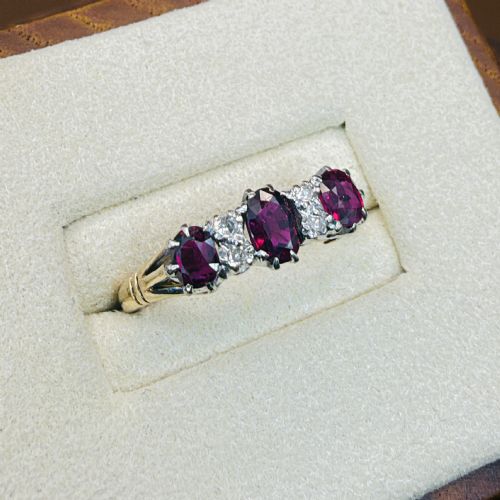
The selection ranges from nineteenth-century three-stone trilogy rings to 1950s floral and oval cluster formations. Most examples pair the crimson gemstone with old cut or baguette diamonds set in eighteen-carat gold.
Materials and Construction
Craftsmen utilised high-grade metals including eighteen-carat yellow gold, eighteen-carat white gold, platinum, and occasionally nine-carat gold to mount the stones. Gemstones such as unheated Burmese rubies and diamonds were shaped into oval, round, pear, and marquise cuts before being secured in claw or halo settings.
Constructed using traditional techniques of the period, these rings often feature intricate detailing like navette shapes or starburst engravings around the primary red stones.
Some Victorian pieces incorporate hair compartments at the back, turning a simple ring into a wearable keepsake.
Distinctions in Quality
Quality rests upon the origin, heat treatment, and depth of colour of the central stone, alongside the cut and clarity of any accompanying diamonds. Natural unheated rubies from sources like Burma command particular attention from collectors.
The weight and purity of the gold or platinum mount further separate standard production pieces from finer examples, alongside the precision of the gemstone setting and the preservation of original hallmarks.
The Red Ruby Ring Glossary
- Ruby
- A pink to blood-red coloured gemstone variety of the mineral corundum, prized for its vivid saturation and durability. It forms the focal point of these rings.
- Cluster ring
- A ring setting where a central gemstone is surrounded by a group of smaller stones, usually diamonds. This arrangement maximises overall brilliance and visual impact.
- Old cut diamond
- A diamond cut popular before the modern brilliant cut was standardised, characterised by a smaller table, higher crown, and hand-polished facets. These stones appear frequently in antique and vintage settings.
- Navette
- A boat-shaped gemstone setting that tapers to points at both ends, also known as a marquise shape. It elongates the appearance of the finger when worn.
- Trilogy ring
- A ring featuring three stones set side by side, traditionally representing the past, present, and future. They often combine a central ruby with matching diamonds.
Red Ruby Ring: Frequently Asked Questions
How do I date a ruby ring?
Dating relies on hallmarks, metal types, and the specific cut of the diamonds and rubies. Georgian, Victorian, Edwardian, and Art Deco periods each utilised distinct mounting styles.
Examining the underside of the setting and any accompanying gemmological reports provides further clues regarding origin and era.
Are these rubies treated?
Some rubies carry certificates noting whether they are unheated or have undergone traditional enhancement processes. Natural unheated stones from specific origins are documented in particular reports.
Reviewing the individual listing details clarifies what gemmological documentation accompanies each piece.
Can I wear an antique ruby ring daily?
Rubies rank nine on the Mohs hardness scale, making them durable enough for daily wear with proper care. However, antique settings in gold or platinum require occasional checks by a jeweller to ensure claws remain secure.
Removing the ring during heavy manual tasks preserves the integrity of delicate claws and older metalwork.
What is a cluster ring?
A cluster ring groups smaller stones tightly around a larger central gemstone to create a larger visual presence. In these listings, diamonds frequently surround a central red ruby.
This style gained immense popularity during the Victorian and Edwardian eras and continued through the mid-twentieth century.