




18ct Ruby Halo Ring
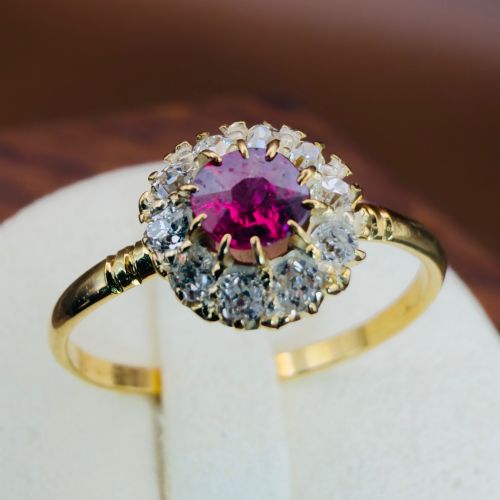
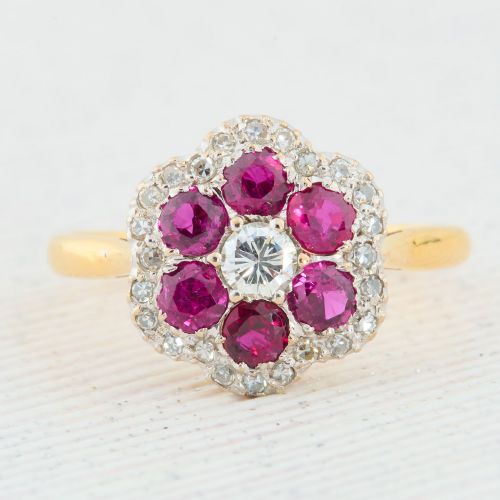
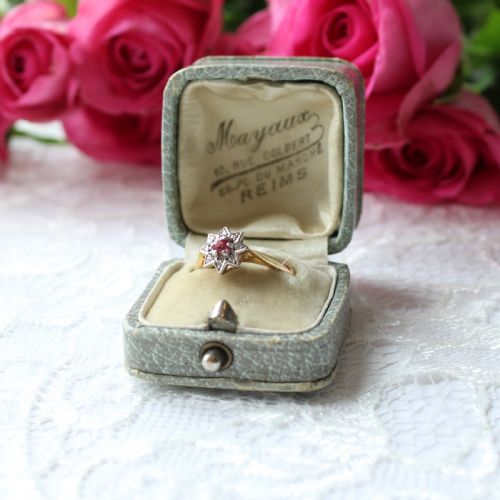
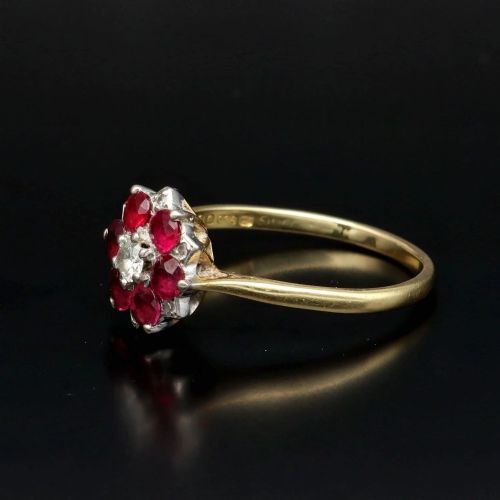
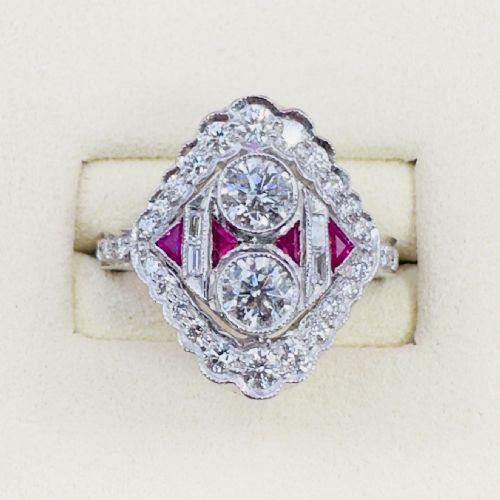
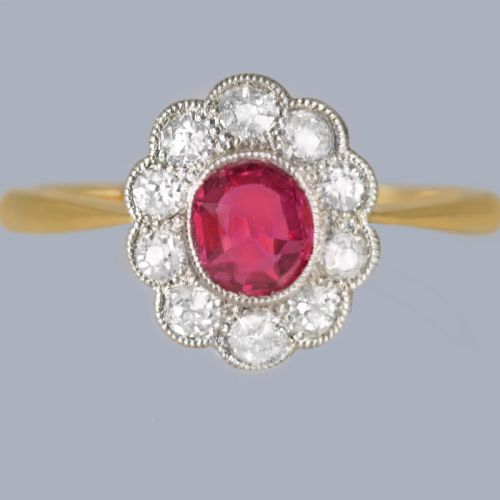
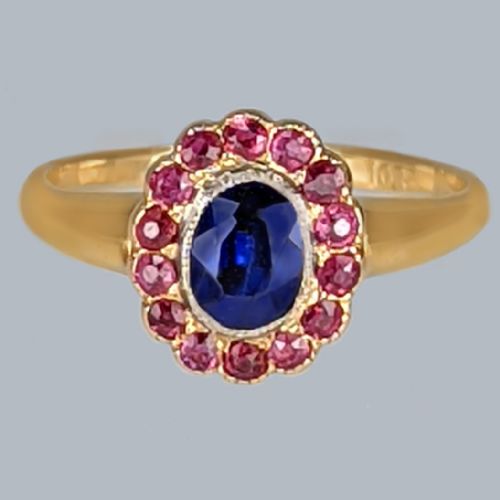
An 18ct ruby halo ring pairs a rich red central stone with a sparkling diamond border in substantial gold.
18ct Ruby Halo Ring
An 18ct ruby halo ring centres on a vivid red natural ruby surrounded by a concentric border of smaller diamonds. These cluster and floral forms appear across multiple decades, from Victorian and Edwardian examples to Art Deco and mid-century pieces.
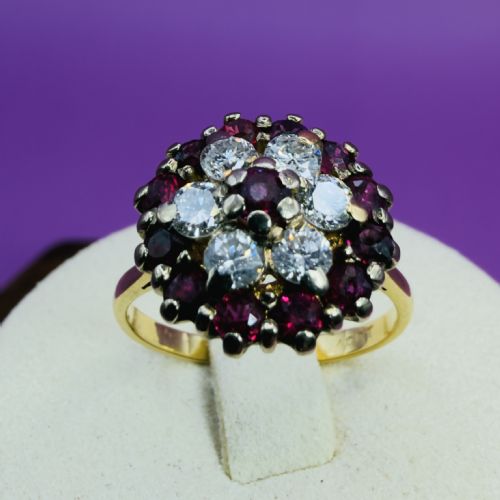
Buyers encounter various geometric layouts, including traditional oval clusters, navette silhouettes, and floral designs. The central stones range from modest weights to substantial Burmese rubies framed by sparkling diamond shoulders in 18ct yellow or white gold.
Materials and construction
The mounting utilises 18ct yellow gold, 18ct white gold, and frequently platinum settings to secure the gemstones. Master jewellers set natural rubies alongside brilliant-cut or single-cut diamonds using claw, bezel, or grain techniques.
Periods such as the Edwardian era and the 1930s introduced delicate millegrain edges and openwork galleries that enhance the sparkle of the surrounding diamond halo.
Listings feature 18ct yellow gold, 18ct white gold, and platinum metals paired with natural rubies and diamonds.
Distinguishing quality in cluster rings
The primary distinction lies in the origin, saturation, and clarity of the ruby, alongside the colour and cut consistency of the surrounding diamonds. Burmese stones with unheated or natural qualities typically command higher regard.
Engineering precision in the gallery, the integrity of the 18ct gold or platinum mount, and the symmetry of the diamond halo determine the overall refinement of the piece.
The 18ct Ruby Halo Ring Glossary
- Halo
- A setting style where a central gemstone is encircled by a continuous border of smaller accent stones, typically diamonds. This arrangement maximises perceived scale and overall brilliance.
- Navette
- A boat-shaped gemstone arrangement that tapers gracefully toward each end, sometimes called a marquise cluster. This elongated profile flatters the finger.
- Millegrain
- A decorative technique featuring tiny, raised metal beads along the edges of a setting. It adds a refined texture frequently seen in Edwardian and Art Deco pieces.
- Cluster
- A design grouping multiple stones together, often placing a prominent coloured gemstone at the focal point. This configuration creates maximum visual impact.
- Burmese ruby
- A natural ruby originating from Myanmar, historically prized for a distinctive rich red hue often described as pigeon's blood. These stones frequently anchor high-end vintage clusters.
18ct Ruby Halo Ring: Frequently Asked Questions
What periods do these rings come from?
The selection spans the Victorian and Edwardian eras, through the geometric lines of Art Deco and the 1930s, into mid-century designs from the 1950s and 1960s.
Each period imparts distinct stylistic hallmarks, such as heavy yellow gold Victorian mounts or crisp white gold and platinum Edwardian work.
How should I care for an antique ruby ring?
Rubies possess high hardness, yet the delicate prongs and older gold settings require gentle handling during daily wear. Avoid ultrasonic cleaners, especially if the stone has received traditional treatments.
Store the piece separately in a fabric-lined box to prevent the diamonds from scratching softer metals or adjacent jewellery.
Are the rubies natural?
The listings feature natural rubies, occasionally accompanied by gemmological reports confirming origin, alongside instances of synthetic sapphire or natural ruby combinations.
Independent certification details treatment history and geographical provenance where available.
How do I determine the ring size?
Rings span various historical sizes and often permit professional adjustment by a skilled jeweller due to the solid 18ct gold or platinum shanks.
Consult a local specialist to measure your finger accurately before requesting any structural alterations to the band.