


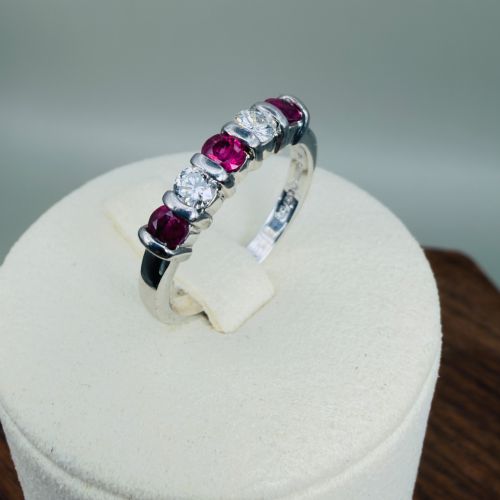
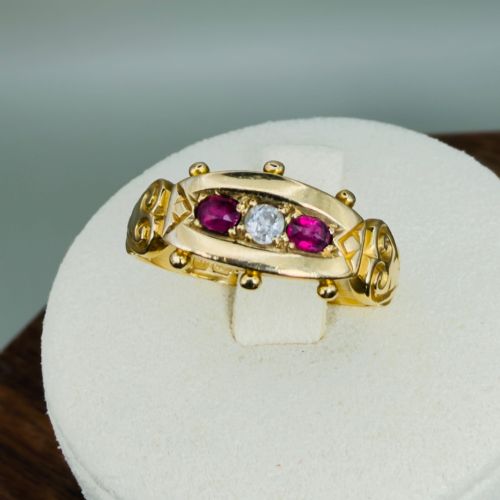
18ct Gold Ruby Dress Ring
An 18ct gold ruby dress ring combines durable precious metal with vibrant red corundum for a statement piece worn on the hand.
18ct Gold Ruby Dress Ring
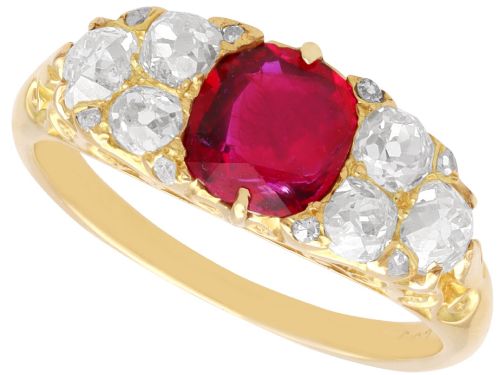
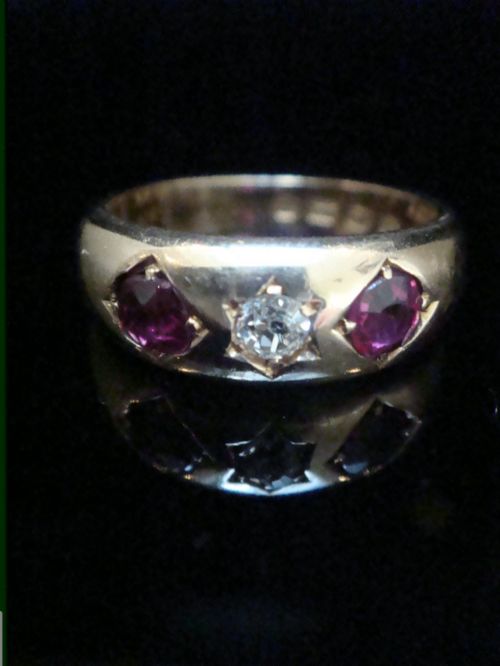
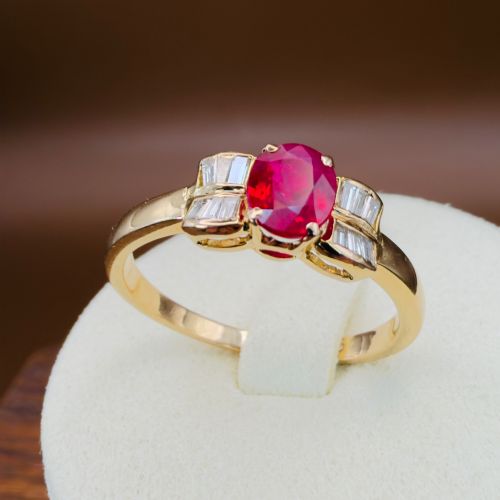
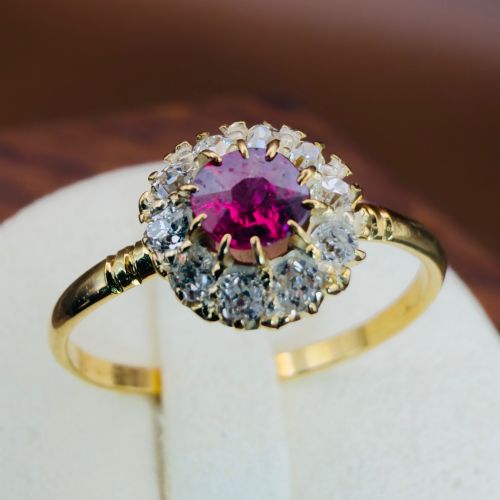
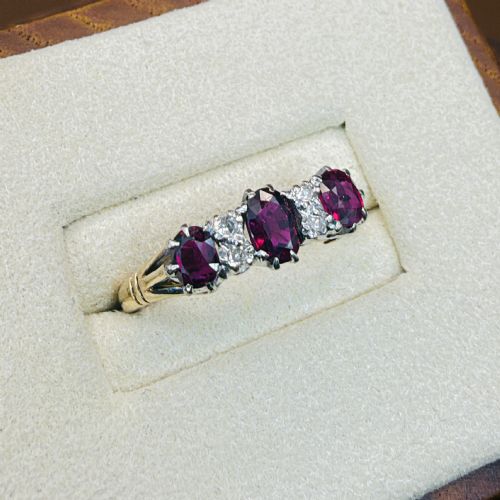
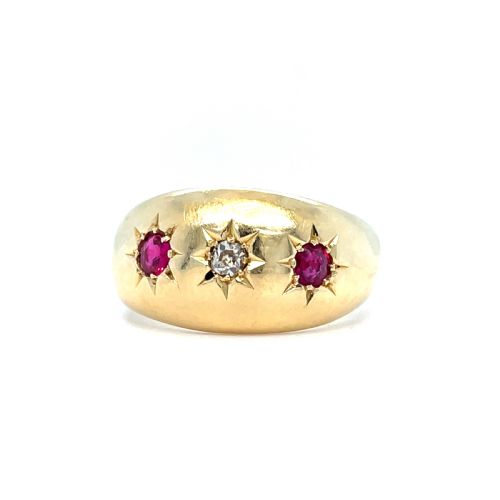
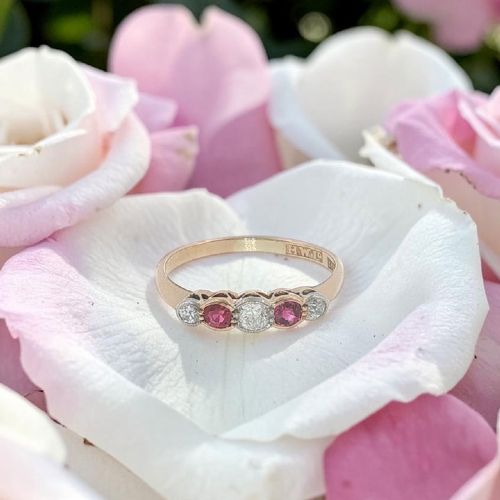
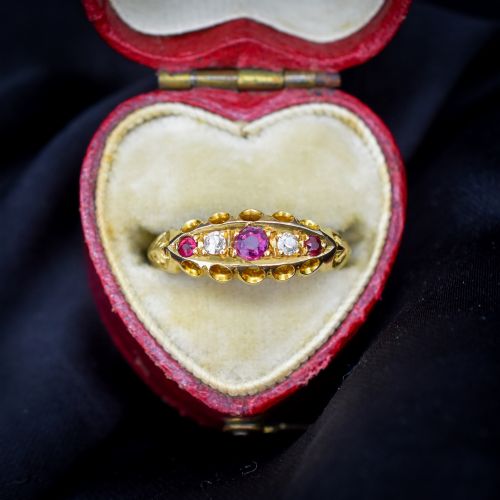
An 18ct gold ruby dress ring is an ornamental finger ornament built around a central red gemstone, frequently accompanied by diamonds in various settings. These pieces span multiple decades and design movements, offering buyers a choice of distinct historical aesthetic styles.
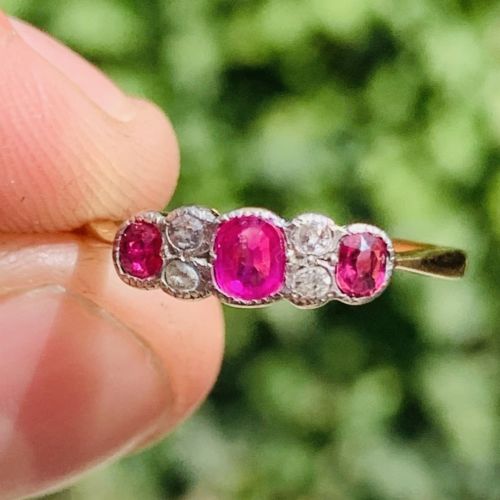
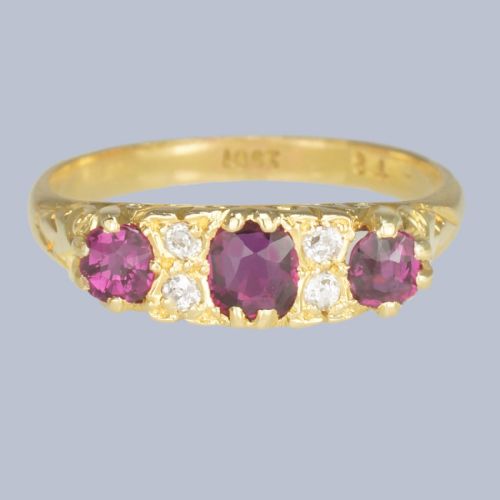
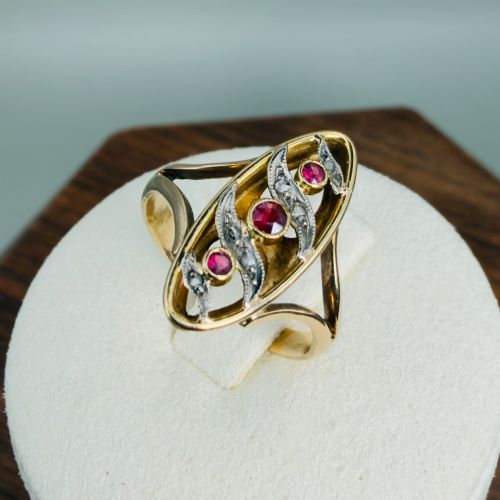
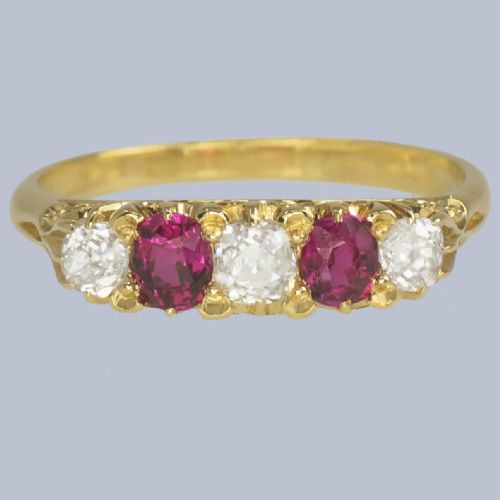
The most common examples on this page date from the Victorian, Edwardian, and Art Deco periods, alongside mid-century creations. Buyers encounter cluster arrangements, boat settings, and traditional multi-stone band configurations most frequently in the current selection.
Originating across the late nineteenth and twentieth centuries, these rings reflect changing goldsmithing techniques and shifting geometric preferences. Each piece demonstrates how jewellers combined high-carat gold with rubies to create striking hand adornments.
How they were made
Goldsmiths utilised 18ct yellow and white gold alongside platinum settings to secure the gemstones and provide structural integrity. These metals were cast, forged, and hand-finished into bands, multi-stone settings, and intricate cluster arrangements.
Craftsmen set rubies alongside old-cut, old mine-cut, and baguette diamonds using claw, bezel, and flush methods. This technique ensured the stones remained firmly in place while maximising the reflection of light through the facets.
Listings span multiple eras from the nineteenth century through the 1960s, featuring both yellow and white 18ct gold alongside platinum.
What varies in quality
The standard of an 18ct gold ruby dress ring depends heavily on the saturation and clarity of the central ruby and its integration with accompanying diamonds. Master jewellers balanced the proportions of the mounting so that the high-carat gold supported the stones without overpowering the design.
Fine construction shows in the precision of the stone settings and the weight of the metal utilised in the shank. Pieces created with heavier gold mounts and well-matched gemstone clarity represent the upper tier of surviving examples.
The 18ct Gold Ruby Dress Ring Glossary
- Cluster ring
- A ring design featuring a central gemstone surrounded by a border of smaller stones, typically diamonds. This layout maximises visual impact on the hand.
- Navette
- A boat-shaped ring setting that tapers to points at both ends, popular in Georgian, Victorian, and Edwardian jewellery. The elongated shape flatters the finger.
- Old-cut diamond
- A hand-faceted diamond cut before the standardisation of modern brilliant cutting, characterised by a smaller table and a higher crown. These stones exhibit a softer, candlelit sparkle.
- Trilogy ring
- A ring set with three stones, often interpreted to represent the past, present, and future. The central stone is usually larger than the two flanking gems.
- Hallmark
- An official stamp applied to precious metals indicating the purity of the gold, the assay office, and the date of testing. It provides a reliable method for dating British-made pieces.
18ct Gold Ruby Dress Ring: Frequently Asked Questions
How do I care for my ring?
Clean your 18ct gold ruby dress ring gently using warm soapy water and a soft brush to remove everyday debris from beneath the settings. Avoid harsh chemical cleaners and ultrasonic devices, particularly if the piece contains pearls or treated stones.
Store the ring separately in a fabric-lined box to prevent the diamonds from scratching the softer gold or the ruby surface. Regular inspection by a jeweller ensures the claws remain secure around each gemstone.
Can these rings be resized?
Most 18ct gold rings can be altered by a skilled jeweller to fit a different finger size without damaging the structural integrity. The ease of resizing depends on the presence of shoulders, channel-set stones, or intricate gallery work.
Consult a professional to determine whether the band has sufficient metal thickness to withstand adjustment safely. Antique pieces with heavy engraving or continuous gallery patterns require specialist handling during sizing.
How do I identify the period?
Examine the cut of the diamonds, the construction of the setting, and any official hallmarks stamped inside the band. Victorian and Edwardian examples often feature hand-cut stones and specific channel or starburst motifs unique to those eras.
Art Deco rings display geometric lines, platinum top-settings, and symmetrical cluster arrangements. Comparing these physical characteristics with recorded stylistic markers helps narrow down the decade of manufacture.
Are synthetic rubies common?
Some twentieth-century rings incorporate synthetic rubies created through laboratory processes while maintaining an 18ct gold mounting. Gemmological reports often accompany these pieces to verify the origin and treatment history of the stone.
Natural rubies remain standard in older Victorian and Edwardian examples. Reviewing any included certification provides exact details regarding the nature of the red corundum used.