


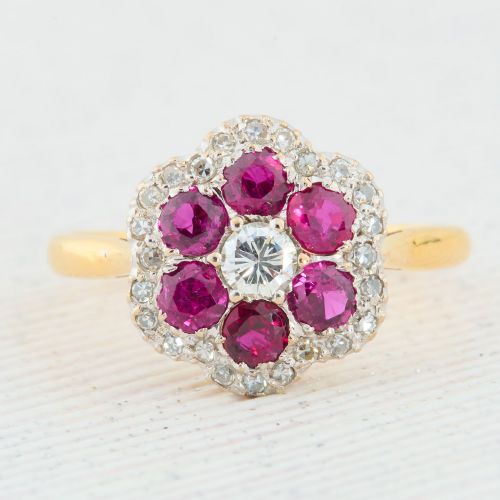
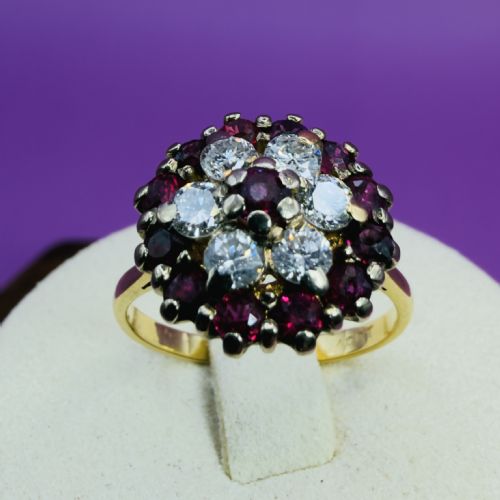
Red Ruby Diamond Ring
A red ruby diamond ring brings together rich red corundum and brilliant stones in designs spanning Victorian to mid-century periods.
Red Ruby Diamond Ring
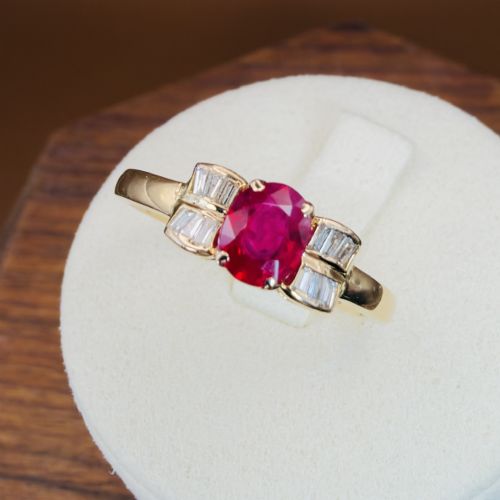
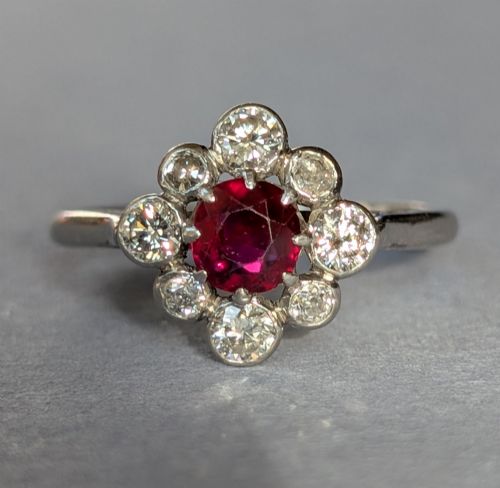
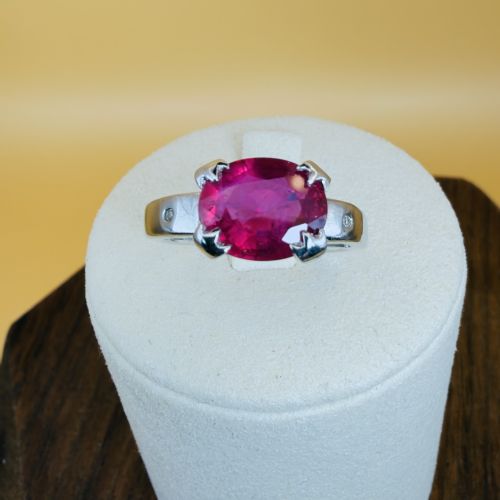
A red ruby diamond ring pairs vibrant red corundum with sparkling diamonds in a mount designed to highlight both gems. You will see these pieces across several eras, with Victorian, Edwardian, Art Deco, and mid-century examples forming the core of the selection.
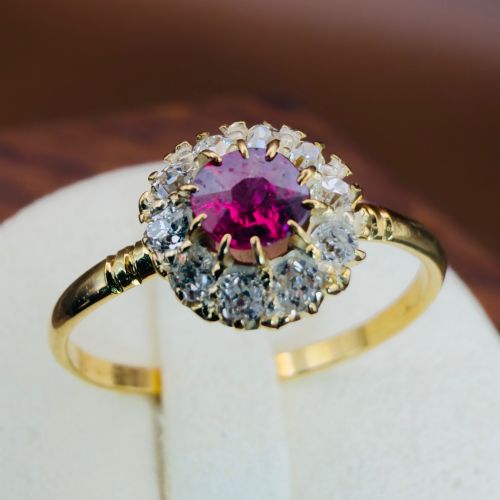
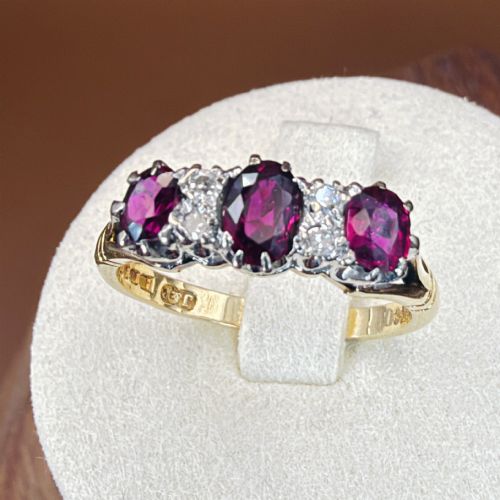
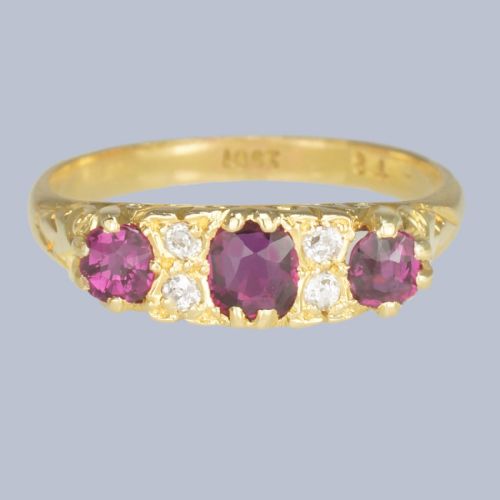
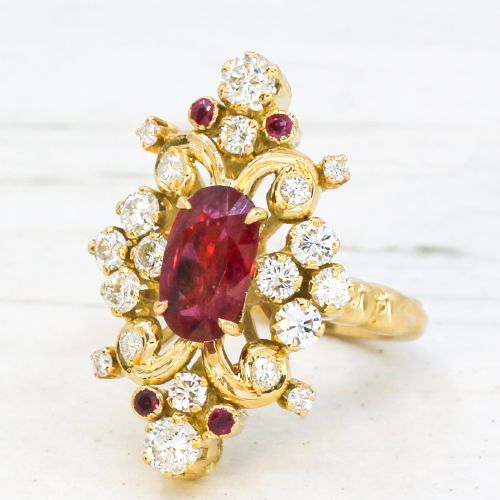
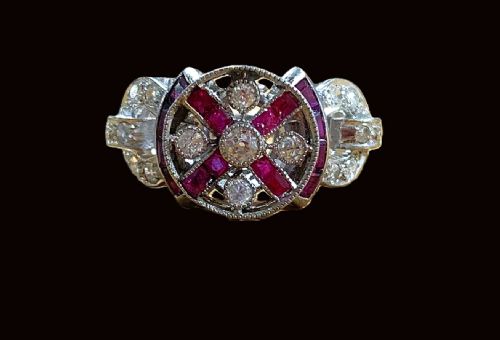
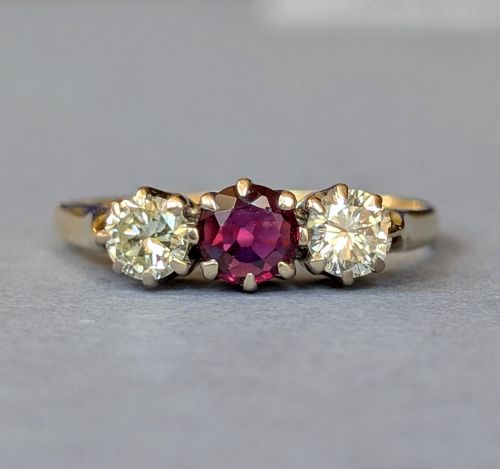
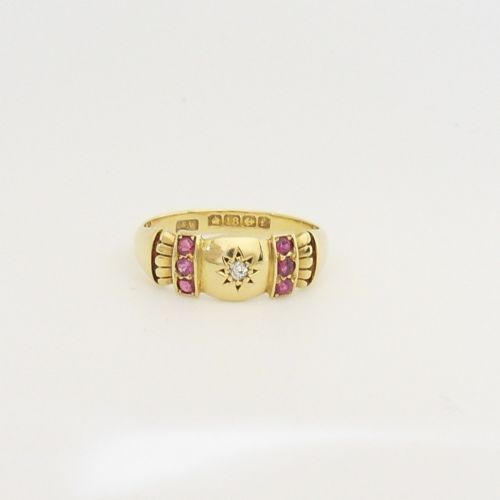
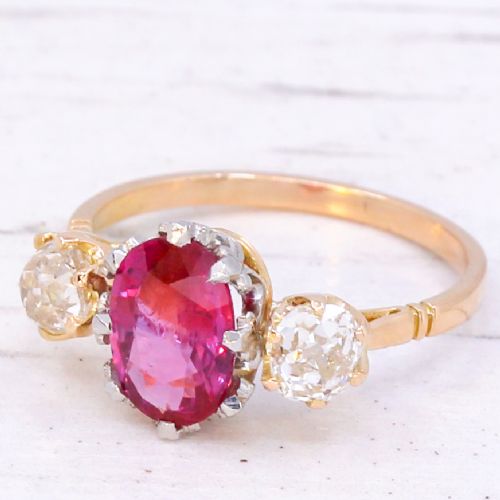
Cluster and halo configurations dominate the inventory, alongside traditional three-stone settings, gypsy bands, and navette shapes. Many pieces utilise 18ct yellow or white gold, while platinum appears frequently in Art Deco and mid-century designs.
Stones range from small accent diamonds framing central rubies to substantial multi-carat Burmese and unheated stones. Whether you examine a delicate Edwardian floral cluster or a heavy 1950s cocktail ring, each specimen reflects the prevailing aesthetic of its decade.
How they were made
Goldsmiths constructed these rings primarily using 18ct gold, available in yellow and white variants, alongside platinum for durable, bright settings. Precious metals were cast, hand-hammered, or worked into intricate wirework to support clusters, starbursts, and trilogy arrangements.
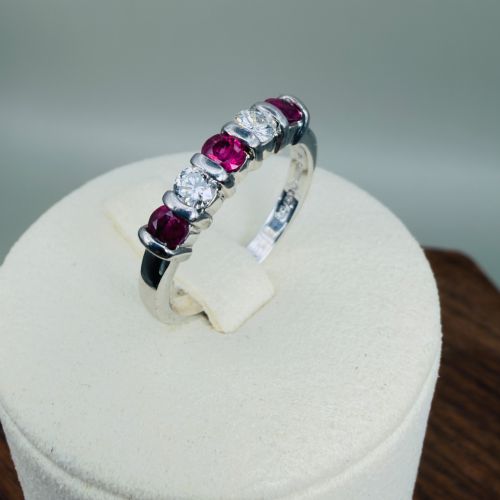
Gemstones received various historic cuts, including old cuts, oval cuts, baguette cuts, and princess cuts, to maximise brilliance and colour dispersion. Stones were secured using meticulous claw settings, bead settings, or flush gypsy mountings tailored to the specific period style.
Red Ruby Diamond Ring Retail Price Guide 2026
Typical asking prices for red ruby diamond ring among the pieces listed under this phrase on Sellingantiques today, from the lower quarter to the upper quarter. They describe what is for sale here now, not the wider market.
Listings incorporate items from the Victorian, Edwardian, Art Deco, and mid-century periods, utilising 18ct gold, platinum, diamonds, and rubies.
What varies in quality
Quality rests significantly on the provenance and optical properties of the central ruby, particularly unheated stones originating from Burma or Mogok. The depth of the natural red hue and the clarity of the corundum dictate much of the piece's standing.
The precision of the stone-setting and the weight of the precious metal mount distinguish workshop standards. Heavier gold bands and balanced diamond arrangements surrounding the central ruby indicate superior manufacturing pedigree.
The Red Ruby Diamond Ring Glossary
- Cluster ring
- A ring featuring a prominent central gemstone surrounded by a group of smaller stones. This arrangement maximises visual impact and light reflection.
- Navette ring
- A ring featuring a pointed, boat-shaped silhouette. The elongated form flatters the finger and accommodates multiple side stones.
- Old cut diamond
- A diamond cut by hand before modern machinery, characterised by a smaller table, higher crown, and open culet. These stones display a softer, candlelit sparkle.
- Gypsy ring
- A ring where gemstones are flush-set directly into the thick band of the metal. This style gained popularity during the Victorian era for daily wear.
- Trilogy ring
- A three-stone ring representing the past, present, and future. It typically pairs a central ruby flanked by two diamonds.
Red Ruby Diamond Ring: Frequently Asked Questions
What periods do these rings come from?
The selection spans the Victorian, Edwardian, Art Deco, and mid-century periods. You will encounter pieces dating from the late nineteenth century through to the 1960s.
Each era brings distinct mounting styles and cutting techniques to the jewellery, reflecting the changing tastes of collectors over time.
Are the rubies natural and unheated?
Many listings specify natural unheated rubies, often originating from Burma or Mogok. Gemmological reports frequently accompany these particular pieces to confirm their origin.
Other rings feature standard treated rubies paired with old cut or brilliant cut diamonds.
What metals are used in the settings?
Makers utilised 18ct gold in both yellow and white varieties, alongside platinum. Platinum became particularly favoured during the Art Deco period for its strength and bright finish.
Gold remains the standard choice across Victorian, Edwardian, and mid-century bands and cluster mounts.