
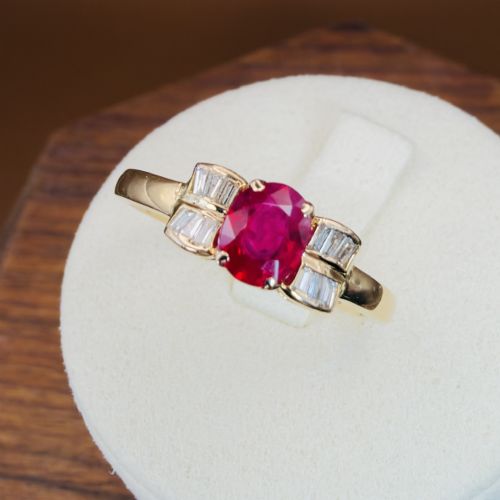
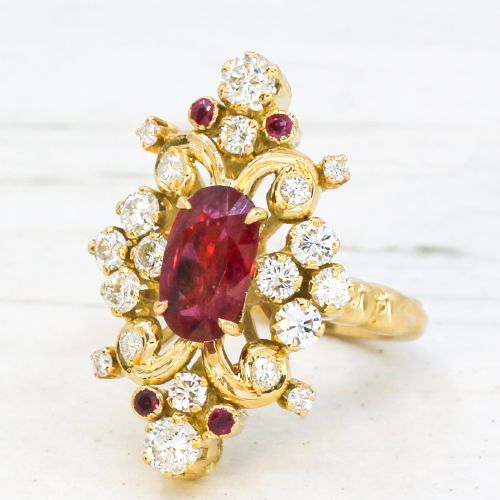
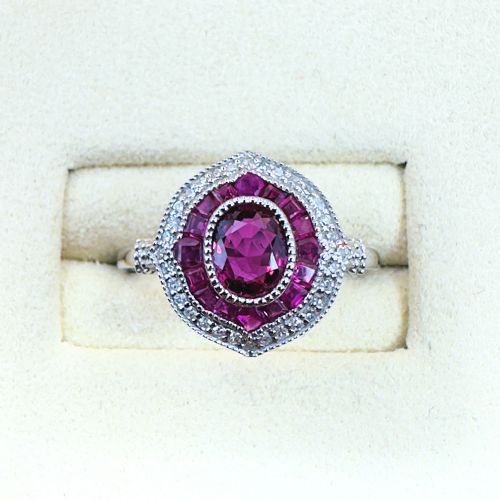
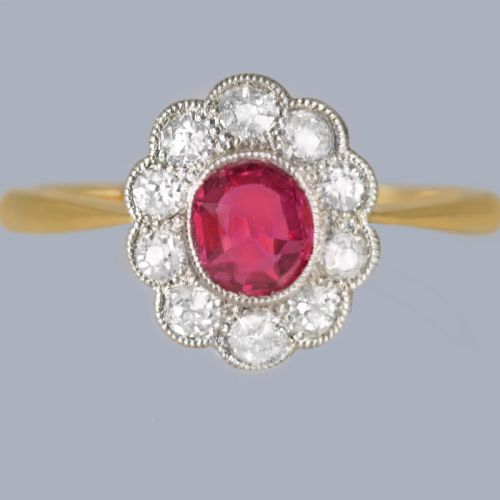
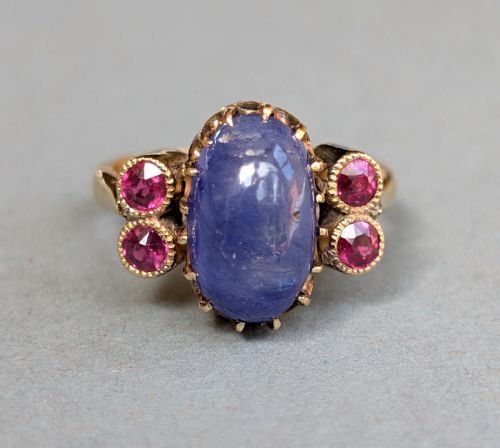

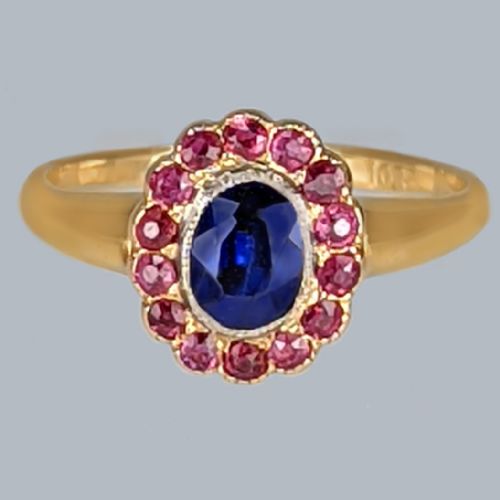


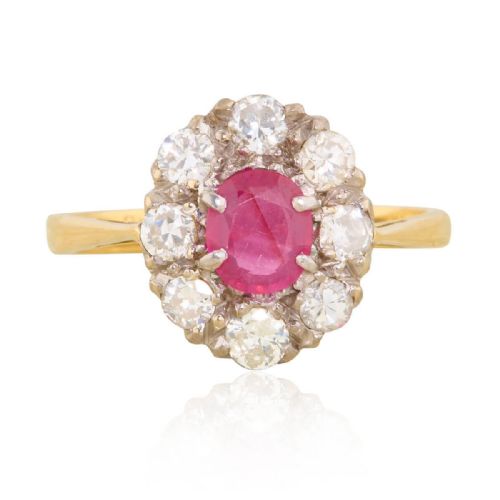


Oval Ruby Cluster Ring
An oval ruby cluster ring combines a deep red centre stone with a bright diamond border, offering a timeless focal point for the hand.
Oval Ruby Cluster Ring
An oval ruby cluster ring is a traditional ring design featuring a central oval-cut ruby surrounded by a halo of smaller diamonds, creating a pronounced contrast in colour and sparkle. These pieces appear across several distinct periods including the Edwardian era, the 1930s, and the mid-century decades of the 1950s and 1960s. Buyers searching for an oval ruby cluster ring will find examples ranging from delicate Edwardian pieces to substantial mid-century cocktail designs.
The materials used across these periods span platinum, 18ct yellow gold, and 18ct white gold, providing robust settings for the central stones. Forms range from compact everyday rings to larger statement clusters set with significant carat weights of ruby and diamond. The overarching structure remains consistent: a central oval gemstone encircled by a distinct geometric or floral border of diamonds.
How they were made
Metals such as platinum and 18ct gold form the structural foundation of these cluster rings, chosen for their durability and ability to securely hold multiple small stones. Yellow and white gold provide warm or bright backdrops respectively, whilst platinum offers a crisp, strong setting often favoured in Edwardian and Art Deco pieces.
Gemstones including rubies and diamonds are cut into specific shapes - such as oval, baguette, and cushion cuts - and arranged closely together to maximise visual impact. Master jewellers set the central ruby securely with claws or bezels, framing it with pavé or prong-set diamonds that catch the light from multiple angles.
Some mid-century rings feature Burmese rubies so intensely red they were once said to glow even in candlelight.
What varies in quality
The overall quality of an oval ruby cluster ring depends heavily on the saturation, clarity, and origin of the central ruby, alongside the cut and match of the surrounding diamonds. Fine examples feature unheated natural rubies with vibrant colour and minimal inclusions, paired with well-proportioned diamonds that enhance the central stone rather than overpower it.
Craftsmanship in the setting also defines the tier of the piece, visible in the precision of the claw work, the symmetry of the cluster halo, and the weight and purity of the precious metal used. Rings accompanied by specialist gemmological reports offer documented proof of origin and treatment status, which further distinguishes finer pieces.
The Oval Ruby Cluster Ring Glossary
- Cluster ring
- A ring design featuring a central prominent gemstone encircled by a group of smaller stones, typically diamonds. This arrangement maximises the apparent size and brilliance of the overall piece.
- Baguette cut
- A step-cut diamond or gemstone shaped in a narrow rectangle, often used alongside larger centre stones to create linear geometric accents in mid-century and Art Deco jewellery.
- Cushion cut
- An antique cut featuring rounded corners and larger facets, resembling a pillow shape that diffuses light with a soft, deep glow.
- Gemmological report
- An independent laboratory document detailing a gemstone's authenticity, measurements, weight, and any evidence of thermal treatments or geographic origin.
- Halo ring
- A setting style where a central stone is completely surrounded by a concentric ring of smaller accent stones, heightening the central focal point.
Oval Ruby Cluster Ring: Frequently Asked Questions
How do I care for an antique ruby ring?
Clean your ring gently using warm soapy water and a soft-bristled brush, avoiding harsh ultrasonic cleaners that can damage older settings.
Store the piece separately in a fabric-lined box to prevent the diamonds from scratching the softer gold or platinum band.
Are these rings suitable for daily wear?
Platinum and 18ct gold provide robust durability for regular use, though older settings benefit from periodic professional checks to ensure claws remain secure.
Take the ring off during heavy manual tasks or swimming to protect both the ruby and the surrounding diamond halo from accidental knocks.
How can I tell an Edwardian ring from a 1950s ring?
Edwardian pieces often utilise platinum with delicate lacy openwork and millegrain detailing, reflecting a lighter, more ethereal aesthetic.
By contrast, 1950s rings frequently showcase heavier 18ct yellow or white gold settings with bolder, more structured cluster arrangements.
What does an unheated ruby mean?
An unheated ruby is a natural gemstone that has not undergone thermal enhancement to improve its colour or clarity, which is confirmed by independent laboratory testing.
These stones are particularly sought after by collectors for their natural provenance and untampered optical characteristics.