


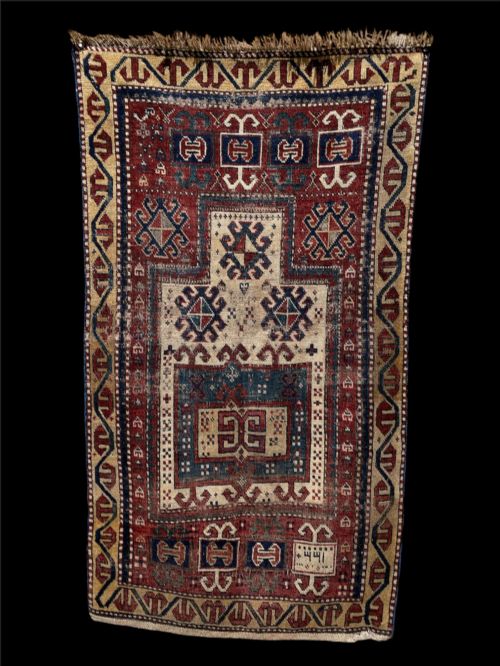


Red Prayer Rug
A red prayer rug brings centuries of tribal weaving tradition and distinct architectural design directly onto the floor.
Red Prayer Rug
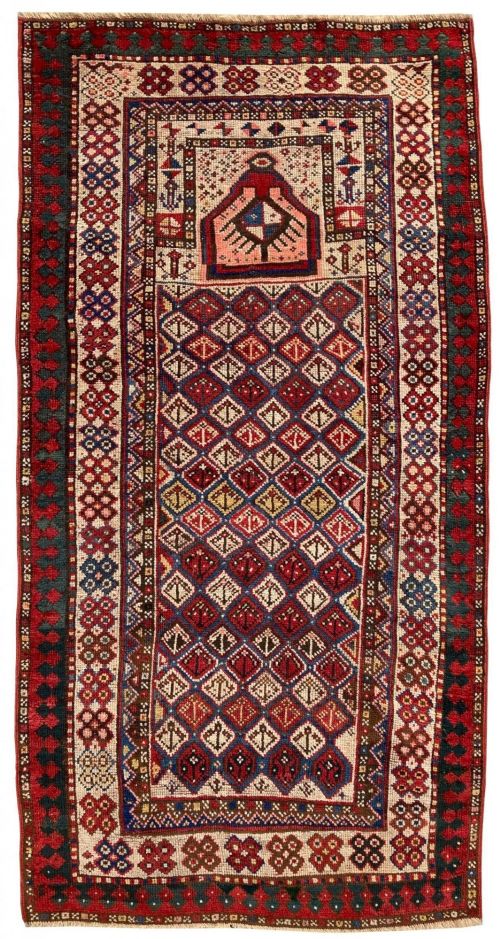
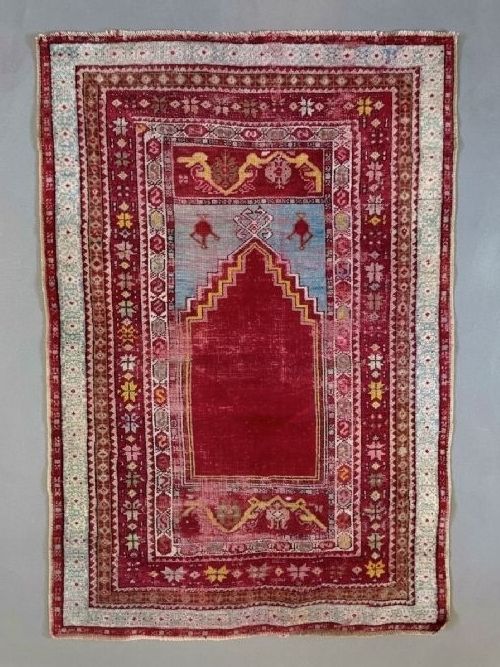
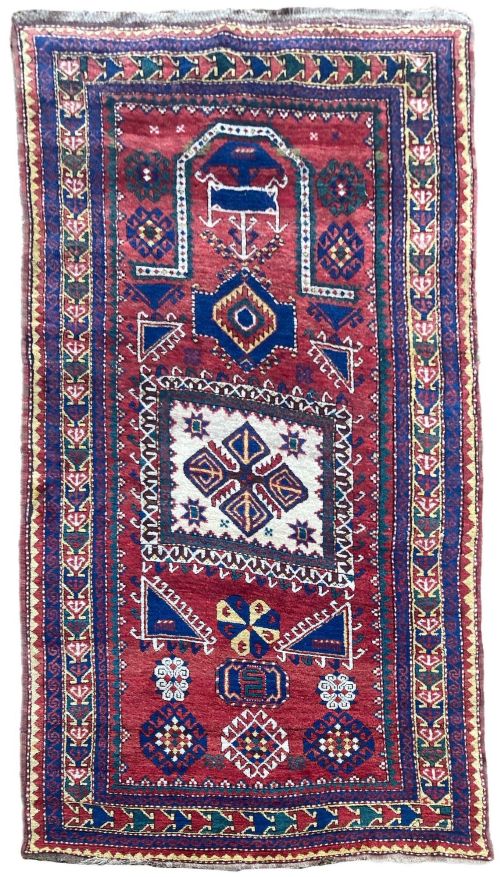
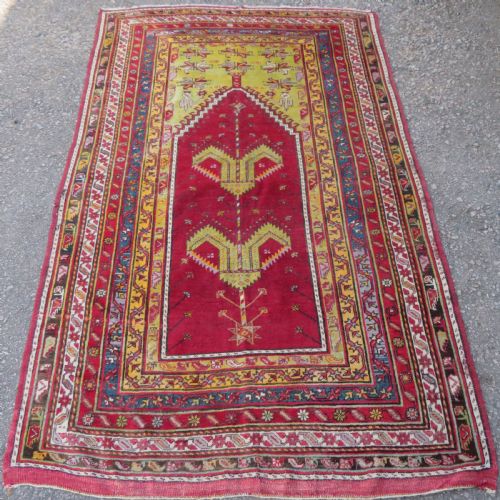
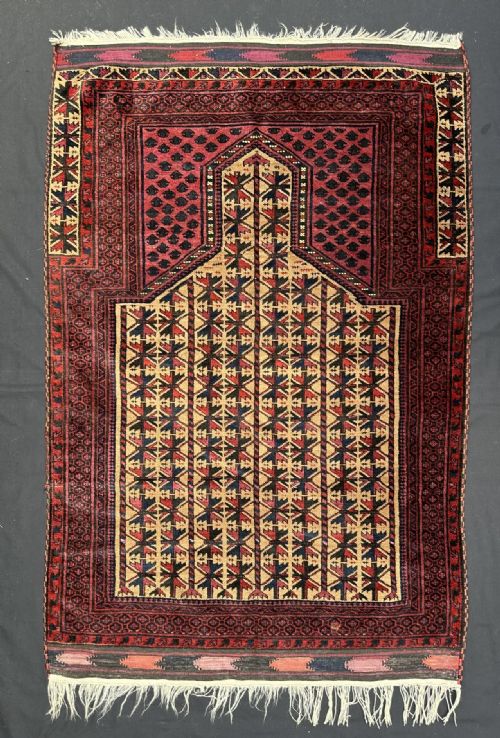
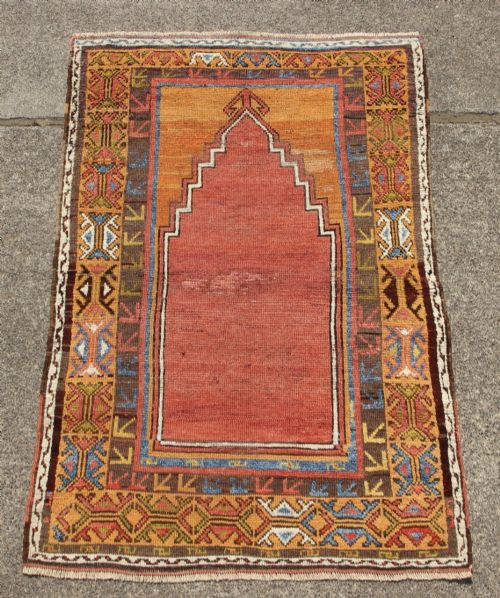
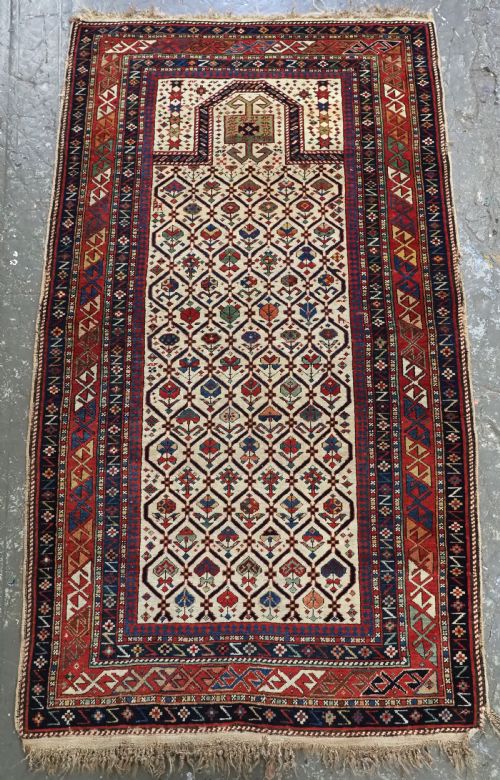
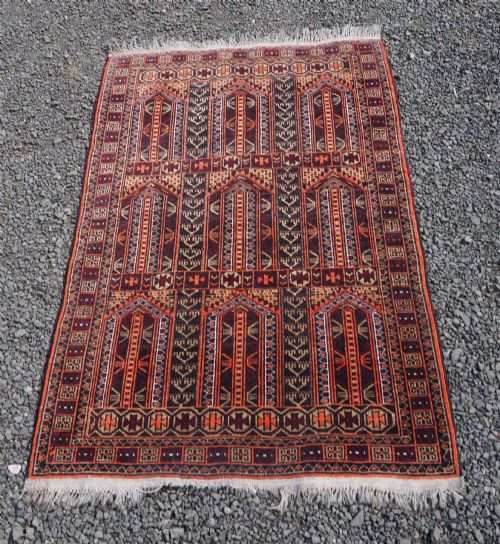
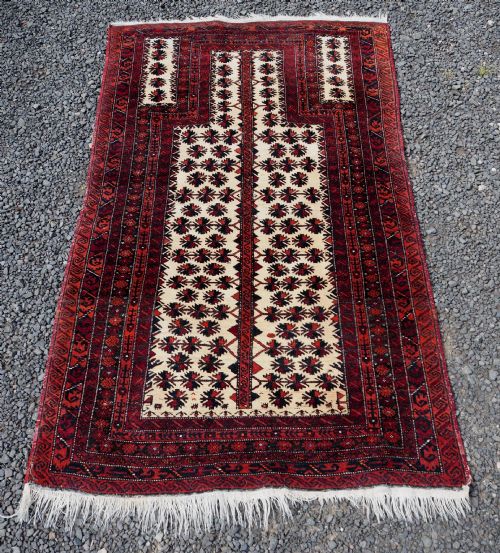
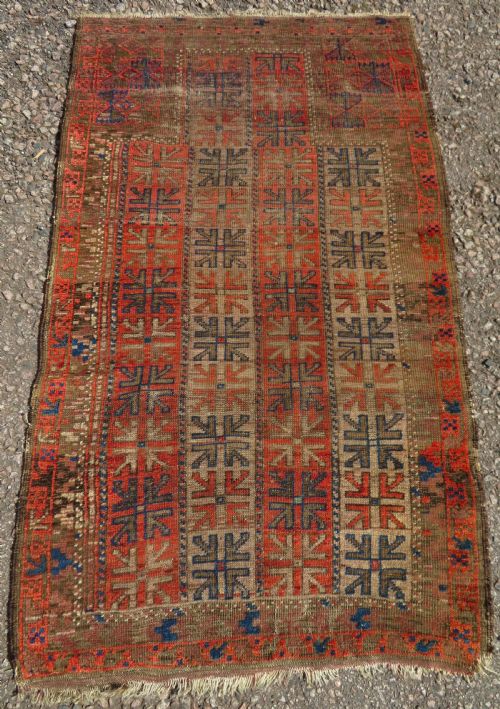
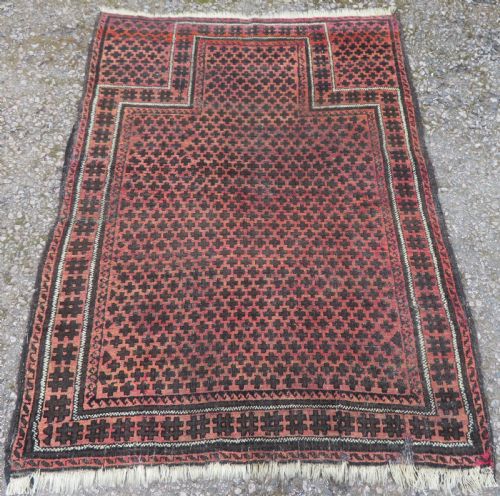
A red prayer rug is defined primarily by its central niche, known as a mihrab, which points toward Mecca during daily devotions. Buyers searching for a red prayer rug will encounter pieces originating from Anatolia, the Caucasus, Persia, and Afghanistan.
The dominant crimson and scarlet hues ground complex geometric medallions, floral lattices, and stylized tree-of-life motifs. The most frequent examples span the nineteenth and early twentieth centuries, created by regional weavers using traditional village and nomadic formats.
Formats range from compact nomadic mats to larger village carpets featuring single or double mihrabs. Each piece reflects the specific aesthetic vocabulary of the weaving group that produced it.
Materials and construction
Construction relies heavily on hand-spun wool for the pile, often supported by cotton or wool foundations and sometimes incorporating goat hair for durability. Weavers utilised natural dyes derived from plants and insects to achieve deep, rich red tones that age with considerable character.
Finer regional examples incorporate silk highlights or feature entirely silk foundations, particularly within specific Persian and Central Asian workshops. Dense hand-knotting secures the pile, while kilim end finishes protect the structural integrity of the ends.
Red Prayer Rug Retail Price Guide 2026
Typical asking prices for red prayer rug among the pieces listed under this phrase on Sellingantiques today, from the lower quarter to the upper quarter. They describe what is for sale here now, not the wider market.
Current listings feature materials including natural dyes, hand-spun wool, cotton, silk, and goat hair across pieces spanning the nineteenth and early twentieth centuries.
Evaluating quality and execution
Quality rests in the precision of the knotting, the saturation and complexity of the natural dyes, and the crispness of the drawing within the mihrab. Superior examples display balanced proportions, deeply saturated reds that have maintained their vibrancy, and tightly packed foundations.
Lesser pieces often exhibit hurried execution, muddy dye combinations, or structural thinning where the foundation shows through. The distinction lies in the deliberate clarity of the tribal motifs and the integrity of the original wool supply.
The Red Prayer Rug Glossary
- Mihrab
- The arched architectural niche depicted on a prayer rug, symbolising the gateway to paradise or the direction of prayer.
- Kazak
- A style of bold, geometric rug woven in the Caucasus, typically characterised by primary colours and strong rectilinear patterns.
- Baluch
- A tribal weaving group originating from the borderlands of Persia and Afghanistan, known for dark palettes and deep red or brown tones.
- Suzani
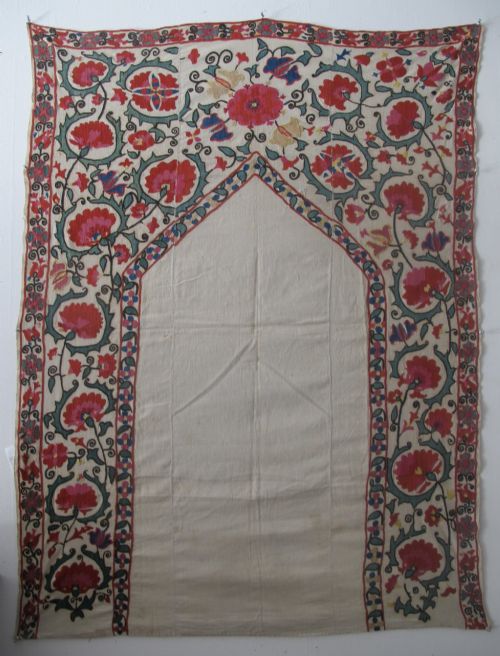
- A large, embroidered textile originating from Uzbekistan, often featuring silk embroidery on a cotton or linen ground with floral designs.
- Medallion
- A central decorative motif placed in the field of a rug, varying from geometric octagons to elaborate floral clusters.
Red Prayer Rug: Frequently Asked Questions
How do I identify a prayer rug?
A prayer rug is distinguished by the presence of a mihrab, an architectural arch motif at one or both ends of the central field. This design directs the user's focus toward Mecca during worship.
Beyond the arched niche, these rugs often feature compact dimensions suited for individual use rather than expansive room coverage.
Where were these rugs made?
These textiles originate primarily from nomadic and village weaving traditions across Anatolia, the Caucasus, Persia, and Afghanistan. Specific regions such as Konya, Kirsehir, and various Caucasian districts developed distinct local styles.
Tribal groups including the Baluch and Turkmen also produced significant numbers of these devotional pieces in borderland areas.
Can I use an antique prayer rug on the floor?
Most antique rugs of this type were constructed for practical use on floors or inside tents, utilising durable hand-spun wool and sturdy foundations. Placing them in moderate-traffic areas allows you to live with the textile as intended.
For exceptionally delicate pieces or those containing silk, mounting them on a wall as a textile hanging provides protection from wear.
How do I care for wool and silk rugs?
Regular, gentle vacuuming without a rotating brush roll prevents dust and grit from settling into the wool pile. Professional cleaning tailored to antique textiles ensures the natural dyes remain stable and the fibres do not dry out.
Keeping the rug away from direct, harsh sunlight preserves the rich red tones over decades of display.