

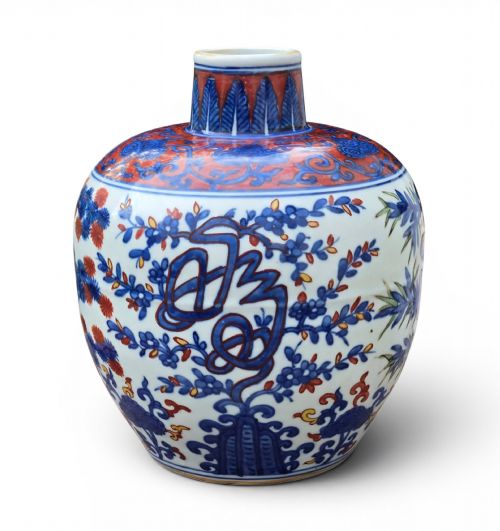


Red Porcelain Ginger Jars
Red porcelain ginger jars span centuries of Arita, Imari, and Kutani kiln traditions, offering vibrant storage vessels for collectors of Asian ceramics.
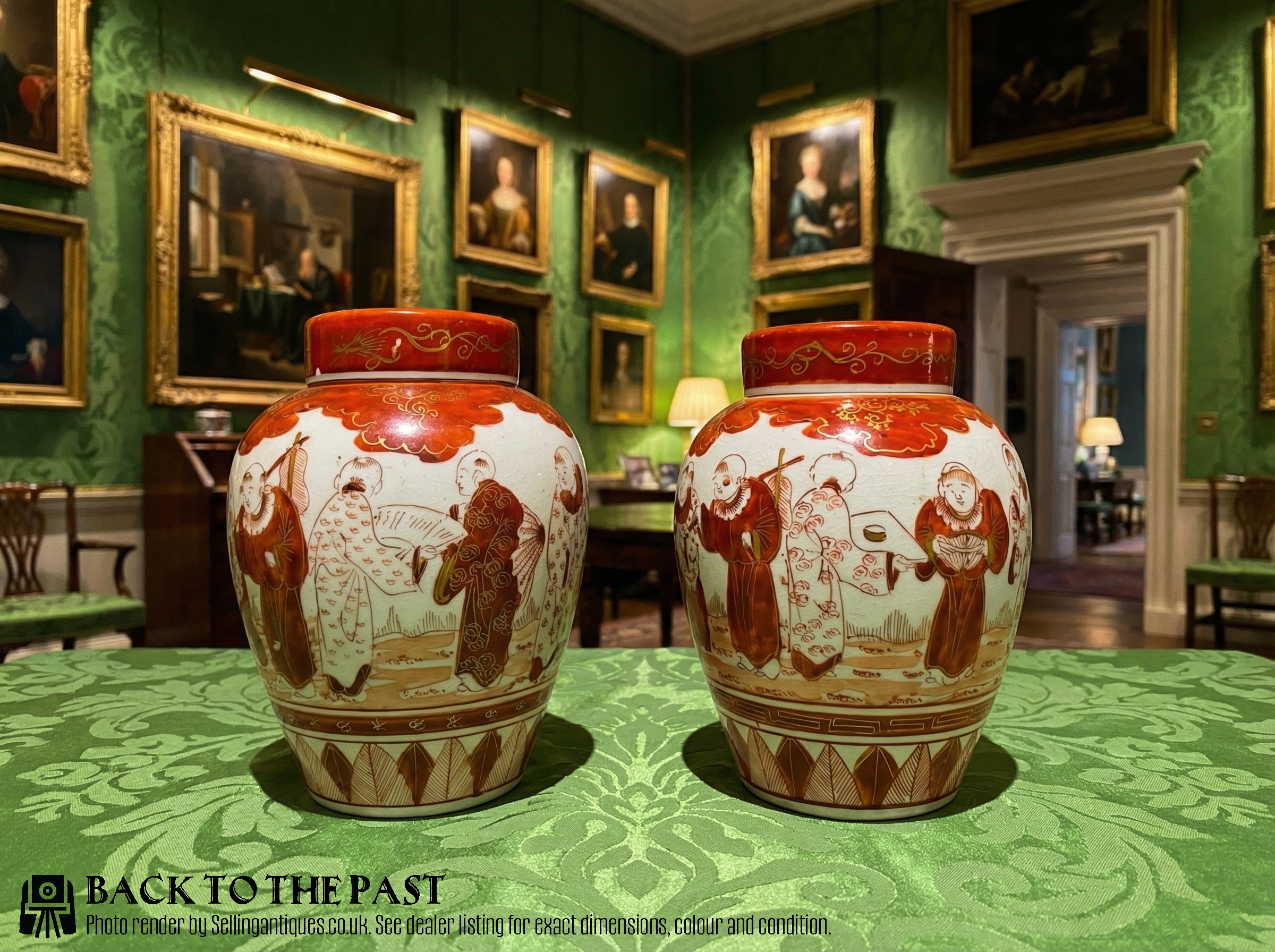
Red Porcelain Ginger Jars
Red porcelain ginger jars encompass lidded storage vessels and decorative vases originating from Japanese and Chinese kilns. When searching for red porcelain ginger jars, buyers encounter pieces ranging from Edo and Meiji period Arita wares to later European interpretations in the Imari style.
The selections on this page concentrate heavily on nineteenth-century Japanese Imari and Kutani production, alongside select earlier Chinese pieces and twentieth-century European factory work. These vessels typically combine cobalt blue and iron-red enamel over a white porcelain body, often accented with gilding.
Forms include covered jars, tea caddies, and lidded vases designed originally for storage or display. Buyers find pairs and individual pieces spanning the sixteenth century to the early twentieth century.
Materials and methods
Potters shaped these vessels from refined white porcelain clay before applying underglaze blue and overglaze iron-red enamel. Artisans utilised cobalt glaze for deep blue elements and iron-red pigment for rich red pictorial details.
Many pieces incorporate gold leaf or delicate gilding over the glaze to highlight intricate patterns. Kiln workers fired these ceramics at high temperatures to vitrify the body before secondary low-temperature firings fixed the enamel colours.
Listings feature porcelain pieces spanning from the sixteenth-century Ming dynasty through the Edo and Meiji periods up to Edwardian European interpretations.
Assessing quality and execution
Quality rests in the crispness of the hand-painted iron-red enamel and the depth of the cobalt underglaze. Superior pieces display balanced compositions where the red and blue pigments sit evenly without blurring or running across the porcelain surface.
The refinement of the porcelain body and the precision of the potting distinguish finer workshop output from simpler commercial wares. Potteries like Kutani and Arita achieved distinct standards in brushwork control and glaze application that separate standard production from masterworks.
Herend·Samson
The Red Porcelain Ginger Jars Glossary
- Imari
- A style of Japanese porcelain originating from Arita, characterised by a palette of underglaze blue, iron-red enamel, and gold. This decorative scheme became immensely popular across Europe during the Edo period.
- Kutani
- A style of Japanese coloured porcelain known for bold pictorial designs and heavy use of iron-red enamel and gold. Kutani wares often feature intricate figural or floral scenes.
- Underglaze
- Pigment applied to the ceramic body before the application of a clear glaze and subsequent firing. Cobalt is the most common underglaze colour found on these vessels.
- Enamel
- Low-melting glass coloured with metallic oxides, applied over the fired glaze and fixed in a second kiln firing. Iron-red enamel provides the dominant reddish hue on these jars.
- Arita
- The Japanese town in Hizen province that served as the primary centre for porcelain production in Japan. Kilns here produced the vast majority of export Imari wares.
Red Porcelain Ginger Jars: Frequently Asked Questions
What were ginger jars used for?
Originally manufactured in ancient China to store and transport spices, salt, and oil, ginger jars eventually found a place in Western homes purely as decorative interior objects.
Over time, European collectors prized these lidded vessels for their symmetry and colourful surface decoration, displaying them on mantelpieces and cabinets rather than using them for pantry storage.
How do I date an Imari jar?
Dating relies on examining the weight of the porcelain body, the specific tone of the iron-red enamel, and the style of the hand-painted motifs. Nineteenth-century pieces often display heavier potting and brighter enamel pigments compared to eighteenth-century examples.
Markings on the base, where present, can also point towards specific periods such as the Meiji era or earlier dynastic reigns, though many export pieces carry imitation marks.
What is the difference between Imari and Kutani?
Imari porcelain traditionally relies on a strict palette combining underglaze cobalt blue, iron-red enamel, and gold, featuring intricate floral and brocade patterns. Kutani porcelain places a heavier emphasis on bold pictorial scenes with dominant iron-red and green enamels.
While both traditions stem from Japanese kilns, their brushwork and overall visual weight differ distinctly upon close inspection.