


Red Porcelain Bottle Vase
A red porcelain bottle vase offers a striking silhouette and rich ceramic depth, combining slender necks with vibrant red tones.
Red Porcelain Bottle Vase
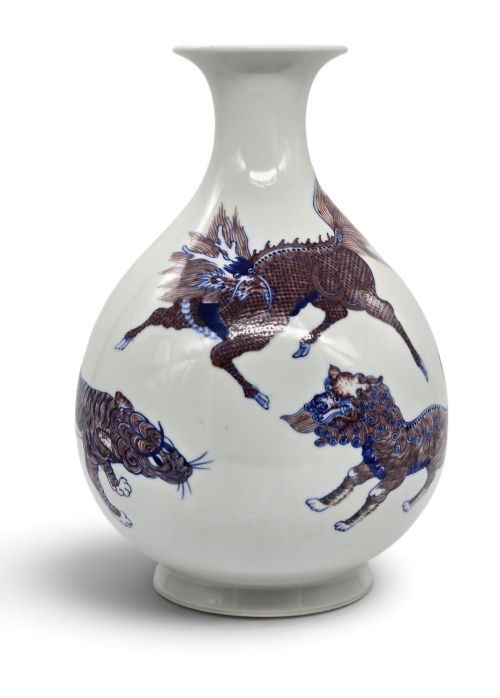
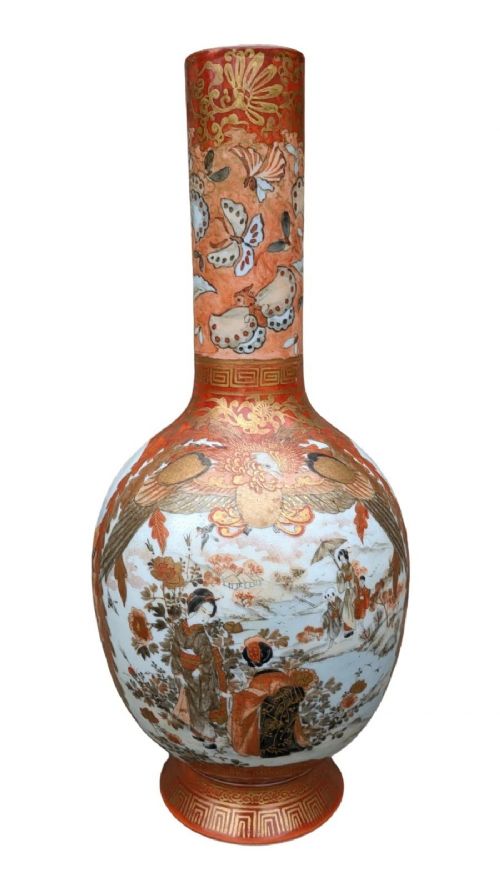
A red porcelain bottle vase typically presents a globular or tapering body rising to a narrow neck, often associated with Japanese Imari, Kutani, and Late Qing dynasty wares. These pieces span the nineteenth century, the Victorian era, and the early twentieth century, incorporating periods such as the Meiji and Taisho eras.
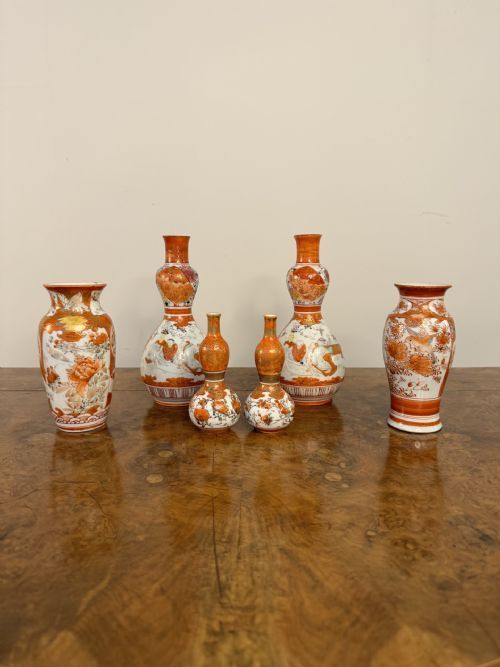
The versions most commonly met on this page include slender neck vases, garlic-mouth vases, and shaped decorative vessels originating from Japan and China, sometimes found as matched pairs or larger garnitures.
Makers and potteries represented in the selection range from traditional East Asian kilns to English porcelain works like Stevenson and Hancock of Derby, demonstrating diverse regional interpretations of the classic bottle form.
How they were made
Potters shaped fine porcelain clay on the wheel before applying mineral glazes and underglaze pigments, frequently combining cobalt blue with copper-red elements.
Decoration often involved detailed enamel painting, sometimes accented with gold leaf applied over the fired glaze to highlight motifs of mythical beasts and traditional patterns.
Some mythical beasts found guarding these vases appear curiously friendly despite their fierce reputations.
What varies in quality
Quality rests upon the precision of the porcelain body and the control achieved during high-temperature kiln firing, which determines the depth and clarity of the red glaze.
The refinement of the hand-painted enamel work and the crispness of any gilt detailing separate standard decorative vessels from exceptional examples of the potter's art.
Stevenson and Hancock
The Red Porcelain Bottle Vase Glossary
- Imari
- A style of Japanese export porcelain characterised by a palette of underglaze blue, iron red, and gold. It originated in the Edo period and became widely exported to Europe.
- Kutani
- Japanese pottery and porcelain traditionally produced in Ishikawa Prefecture, known for bold overglaze enamels. These wares frequently feature intricate pictorial scenes.
- Underglaze
- A method of decorating pottery in which pigments are applied to the unfired clay body before glazing and firing. This ensures the design remains permanent beneath a glassy surface.
- Garniture
- A set of three or more matching vases or decorative vessels designed to be displayed together on a mantelpiece or sideboard. They gained immense popularity in European and Asian interiors.
Red Porcelain Bottle Vase: Frequently Asked Questions
What is a red porcelain bottle vase?
A red porcelain bottle vase is a ceramic vessel featuring a narrow neck and a rounded body, finished with red glazes or iron-red enamels. These items often display traditional East Asian or Victorian decorative motifs.
Such pieces were primarily created for ornamental display rather than holding flowers, serving as focal points in period interiors.
How do I date these vases?
Dating relies on stylistic markers, materials, and associated kiln marks recorded across periods like the Meiji era, the late Qing dynasty, and the Victorian epoch. Examining the base and the application of the glaze provides further chronological clues.
Comparative analysis with documented factory styles helps place an object within the nineteenth or early twentieth century.
Were these vases used for flowers?
Many slender neck vessels were designed principally as decorative garniture pieces or cabinet items rather than functional flower holders. Their narrow apertures meant they were better suited to displaying decorative glazes and painted enamel work.
Over time, collectors have prized them for their sculptural forms and vibrant colour palettes rather than practical utility.
How should I display a bottle vase?
Display these vessels on stable surfaces away from direct sunlight to protect delicate enamel and gold leaf decorations. Placing them individually or as part of a traditional garniture set enhances their architectural silhouette.
Allowing sufficient space around the piece ensures the slender neck and red porcelain body remain the visual centrepiece.