
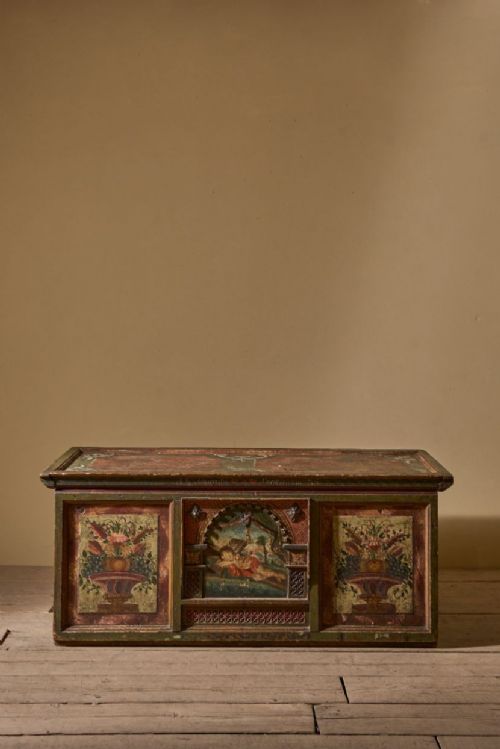


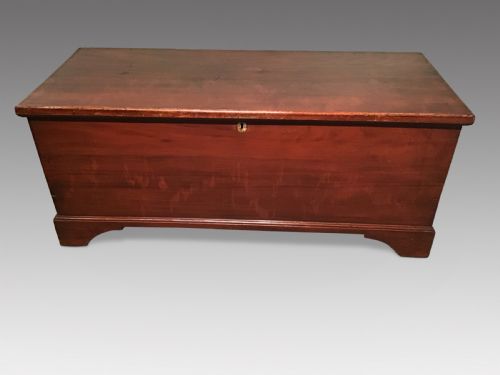
Red Painted Wooden Trunk
A red painted wooden trunk is a sturdy storage piece finished in colourful pigment, prized for carrying history and brightening a room.
Red Painted Wooden Trunk
A red painted wooden trunk is a utilitarian storage container finished with pigment, appearing in forms such as blanket boxes, coffers, strong boxes, and marriage chests. When you search for a red painted wooden trunk, you encounter pieces designed to hold personal belongings, linens, or dowries.
The selections available here span the Georgian and Victorian eras, alongside mid to late nineteenth century items. You will frequently find Scandinavian, Hungarian, and general European folk art pieces among the offerings.
These items range from small dome-top boxes and cashier boxes to large dowry chests and luggage stands. Most examples utilise pine as their primary timber, often elevated on bracket feet or resting on stands.
How they were made
Makers constructed these storage pieces using solid timber boards, predominantly pine and occasionally oak, joined securely to withstand heavy use. Surfaces were then prepared to receive mineral pigments and traditional paints.
Many examples feature applied iron or brass hardware, including metal binding and hinges, to reinforce the structure of the chest or strong box. Hand-painted floral motifs and decorative schemes were applied directly over the base coat.
Some nineteenth century strong boxes doubled as miniature architectural statements, complete with tiny bracket feet and domed roofs.
What varies in quality
Quality rests in the survival of original surface decoration and the integrity of the timber construction. Pieces retaining their initial pigment and distinct folk art motifs command greater attention from collectors.
Proportions and functional details, such as bracket feet, shaped bases, and original metal-bound edges, elevate the standing of a trunk. The harmony between the carpentry and the decorative painting dictates the character of each piece.
The Red Painted Wooden Trunk Glossary
- Coffer
- A heavy wooden chest traditionally used for storing valuables or documents. These sturdy boxes often feature hinged lids and iron reinforcement.
- Dowry chest
- A storage box prepared for a bride to hold household linens and personal possessions. They frequently display specific floral or marriage motifs.
- Folk art
- Decorative items created within a traditional community culture, usually by self-taught makers. This style relies on local materials and regional design patterns.
- Mineral pigment
- Natural earth or rock substances ground into powder and mixed with a binder to create durable paint. These substances provide the rich colour found on antique boxes.
Red Painted Wooden Trunk: Frequently Asked Questions
What were red painted wooden trunks used for?
These trunks served practical storage purposes in homes, holding textiles, blankets, and personal valuables. Marriage and dowry chests specifically stored items intended for a new household.
Travellers also utilised metal-bound travelling trunks for journeys, while smaller strong boxes kept currency and documents secure.
How do I date a painted wooden trunk?
Dating relies on construction methods, timber type, and stylistic clues within the painted decoration. Georgian and Victorian examples display specific joinery techniques and proportions characteristic of their decades.
Paint analysis and regional folk art motifs further help place a trunk within the nineteenth century.
Are the paint finishes original?
Many listings specify original paint or early decorative schemes applied to the pine or oak surfaces. Trunks often retain their initial mineral pigment finishes from the nineteenth century.
Examining the wear patterns and the interaction between the wood and pigment reveals the history of the surface.
Where do these painted trunks originate?
The pieces originate from various European regions, notably Scandinavia, Hungary, and Spain. Each area developed distinct folk art traditions and decorative vocabulary.
Scandinavian and Hungarian workshops produced many of the blanket boxes and shaped coffers seen in these collections.