




Red Marble Top Table
A red marble top table brings weight and rich colour to a room, offering a sturdy surface framed by varied historic woods and metals.
Defining the red marble top table
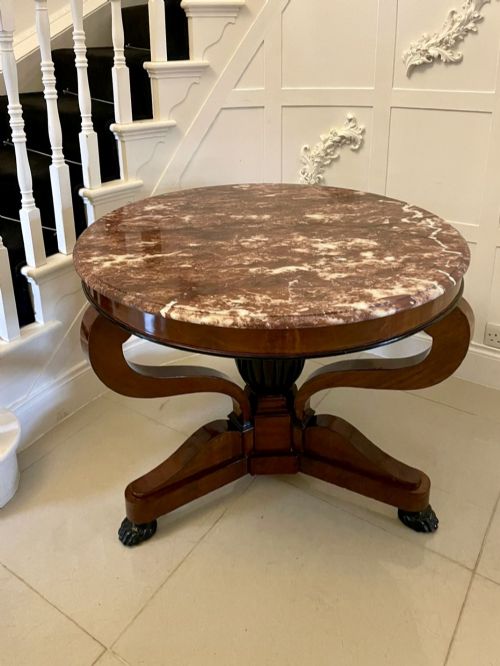
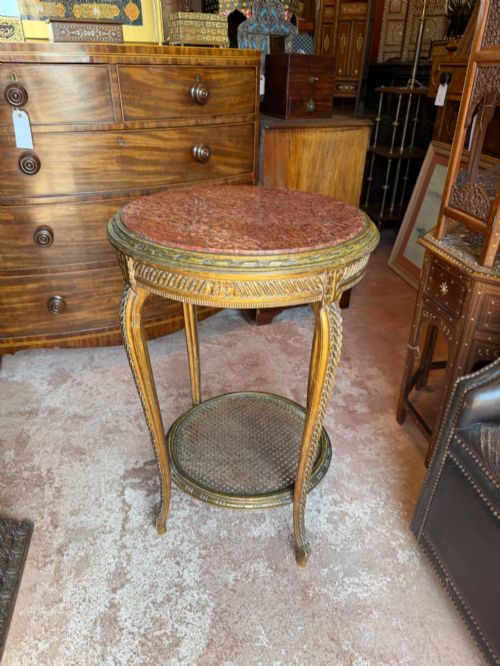
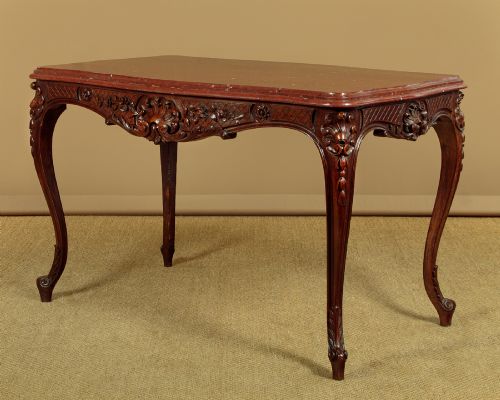
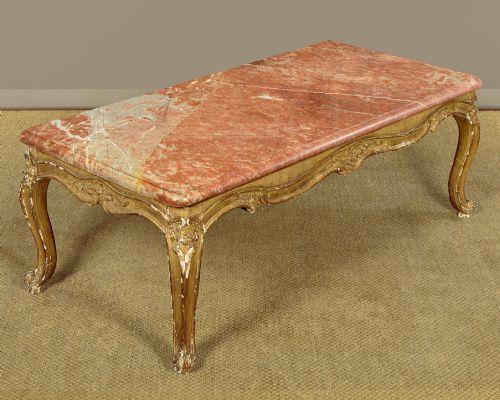
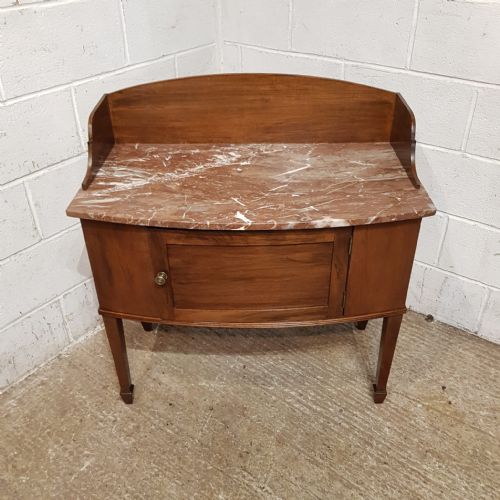
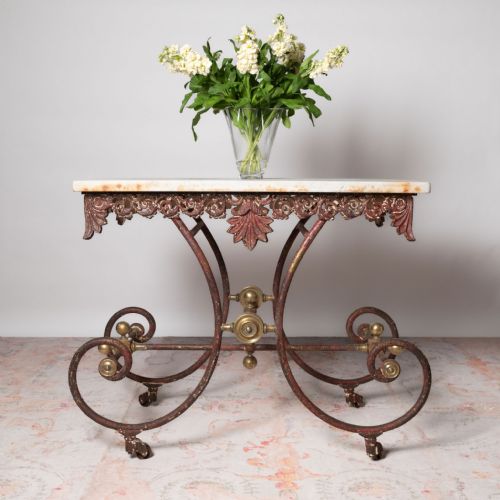
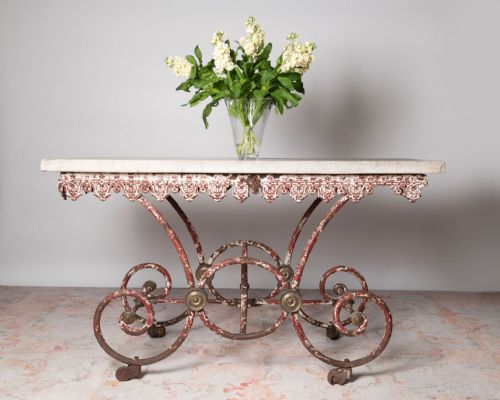
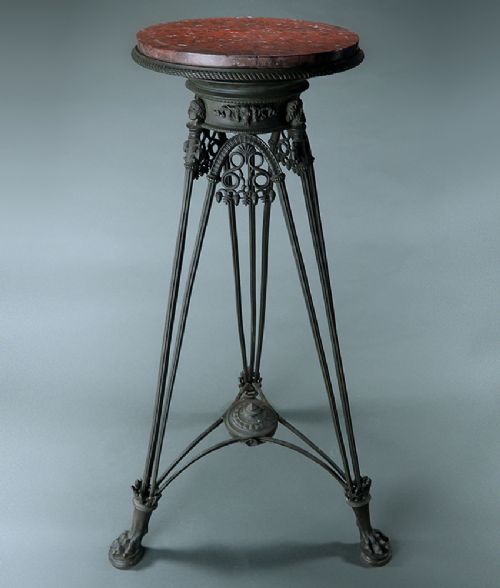
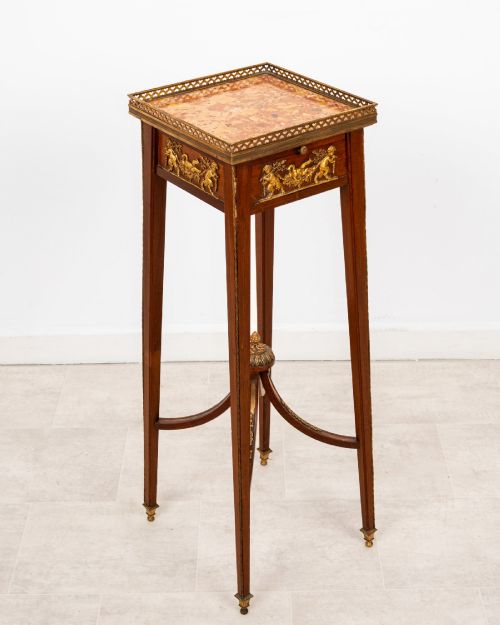
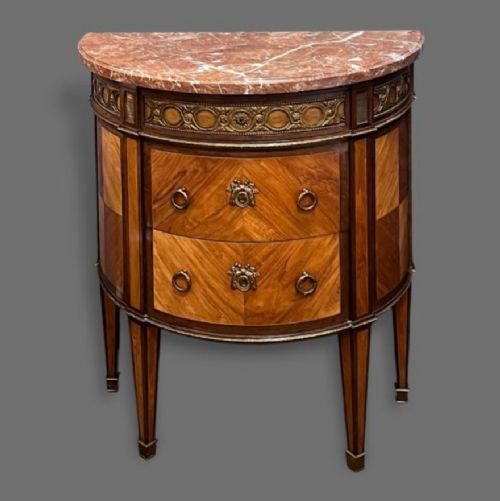
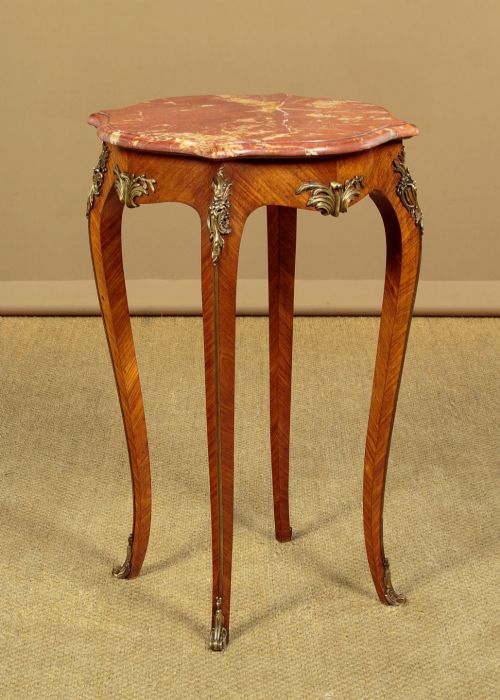
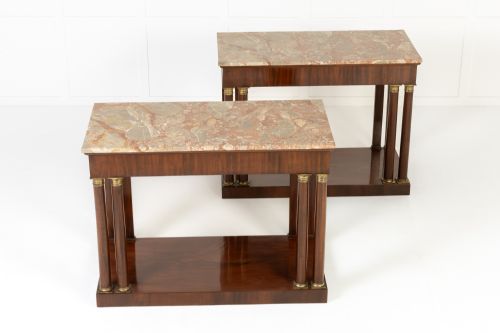
When you search for a red marble top table, you find a range of practical and decorative furniture designed to anchor a room with a distinctive stone surface. These pieces span washstands, bedside tables, occasional tables, side tables, and grand centre tables.
You are most likely to meet 19th-century examples, along with Edwardian pieces and items from around 1800 to 1900. The forms draw on French Henri II, Victorian, Arts and Crafts, Edwardian, Qing Dynasty, and Swedish Rococo traditions.
The underlying frames vary widely, moving from washstands to console tables, lamp tables, and night tables. Each piece combines the cool, solid presence of a marble slab with timber or gilded supports.
Materials and construction
The defining feature rests upon a foundation of varied timbers and metals, utilising marble paired with oak, ceramic, brass, mahogany, satinwood, walnut, giltwood, rosewood, and burr-maple veneer. Frames are carved, painted, parcel silvered, or gilded to complement the heavy stone top.
Makers shaped these tables to serve diverse domestic functions, from utilitarian washstands to decorative console and occasional pieces. The stone is fitted closely to wooden frames, sometimes accompanied by mirrored backs or carved structural details like dolphin motifs.
Retail Price Guide 2026
Typical UK retail prices for red marble top table, calculated from the Sellingantiques database of over a million retail prices indexed since 2003. This retail price guide relies exclusively on Sellingantiques data; no external sources or auction records are used, so the figures do not describe the wider market.
Listings feature 19th-century, Edwardian, and turn-of-the-century pieces spanning French, Swedish, British, and Chinese design traditions.
Judging quality and character
The distinction between standard examples and finer pieces lies in the integration of the stone with the frame and the depth of carving in the wood. Richly figured timbers such as satinwood and burr-maple veneer, or meticulous parcel silvering and gilding, elevate the piece.
Proportion and the handling of stylistic details, such as French Empire curves or Swedish Rococo lines, dictate the visual success of the table. A well-balanced frame supports the heavy marble slab harmoniously without appearing clumsy.

The Red Marble Top Table Glossary
- Marble
- A hard metamorphic rock that takes a high polish, forming the heavy, cool top characteristic of these tables. It provides a durable and smooth surface for daily use.
- Washstand
- A piece of furniture designed to hold a basin and pitcher, frequently fitted with a stone top to resist water damage. These often include lower shelves or backsplashes.
- Centre table
- A freestanding piece finished on all sides so it can stand in the middle of a room rather than against a wall. They often feature elaborate carving or gilt finishes.
- Parcel silvered
- A decorative treatment where specific carved details of a wooden frame are partially covered with silver leaf. This contrasts sharply with painted or dark wood surfaces.
- Occasional table
- A small, versatile table moved easily around a room for temporary use as a lamp or side table. They appear across multiple nineteenth-century styles.
Frequently Asked Questions
What rooms suit a marble top table best?
These tables find natural homes in hallways, living rooms, and bedrooms where their durable stone surfaces withstand daily use. Smaller lamp or bedside versions fit beside seating or beds, while larger centre tables anchor spacious rooms.
The cool touch and distinctive colour of the stone introduce a classical element that contrasts pleasingly with textiles and soft furnishings.
How do I clean the marble top?
Maintenance requires simple wiping with a damp cloth and mild, non-acidic soap to protect the polished stone surface. Avoid harsh chemical cleaners or vinegar, which etch the marble.
Regular dusting keeps the surface clear, and using coasters prevents rings from glasses or moisture.
Are these tables heavy to move?
The presence of a thick stone slab makes these pieces substantially heavy, requiring care and often two people to lift or reposition safely. The wooden or gilded base supports this weight through solid construction.
It is wise to lift from the wooden frame rather than attempting to grip the stone top alone.
How can I tell the period of the table?
Dating relies on examining the secondary timbers, construction joints, and stylistic cues such as Victorian heavy carving or Edwardian refinement. French Empire influences often show specific classical motifs and silvered finishes.
Comparing the turned legs, edge profiles of the marble, and overall joinery helps narrow down the decade of manufacture.