




Red Lattice Runner
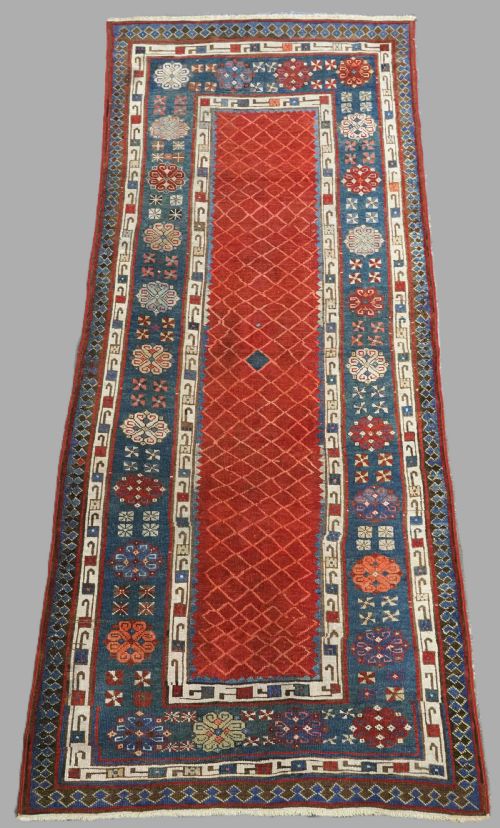
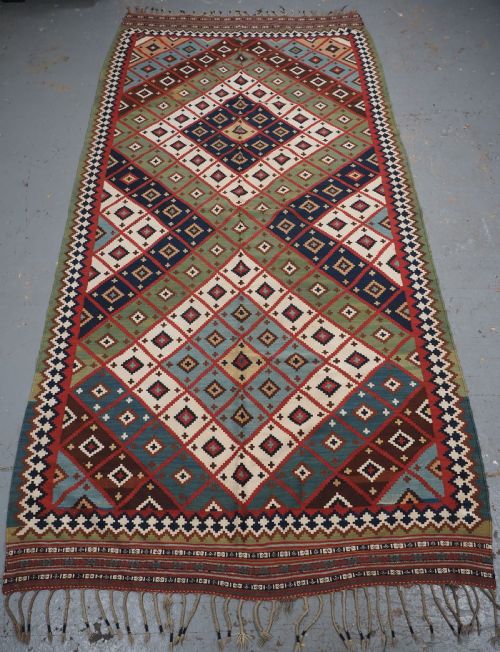
These red lattice runner examples bring geometric structure and rich colour to narrow spaces, formed by tribal weavers across the Caucasus and Persia.
Red Lattice Runner
When you search for a red lattice runner, you encounter elongated floor coverings designed specifically for hallways and corridors. These pieces combine a predominant red ground with an intersecting lattice pattern, creating a structured geometric grid across the length of the floor.
The selections on this page originate primarily from regional workshops and tribal groups in the Caucasus and Persia. They include long rugs and narrow corridor carpets dating from the late nineteenth century up to the early twentieth century, produced by weavers such as the Baluch, Qashqai and Kurdish communities.
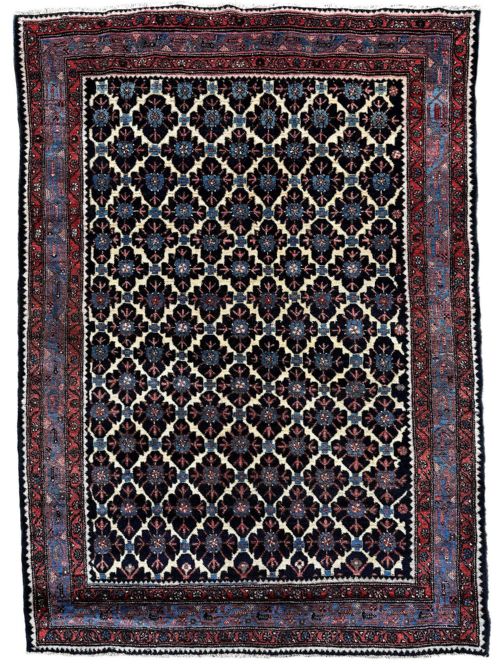
Most examples present repeating motifs within the grid framework, ranging from floral lattice arrangements to specific tribal variations like the Mina Khani design. These formats provide a practical solution for narrow domestic spaces while displaying traditional regional iconography.
How they were made
The construction of these pieces relies on hand-spun wool foundations and pile, knotted or woven by nomadic and village weavers. Natural dyes provide the characteristic red tones and contrasting palette seen across the pieces, yielding depth and variation in the colouration.
Weavers utilised traditional upright looms to construct these long formats, carefully executing complex geometric grid patterns by hand. The application of natural dyestuffs interacts with the hand-spun wool to create rich hues that mature gracefully over decades.
Every single weaver working on these runners had to commit complex multi-axis geometry to memory without a single printed graph.
What varies in quality
Quality in these runner formats rests on the precision of the lattice geometry and the fineness of the knotting. Better examples demonstrate crisp execution of the grid pattern and deliberate control over the interlacing motifs along the narrow field.
The choice and saturation of natural dyes further distinguish the finer pieces from simpler village production. Rich, uniform colour depth and resilient hand-spun wool construction elevate the visual impact of the corridor carpet.
The Red Lattice Runner Glossary
- Lattice design
- A repeating network of intersecting diagonal bands forming a geometric grid across the field. This framework often encloses floral elements or stylized botanical motifs.
- Runner
- An elongated narrow carpet format suited for hallways, corridors and staircases. These pieces proportion pattern and border work specifically for confined linear spaces.
- Natural Dyes
- Colourants derived from plant and mineral sources rather than synthetic chemistry. They produce rich, variable tones that develop a desirable patina with age.
- Hand-Spun Wool
- Sheep fleece processed and twisted into yarn by hand rather than via industrial machinery. This traditional preparation retains natural lanolin and creates irregular texture in the pile.
- Mina Khani
- A traditional all-over pattern consisting of daisy-like flower heads linked by curved vines within a geometric lattice. It frequently appears in Persian and Baluch weaving traditions.
Red Lattice Runner: Frequently Asked Questions
Where should I place a red lattice runner?
These narrow formats work best in hallways, corridors, entryways and narrow passageways where their linear design can direct movement through the interior.
Their geometric lattice patterns provide visual structure to transitional spaces while protecting flooring in high-traffic areas.
How do I identify the regional origin of these pieces?
Origin is identified through specific combinations of knotting structure, wool quality, palette and characteristic lattice variations used by tribal groups.
Caucasian pieces often display crisper geometry, whereas Persian tribal examples from regions like Khorasan or regions worked by Kurdish weavers show softer botanical integrations.
What maintenance do these wool runners require?
Regular gentle vacuuming without a rotating brush roll prevents dust accumulation within the hand-spun wool pile.
Professional specialist cleaning is recommended periodically to preserve the integrity of natural dye colours and delicate foundation fibres.
How do natural dyes age over time?
Natural dyes mellow gradually through exposure to light and air, developing a harmonious patina known as abrash where colour subtly shifts across the wool.
This ageing process enhances the visual depth of the red ground and softens the contrast within the lattice grid.