



Red Lacquer Storage Cupboard
A red lacquer storage cupboard brings warmth and striking colour to a room, offering practical concealment alongside centuries of traditional craftsmanship.
Red Lacquer Storage Cupboard
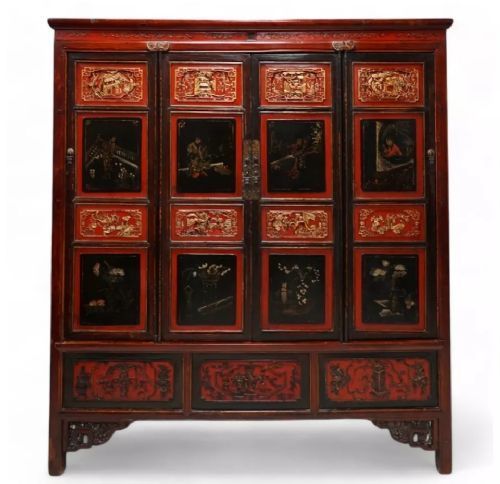
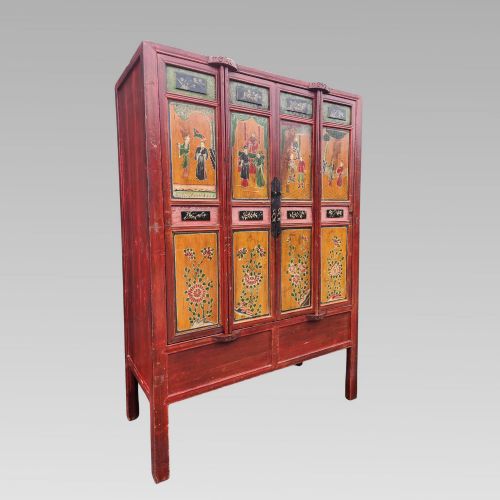
A red lacquer storage cupboard is a substantial wooden cabinet finished in vibrant red protective coatings, often serving as a focal point for living spaces. When you search this phrase, you encounter forms ranging from large marriage cabinets to compact bedside lamp cabinets.
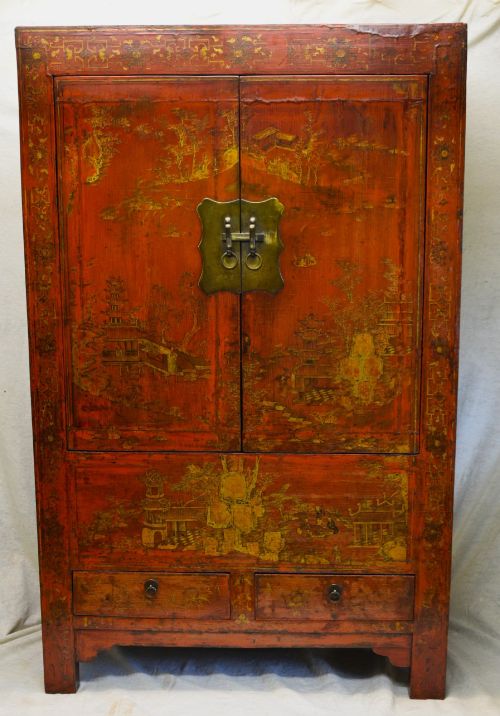
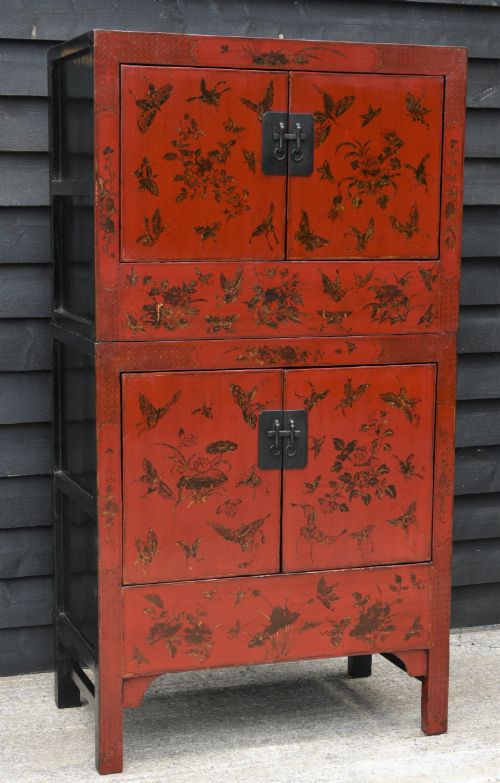
The pieces appearing on this page span the nineteenth century through the early twentieth century, taking stylistic inspiration from Qing Dynasty traditions and Chinese provincial workshops. You will frequently find traditional marriage and wedding cabinets designed with double doors enclosing interior shelving and compartment space.
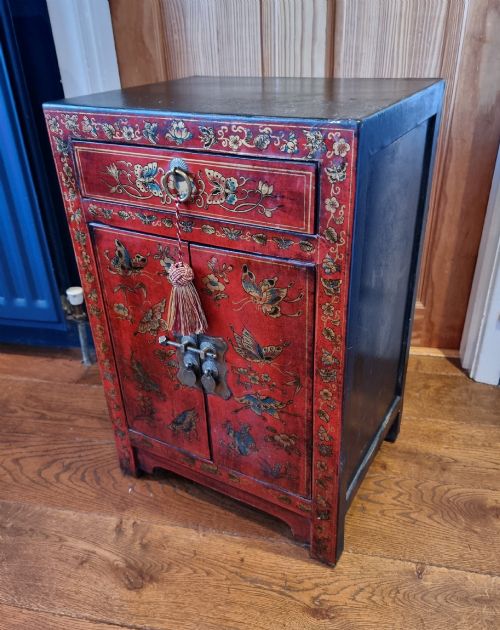
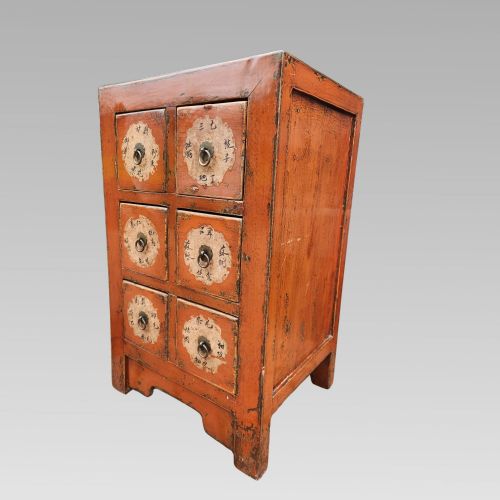
Alongside tall armoires, the selection includes side cabinets, cocktail cabinets, and multi-drawer apothecary chests or medicine cabinets. Japanese tansu chests also appear within the wider group, introducing distinct regional hardware and internal configurations.
Materials and construction methods
Construction relies heavily on native timbers such as Chinese elm and various hardwoods, providing a sturdy carcase capable of supporting multiple layers of decorative coating. Joinery typically employs traditional wood-to-wood techniques that accommodate seasonal timber movement without splitting the primary structure.
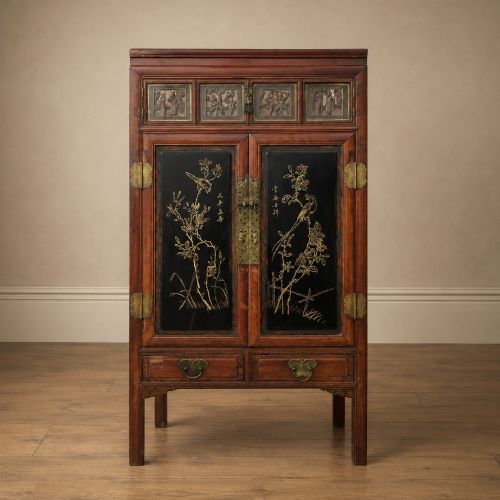
The distinctive red surface is achieved through successive applications of lacquer derived from tree sap, built up over weeks and meticulously polished between coats. Artisans frequently enhanced these rich red grounds with contrasting black lacquer work, intricate gold leaf detailing, and detailed carving.
Functional hardware is integral to the construction, utilising forged iron and polished brass for hinges, side carrying handles, and circular front faceplates secured with traditional pin locks.
Form variations include apothecary chests with multiple small drawers alongside tall marriage cupboards and bedside lamp cabinets.
Evaluating craftsmanship and condition
Quality rests significantly on the depth and durability of the lacquering process, where superior examples exhibit a smooth, lustrous finish that has aged uniformly. Lesser pieces show extensive modern repainting or heavy flaking that obscures the underlying timber and early surface texture.
The finesse of the carving and the application of gold leaf differentiate standard utility furniture from high-status pieces commissioned for wealthy households. Crisp detailing on panels and well-executed figurative or floral motifs indicate skilled workshop production rather than hurried commercial output.
Originality of the metalwork also governs value, with intact period brass or iron plates and hinges demonstrating a higher degree of preservation. Replacement modern screws or mismatched lock plates indicate later repairs that alter the historical integrity of the cabinet.
The Red Lacquer Storage Cupboard Glossary
- Lacquer
- A protective and decorative coating derived from natural plant resin, applied in multiple thin layers and polished to a hard sheen. This technique preserves the timber beneath while offering a tactile, glossy surface.
- Chinoiserie
- European artistic styles that reflect Chinese decorative motifs, though many pieces on this page represent authentic Qing Dynasty and Chinese provincial manufacturing traditions. It frequently incorporates landscapes, figures, and floral elements.
- Marriage cabinet
- A large traditional Chinese storage piece traditionally given as a wedding gift to hold the bride's clothing and personal belongings. These items feature internal shelving and removable central stile posts for bulky items.
- Apothecary cabinet
- A multi-drawer chest historically used by herbalists and practitioners of traditional medicine to store dried roots, herbs, and minerals. They are characterised by numerous small drawers, each often marked with identifying script.
- Tansu
- A traditional mobile Japanese cabinetry form featuring integrated iron handles and specialised storage compartments for household goods. These pieces prioritise functional utility alongside clean structural lines.
Red Lacquer Storage Cupboard: Frequently Asked Questions
What is a red lacquer storage cupboard used for?
These cabinets serve as versatile storage units in modern interiors, functioning as wardrobes, linen presses, or media consoles. Their enclosed shelving keeps clutter out of sight while adding a bold splash of colour to a hallway or living room.
Larger marriage cabinets provide deep wardrobe space, whereas side cabinets and bedside units suit smaller rooms where surface display and concealed storage are both required.
How do I care for antique lacquer furniture?
Maintain the surface by dusting gently with a soft, dry microfibre cloth, avoiding harsh chemical cleaners, abrasives, or silicone polishes. Keep the cabinet away from direct sunlight and radiators to prevent the wood beneath from drying and the lacquer from cracking.
Stable room humidity helps preserve the fragile balance between the timber carcase and the external resin layers over decades of use.
How can I tell the age of these cabinets?
Dating relies on examining the construction methods, wear patterns on the lacquer, and the style of the brass or iron hardware. Nineteenth-century pieces often show hand-planed interior boards, forged iron pins, and a deep, mellow crazing in the red finish.
Twentieth-century examples tend to display more uniform machine-sawn timber and brighter, less degraded surface patination, aligning with the later Qing and Republican periods.
Where were these cabinets originally made?
The pieces originate primarily from various Chinese provinces, such as Fujian, where regional woodworking guilds produced domestic furniture for local and export markets. Cabinetmakers utilised locally available hardwoods and softwoods suited to each specific furniture form.
Japanese workshops also contributed distinct storage forms, such as tansu chests, which incorporated different regional construction methods and specific iron reinforcement mounts.