




Red Kashan Rug
A red kashan rug brings century-old Persian craftsmanship directly to the floor, offering deep wool pile and classic floral motifs.
Red Kashan Rug
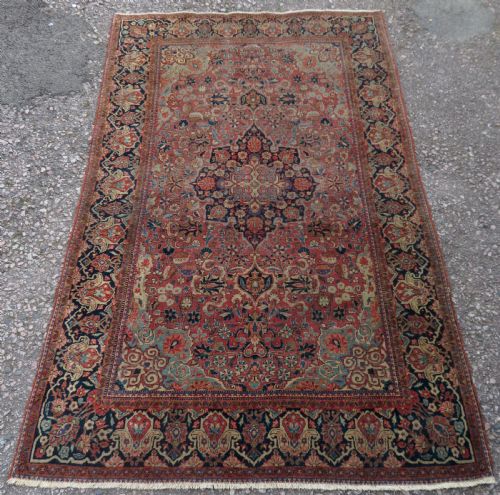
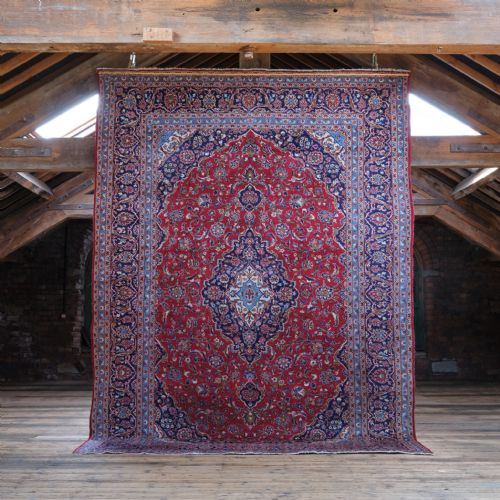
A red kashan rug is a woven floor covering originating from central Persia, recorded in examples dating from the late nineteenth century through the mid twentieth century. Buyers seeking this phrase encounter traditional area rugs, large carpets, prayer rugs, and pictorial formats.
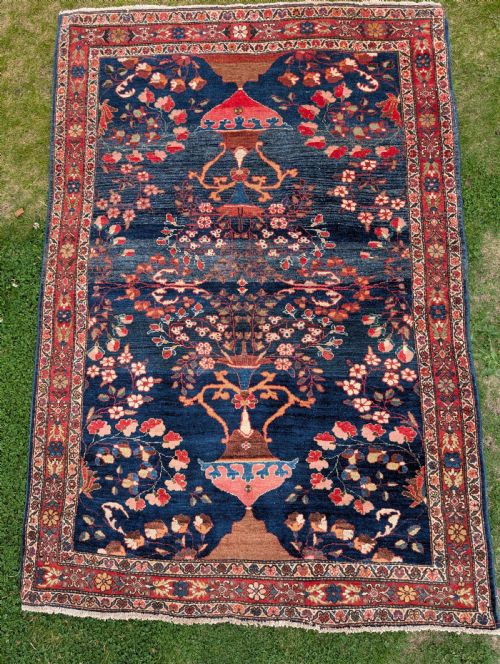
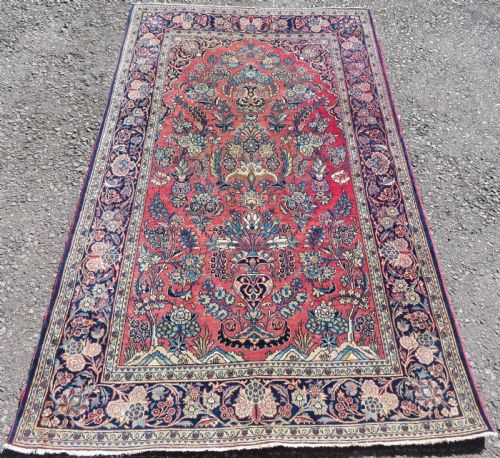
The pieces listed on this page span several decades, featuring works from the 1890s up to the 1940s. Traditional Persian designs dominate the selection, often displaying elaborate floral vases, all-over patterns, or portrait subjects.
How they were made
These carpets are constructed through hand-knotting techniques, utilising durable cotton foundations to support dense pile. Artisans selected fine wool, kork wool, and occasionally silk to execute intricate designs.
Weavers incorporated fine fibres and part-silk blends to achieve detailed pictorial representations and floral vase motifs. The combination of cotton warps with soft wool pile gives these floor coverings their characteristic weight and drape.
The listings span six decades from the 1890s to the 1940s, featuring wool, cotton, and silk materials.
What varies in quality
Quality in these textiles rests upon the fineness of the knotting and the selection of materials. Examples utilising kork wool or pure silk display greater textural depth than standard wool variants.
The sophistication of the design also separates standard items from exceptional ones. Elaborate prayer formats, floral vase layouts, and portrait pictorials require superior weaving skill compared to simpler all-over patterns.
Mohtasham
The Red Kashan Rug Glossary
- Kashan
- A city in central Persia renowned for producing fine knotted rugs and carpets. Weavers there developed distinct floral and vase motifs.
- Kork wool
- High-grade fleece taken from the neck of the sheep, yielding an exceptionally soft and dense pile. This material appears in finer nineteenth-century weaving.
- Prayer rug
- A small textile featuring a mihrab or niche design, traditionally used for personal devotion. These pieces often incorporate floral vase imagery.
- Pictorial rug
- A woven textile depicting figures, portraits, or specific historical likenesses rather than purely geometric or botanical patterns.
- Warp
- The vertical threads stretched on the loom that form the foundational skeleton of the rug. Cotton serves as the primary material for this structure.
Red Kashan Rug: Frequently Asked Questions
How do I date a red kashan rug?
Dating relies upon stylistic details, material composition, and structural characteristics recorded across pieces from the 1890s to the 1940s. Examining the fineness of the hand-knotting and the specific dyestuffs provides further clues to the period of origin.
Consulting the listed year of production helps place the piece within the correct decade. Earlier examples often feature finer kork wool or specific historical portrait subjects.
What is a pictorial red kashan rug?
A pictorial piece depicts human figures, rulers, or specific portraits rather than traditional repeating floral motifs. These specialist items showcase advanced weaving skill to render recognizable likenesses in wool or silk.
Such rugs function as wall hangings or collector pieces due to their narrative subjects. They represent a distinct subset within central Persian weaving traditions.
Where were these rugs made?
These textiles were produced in Kashan, located in north west central Persia. The region established a lasting reputation for sophisticated carpet production.
Master workshops in this city utilised high-quality cotton, wool, and silk materials. Their output supplied both domestic markets and international collectors.
How should I care for a silk or wool kashan rug?
Protect the pile by placing the textile in low-traffic areas or mounting pictorial pieces on walls. Regular gentle vacuuming without a beater bar prevents dust accumulation in the cotton foundation.
Avoid direct exposure to strong sunlight to preserve the rich red ground and dyed details. Professional cleaning by a specialist in antique textiles remains essential.