
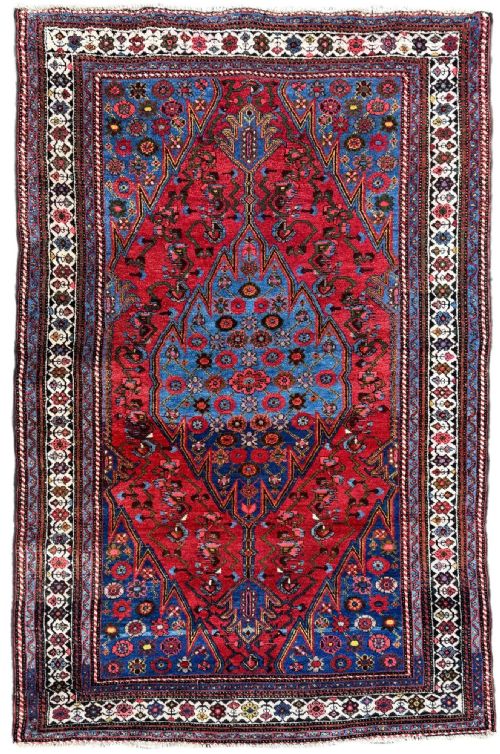
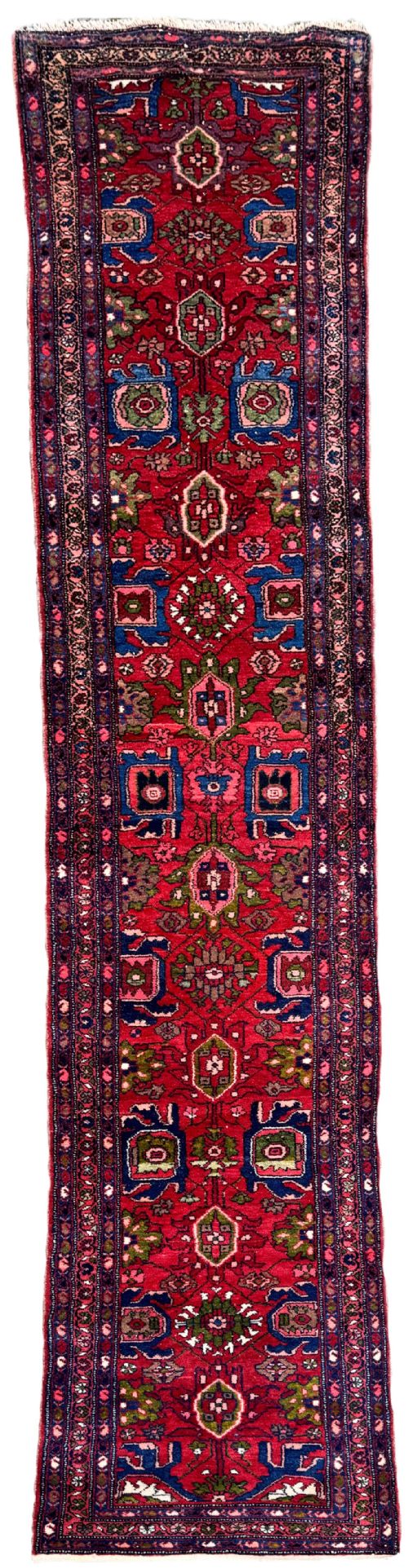
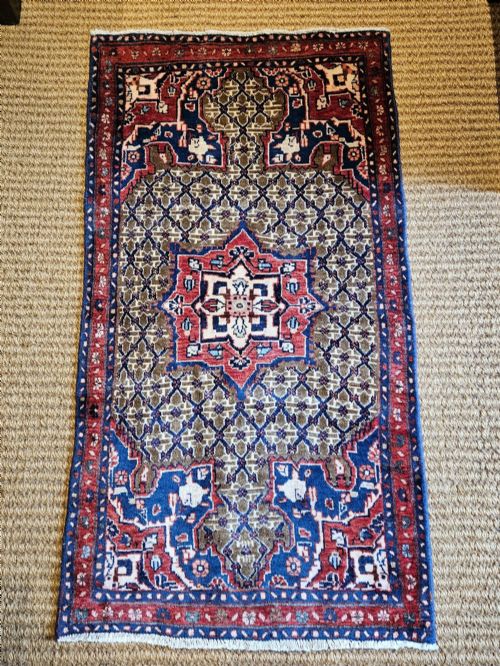
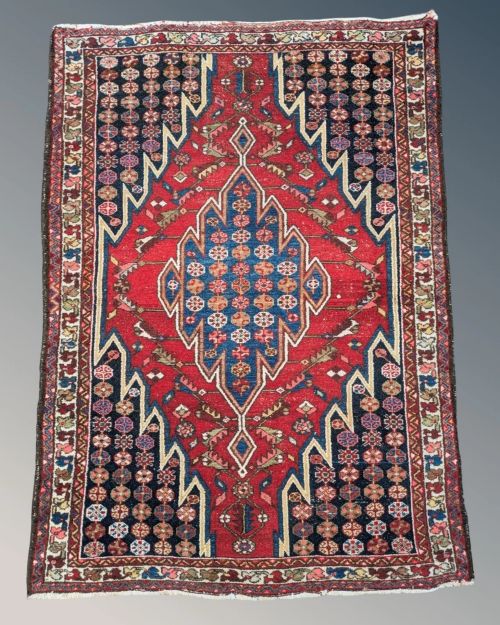
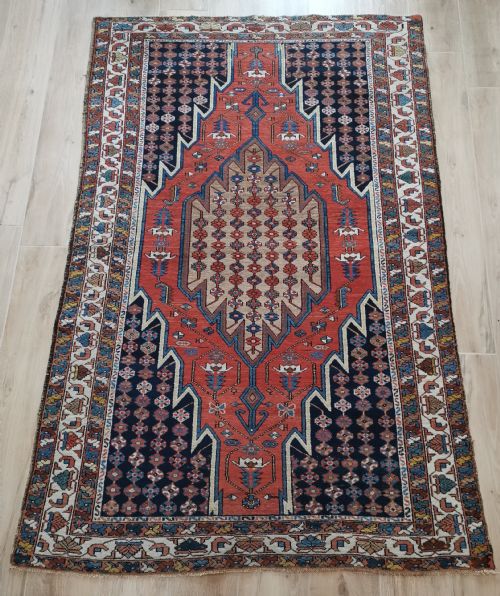
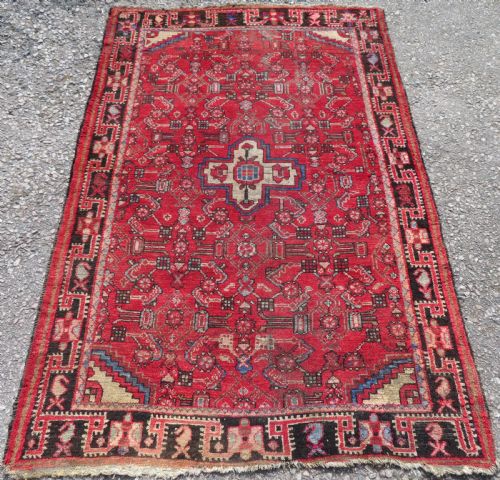
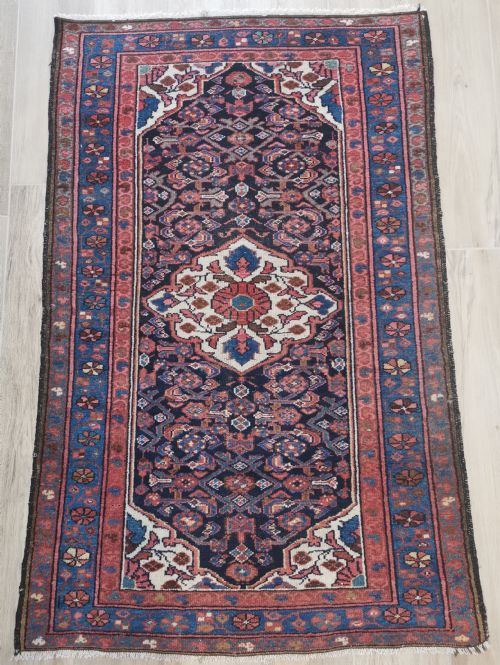
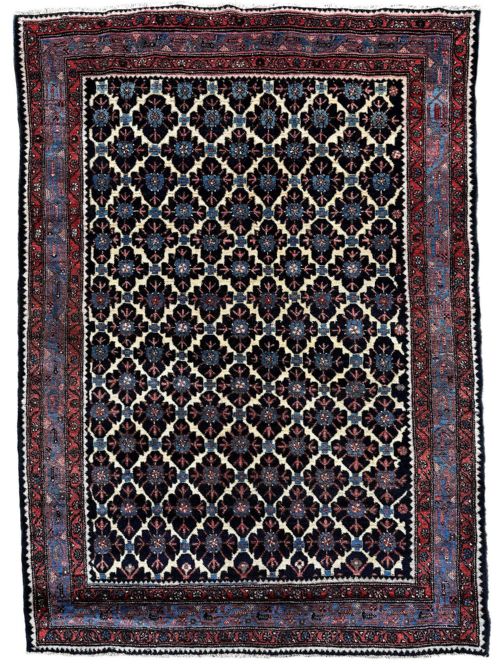
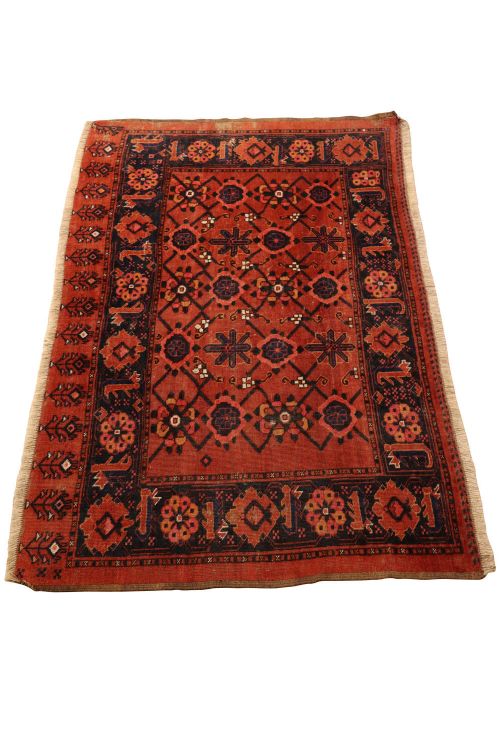


Red Hamadan Rug
A red hamadan rug brings durable village craftsmanship and rich botanical colour directly to floors that need warmth and character.
Red Hamadan Rug
A red hamadan rug originates from the broad weaving region of western Persia, encompassing numerous villages that produce sturdy floor coverings. These pieces include hearth-sized rugs, large carpets, and narrow runners suited for hallways.
The version most commonly met on this page is a hand-knotted village piece dating from the late nineteenth century through to the middle of the twentieth century. They often feature traditional Persian designs, geometric motifs, or floral lattice patterns.
Related village types from the same broad origin, such as Mazlaghan and Malayer pieces, frequently appear alongside standard Hamadan productions. Buyers find both room-sized formats and long runners designed for heavy domestic traffic.
What varies in quality
Knot density and the precision of the village design separate the finer examples from simpler utilitarian pieces. A tighter knotting allows for sharper definition in the geometric or floral patterns.
The condition of the wool pile and the integrity of the original cotton foundation dictate the overall durability of the textile. Pieces with heavier, well-preserved wool retain their structure better under daily foot traffic.
Some runners measure over ten metres long, suggesting they once lined exceptionally grand nineteenth-century corridors.
The Red Hamadan Rug Glossary
- Hamadan
- A major trading hub and weaving region in west Persia where numerous surrounding villages bring their rugs to market. This term covers a diverse range of styles sharing common regional materials.
- Runner
- A long, narrow carpet format specifically woven for corridors, hallways, and staircases. These pieces typically measure significantly more in length than in width.
- Kelleh
- A large-sized rectangular carpet format, traditionally proportioned narrower than a standard room carpet but wider than a runner. These large pieces serve open floor spaces.
- Mazlaghan
- A specific village sub-type from the Hamadan region known for distinctive geometric medallion layouts and contrasting dark fields. These pieces share technical traits with standard regional weaving.
Red Hamadan Rug: Frequently Asked Questions
How do I care for a wool runner?
Regular gentle vacuuming without a rotating brush roll keeps the wool pile free from embedded dirt. Professional cleaning by a specialist in antique textiles preserves the natural fibres.
Positioning the runner away from direct, harsh sunlight prevents the red dyes from fading prematurely over time.
Are these pieces suitable for hallways?
The narrow runner formats are specifically designed for corridors, hallways, and transitional spaces. Their sturdy wool construction handles regular foot traffic effectively.
Using an appropriate underlay helps keep the rug stable on hard flooring and reduces wear on the cotton foundation.
How do I date an antique rug?
Dating relies on stylistic indicators, dye characteristics, and structural evidence within the weave. Pieces from the nineteenth century often display distinct natural colour palettes and softer wool handling.
Twentieth-century examples frequently show shifts in design execution and yarn preparation typical of later village production.