



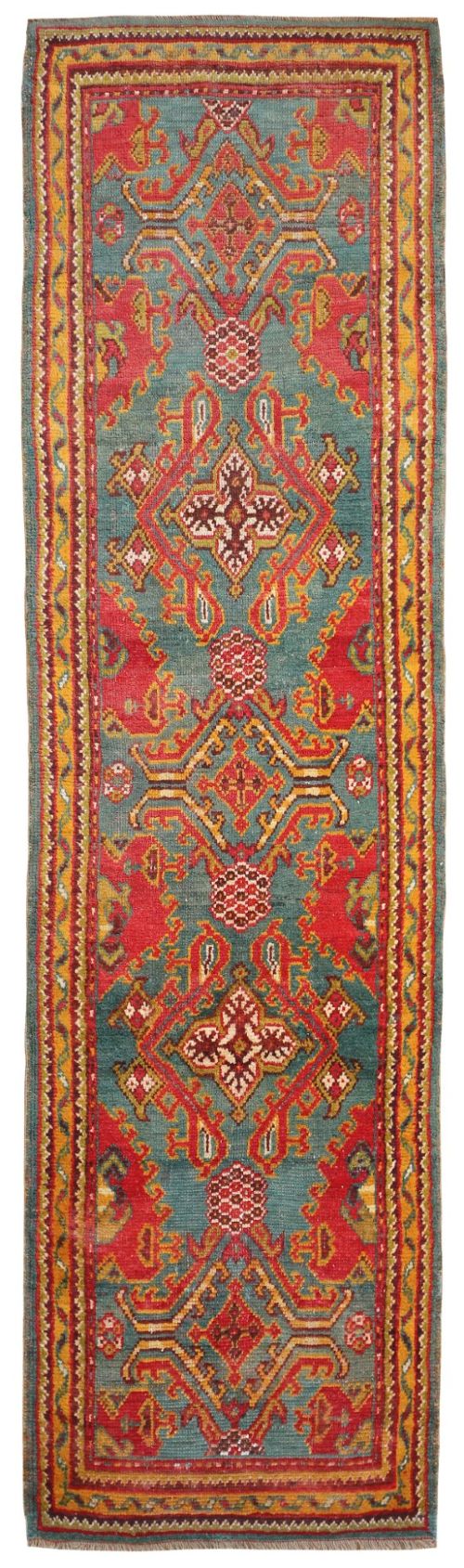
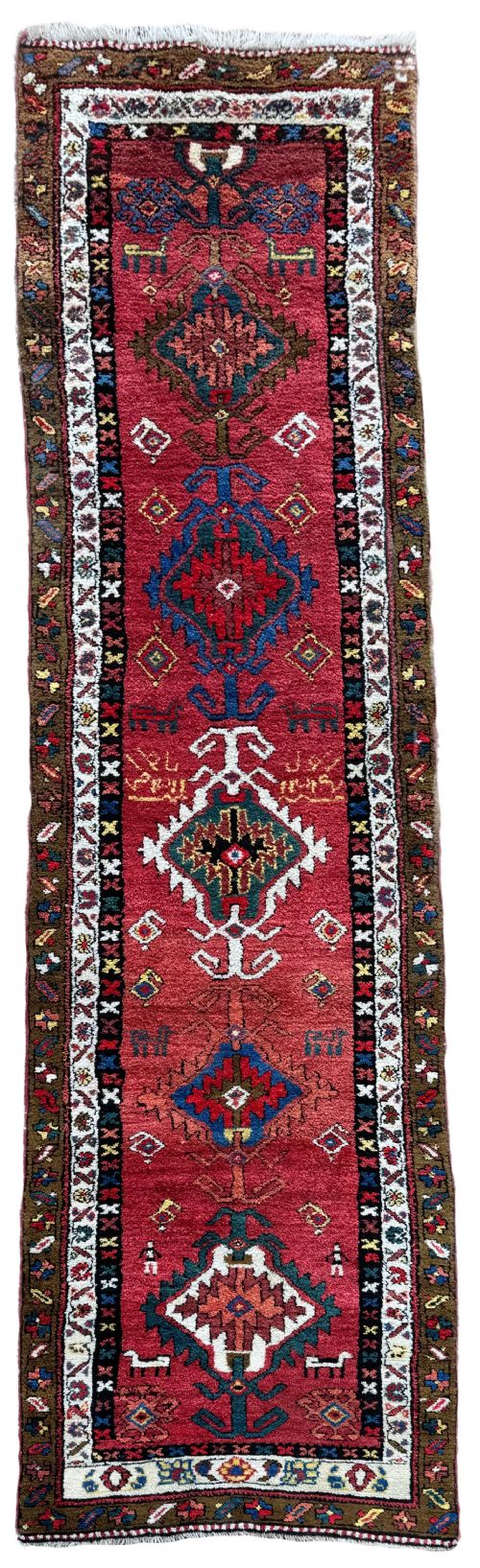
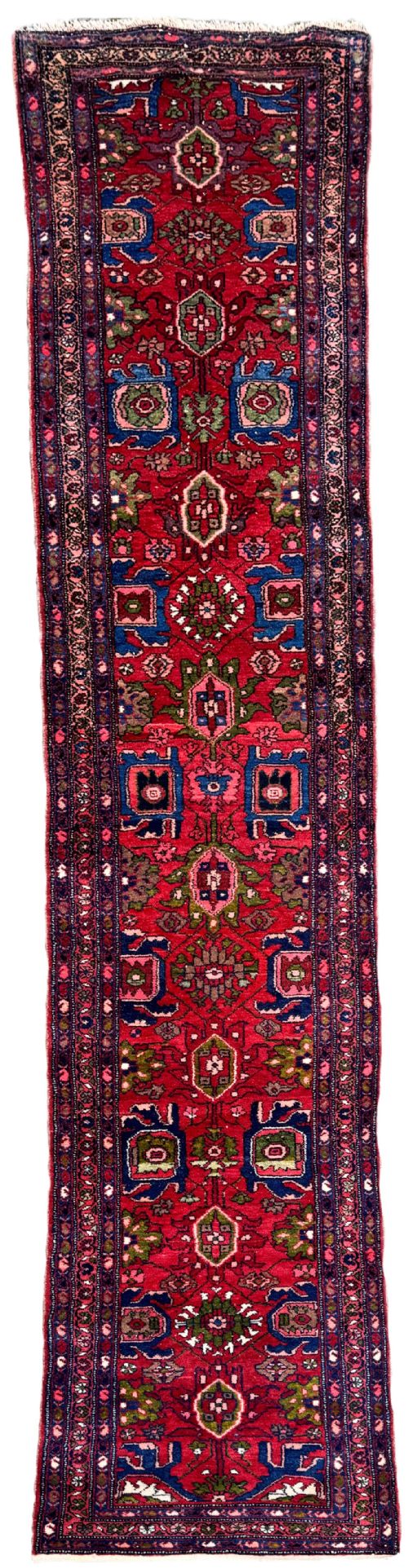
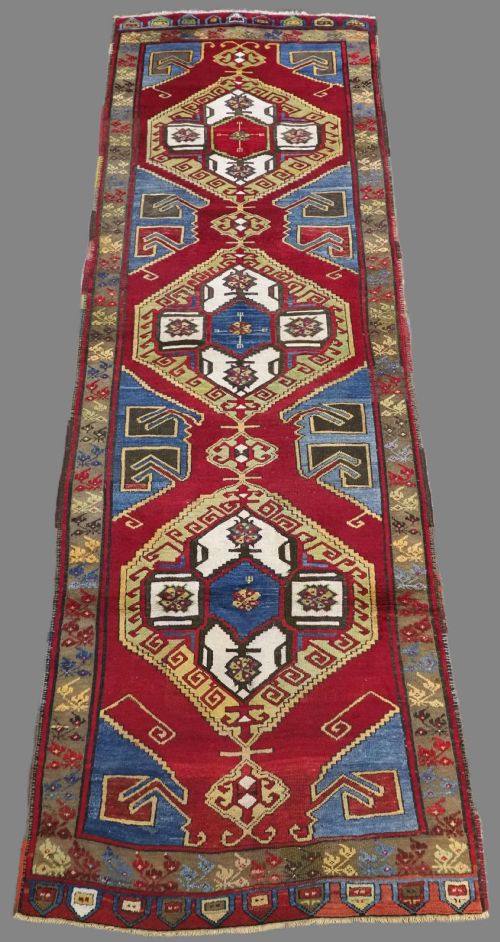

Red Hallway Runner
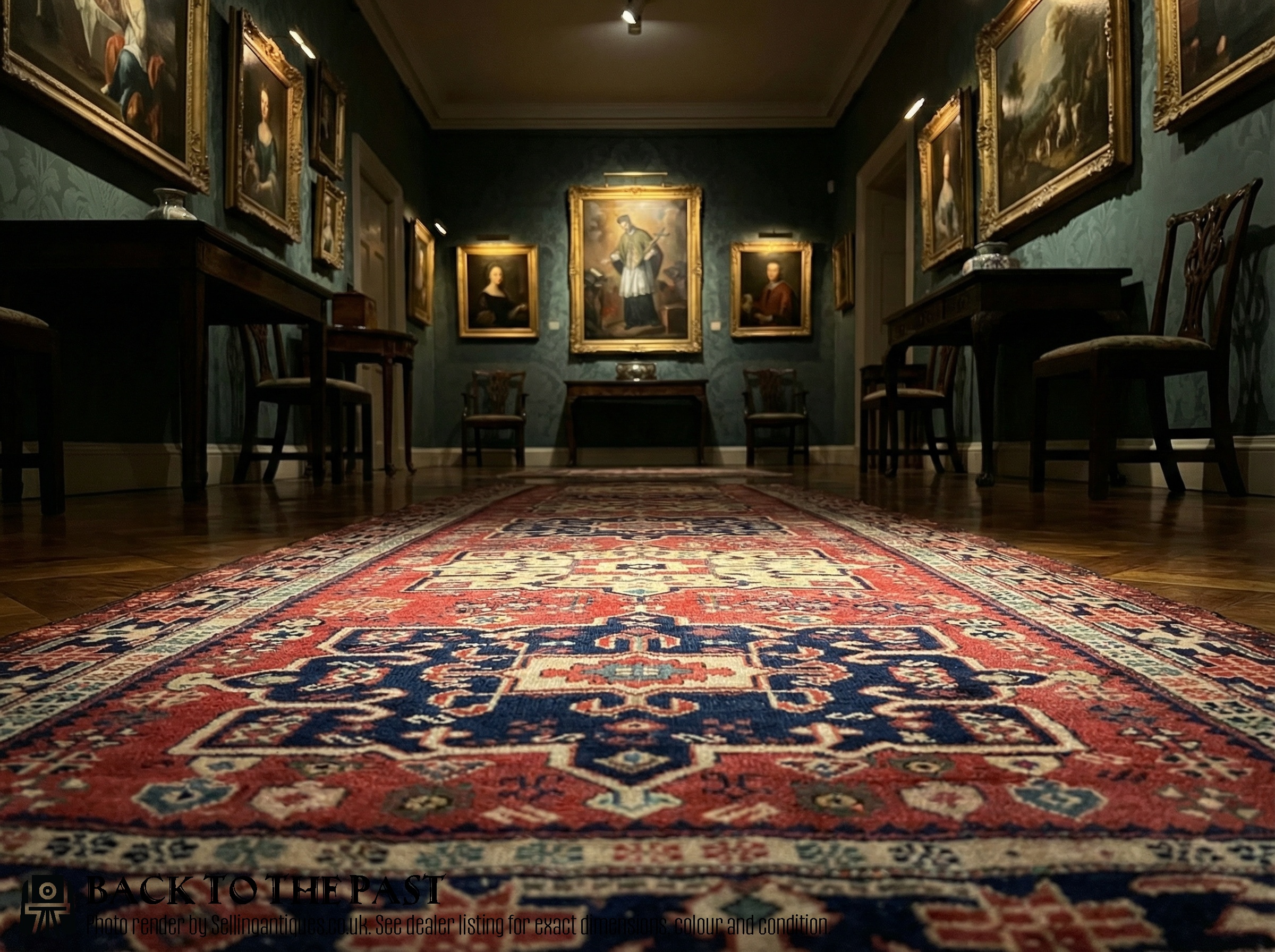
A red hallway runner brings warmth and historical depth to a corridor, offering durable floor coverage woven with traditional tribal and regional designs.
Red Hallway Runner
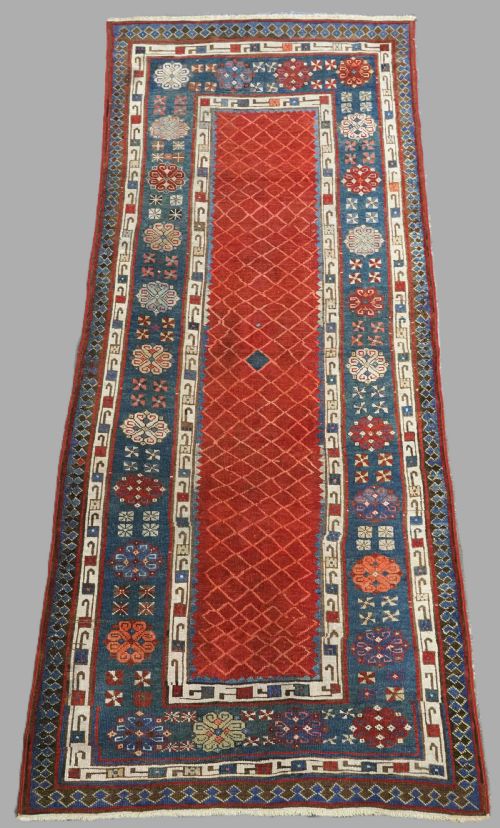
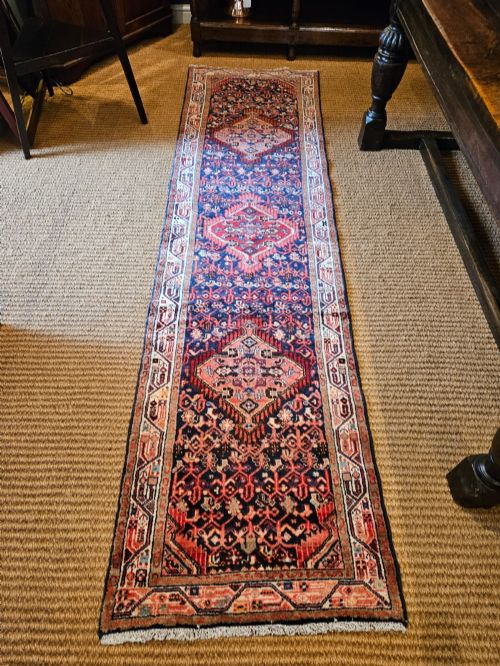
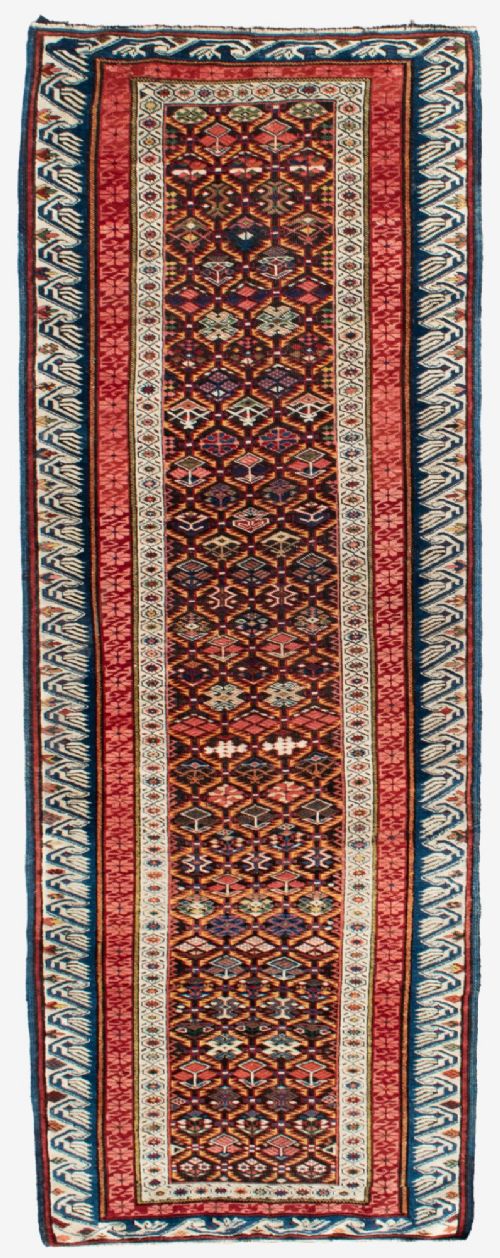
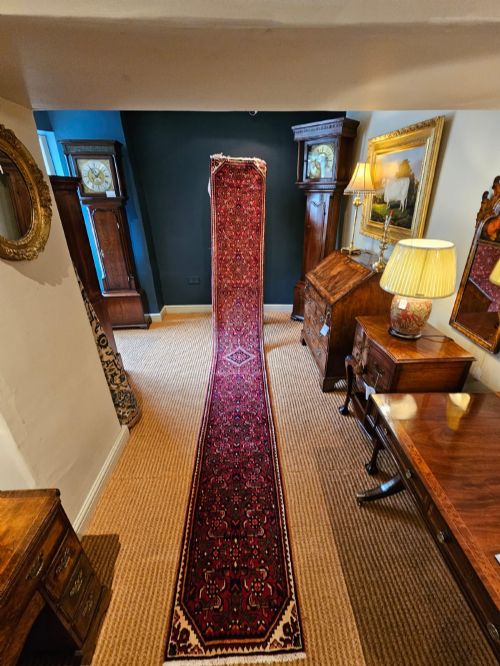
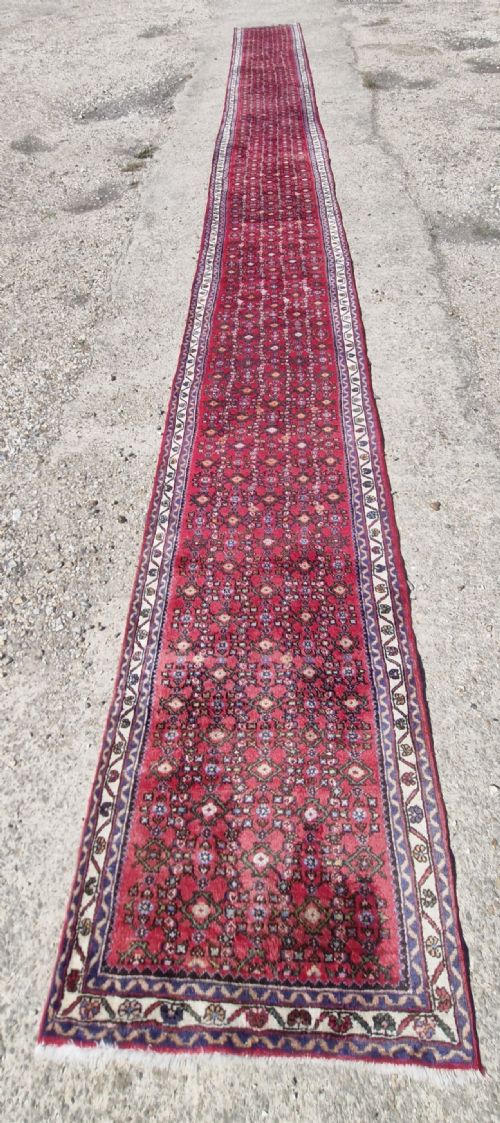
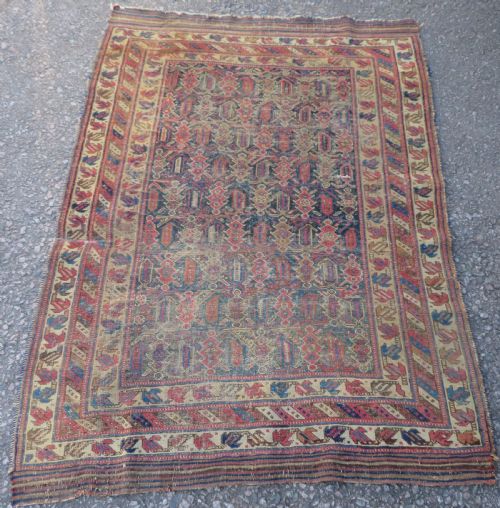
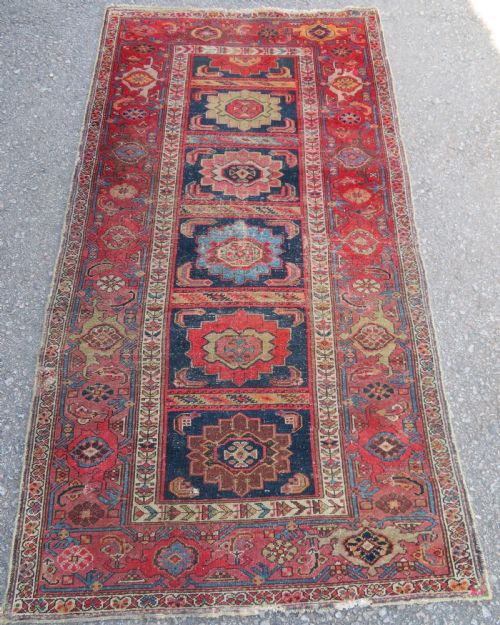
A red hallway runner is a long, narrow floor covering designed for corridors, landings and extended spaces in the home. When looking for a red hallway runner, buyers encounter antique Persian, Caucasian, Anatolian and Turkish examples dating from the nineteenth century up to the 1920s.
The selections include regional classifications such as Heriz, Hamadan, Kurdish, Shirvan and Ushak pieces. These textiles served domestic functions in nomadic, village and workshop settings, woven to withstand heavy foot traffic while providing insulation.
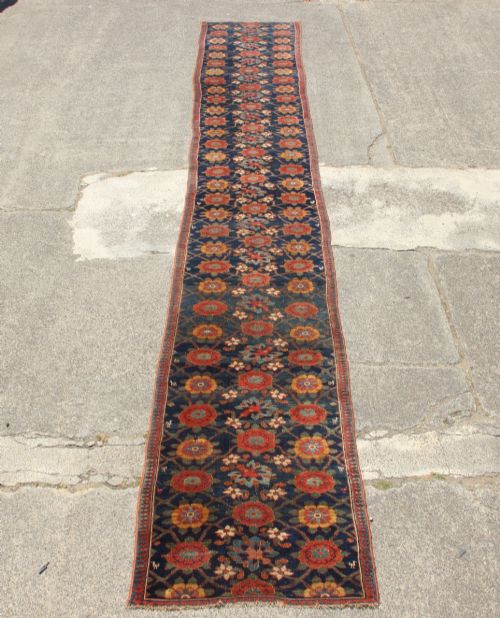
Most examples rely on deep madder-red grounds paired with contrasting geometric or floral motifs. The format ranges from compact village pieces to extensive thirty-foot gallery carpets.
How they were made
These runners are constructed primarily from wool and hand-spun wool, often paired with cotton foundations depending on the weaving origin. Natural dyes, particularly rich madder reds, provide the dominant palette across Persian and Caucasian workshops.
Weavers knotted the pile by hand onto warp and weft threads, utilising traditional village and tribal techniques passed down through generations. The resulting density and pile height determine how the rug handles wear over decades of use.
Some antique runners stretch past thirty feet long, proving that nineteenth-century houses possessed remarkably grand corridors.
What varies in quality
Quality in these runners rests on the precision of the weave, the handling of the wool and the depth of the dyestuffs. Finer knot density allows for sharper definition in intricate lattice and medallion designs.
The integrity of the foundation and the evenly balanced wear of the wool pile distinguish exceptional survival states from heavily compromised examples.
The Red Hallway Runner Glossary
- Madder
- A natural red dye derived from the root of the Rubia tinctorum plant. It yields the deep, enduring crimson tones seen across traditional runner rugs.
- Pile
- The upright yarn loops that form the soft surface of a carpet. Hand-knotted pile provides both cushioning and resilience in high-traffic corridors.
- Warp
- The stationary lengthwise threads stretched on a loom. They form the structural skeleton that supports the knots and weft.
- Weft
- The horizontal threads passed alternately over and under the warp threads. They bind the rows of knots firmly together.
- Medallion
- A central ornamental motif set in the middle of the field. It anchors the geometric or floral composition of the rug.
Red Hallway Runner: Frequently Asked Questions
How do I clean an antique runner?
Gentle surface brushing and professional specialist cleaning suited for antique wool textiles maintain the pile safely.
Avoid immersion washing or harsh chemical detergents that strip natural lanolin from the fibres.
Are these rugs suitable for heavy traffic?
Traditional village and tribal runners were constructed precisely for domestic transit and heavy use.
Using a quality underlay prevents slipping and cushions the wool against hard flooring.
How do I identify a Heriz runner?
Heriz pieces typically display bold geometric medallions, robust corner spandrels and heavy-gauge wool.
Their substantial structure reflects the mountainous production region in North-West Persia.
What causes distress in old runners?
Centuries of foot friction, moth activity and previous damp storage gradually wear down the wool pile and side cord bindings.
Uneven fading often results from exposure to direct sunlight in long hallways.