



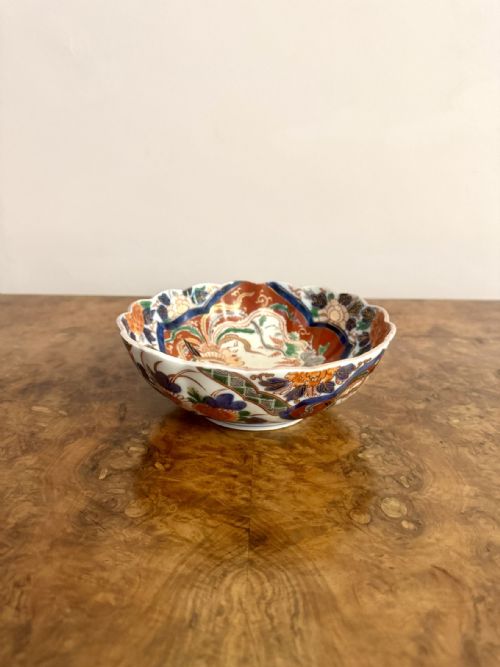

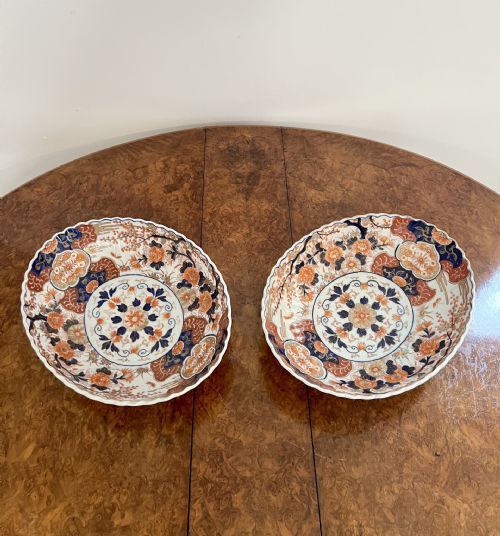


Red Floral Porcelain Bowl
These red floral porcelain bowl pieces unite decorative utility and export tradition, offering rich palettes and scalloped profiles.
Red Floral Porcelain Bowl
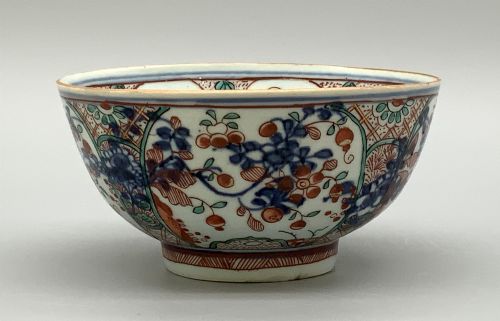
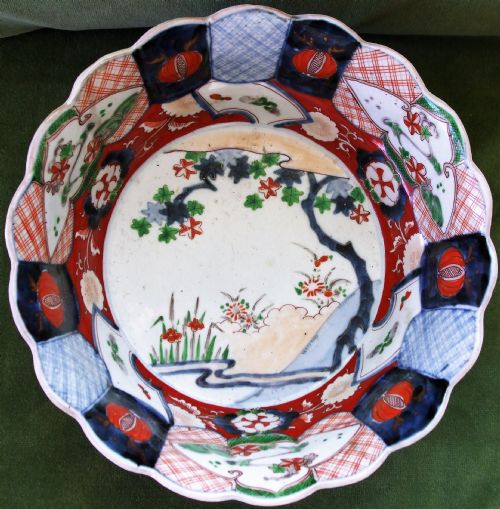
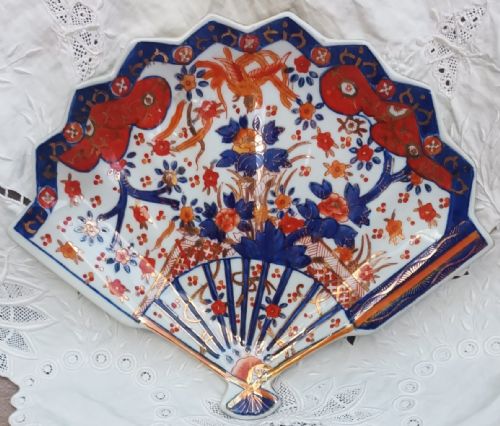
A red floral porcelain bowl brings together centuries of export pottery traditions from Japan and China, alongside select European porcelain houses. Buyers seeking this phrase primarily encounter Japanese Imari wares featuring distinct iron-red pigments alongside cobalt blue and gilt details.
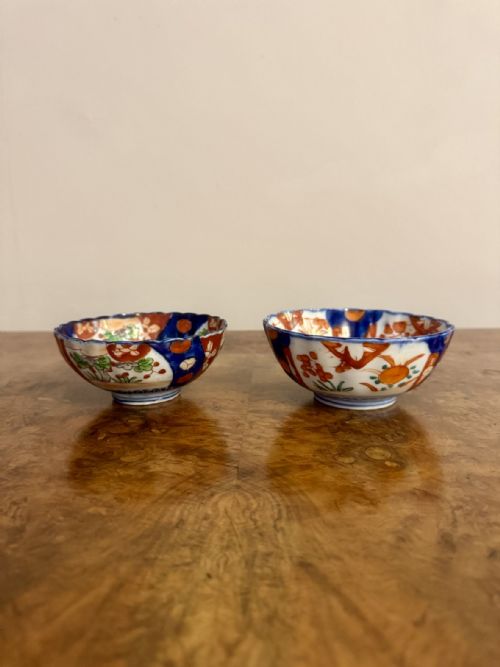
The inventory on this page spans forms from large scalloped display vessels and deep jardinieres down to miniature bowls and broth cups. Pieces range across the eighteenth, nineteenth and early twentieth centuries, reflecting diverse domestic and export markets.
Materials and construction methods
Potters built these vessels using fine ceramic porcelain clay, shaped by hand or wheel before applying underglaze blue and overglaze enamel colours. Artisans then added gold leaf, gilding or gilt highlights to accentuate the floral motifs and geometric borders.
Kiln firing fixed the ceramic body and base glazes before secondary lower-temperature firings set the delicate red enamel and gold leaf decorations. Workshops in regions such as Arita employed specialised hand painting techniques to achieve the characteristic fluted and scalloped edges.
Listings span centuries from seventeen hundred through the Victorian era up to nineteen-ten, covering Chinese, Japanese, and European porcelain.
Judging quality in export porcelain
Excellence in these ceramics rests on the precision of the hand-painted brushwork and the preservation of the applied gold leaf and iron-red enamel. Superior examples display crisp definition across intricate floral panels without the blurring or pigment run seen in simpler trade wares.
The sophistication of the porcelain body, the regularity of the scalloped or fluted moulding, and the clarity of kiln glazing distinguish standard production items from exceptional workshop output.
The Red Floral Porcelain Bowl Glossary
- Imari
- A style of Japanese export porcelain originating from Arita, typically decorated in underglaze blue, iron-red enamel and gold. The palette creates a dense, colourful surface suited for display.
- Meiji Period
- The era of Japanese history lasting from 1868 to 1912, known for significant export of decorative arts to Western markets. Pieces from this time often exhibit highly intricate hand-painted floral details.
- Kangxi Period
- A period of Chinese imperial rule from 1662 to 1722 associated with fine porcelain production. Vessels from this era demonstrate exceptional ceramic refinement and glaze quality.
- Scallop Edge
- A decorative rim shaped into curved segments resembling a seashell. This moulding technique appears frequently on nineteenth-century Japanese plates and bowls.
- Jardiniere
- A large ornamental pot designed to hold plants or flowers. These robust ceramic vessels often utilise the same floral enamel palettes as smaller table bowls.
Red Floral Porcelain Bowl: Frequently Asked Questions
How do I date an Imari bowl?
Dating relies on stylistic shifts, potting weights, and the vibrancy of the iron-red and gilt pigments applied over the glaze. Earlier pieces from the seventeenth and eighteenth centuries often display heavier potting and deeper cobalt tones.
Later nineteenth and early twentieth-century examples tend toward brighter synthetic enamel colours and more standardised scalloped moulding.
What is the difference between Imari and Kutani ware?
Imari porcelain relies on a tripartite colour scheme combining underglaze blue, iron-red enamel and gold leaf on a crisp white ceramic body. The designs frequently incorporate dense floral and brocade patterns.
Kutani ware, by contrast, often utilises a broader palette dominated by rich green, purple and yellow enamels alongside detailed pictorial or floral brushwork.
Can I use these antique bowls for serving food?
Most antique porcelain bowls function best as decorative display items rather than daily tableware due to age, delicate overglaze enamels, and potential wear to the gold leaf. Hand washing in lukewarm water without harsh detergents helps preserve the painted surface.
Thermal shock from hot liquids or modern dishwashers can damage fragile nineteenth-century ceramic bodies and historic glazes.
Why do some bowls have scalloped edges?
Potters shaped rims into lobes or scallops to echo natural forms like flowers and seashells, enhancing the visual appeal of decorative display dishes. This technique required skilled hand moulding while the porcelain clay remained soft before firing.
Scalloped profiles also allowed artisans to divide surface patterns into distinct panels of floral ornament.