






Red Flashed Glass
Red flashed glass offers a vibrant depth of colour, bringing striking ruby and cranberry tones to nineteenth-century decanters, vases, and chandelier components.
Red Flashed Glass
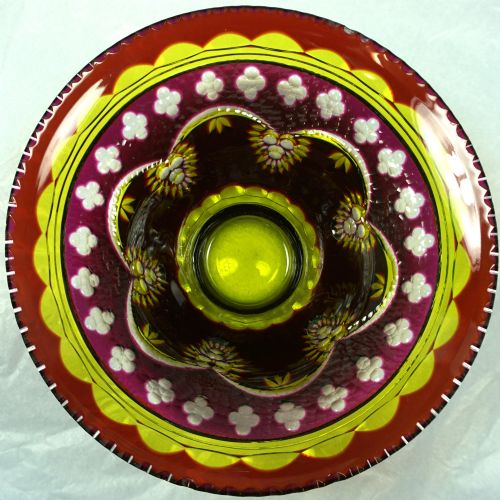
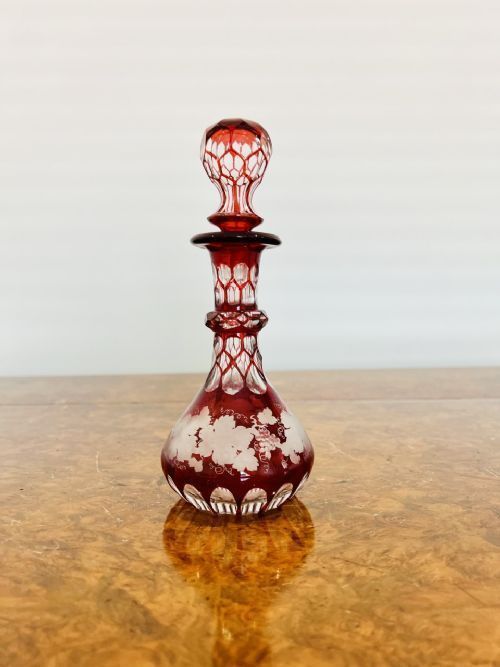
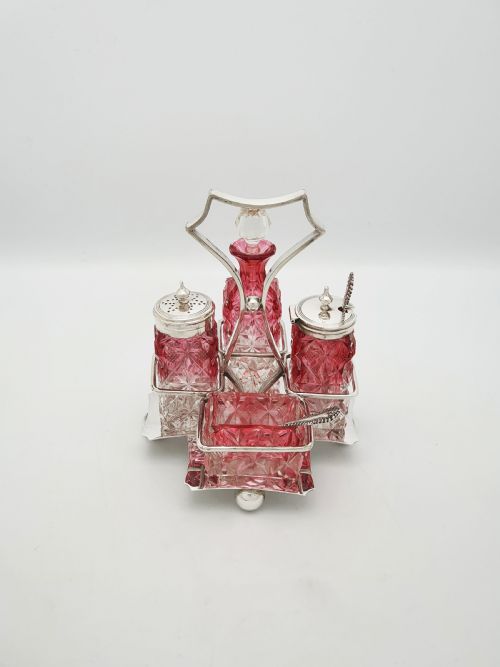
Red flashed glass pieces on this page span the eighteenth, nineteenth, and early twentieth centuries, encompassing Victorian and Edwardian periods. Collectors encounter various forms, ranging from scent bottles and beakers to cruet sets and large chandelier components.
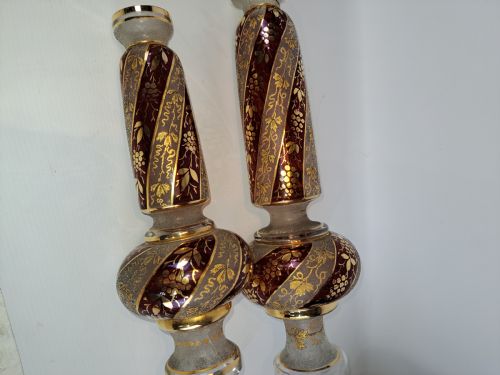
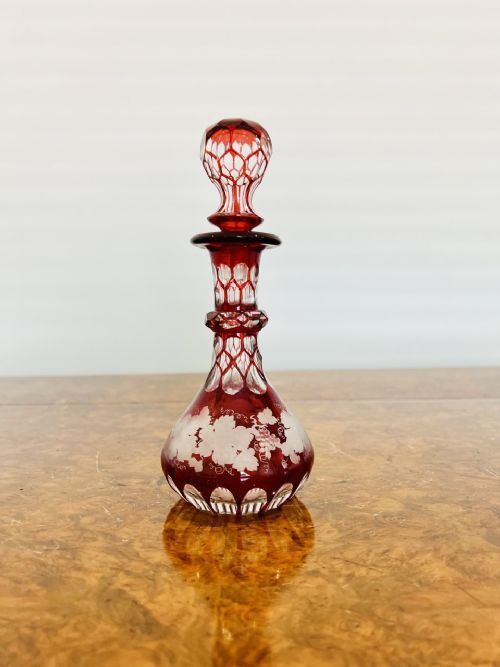
The selection includes distinct regional origins, most notably Bohemian and English craftsmanship. Bohemian examples frequently display intricate gilding, etching, and frosted finishes, while English pieces often feature detailed bird and vine engravings.
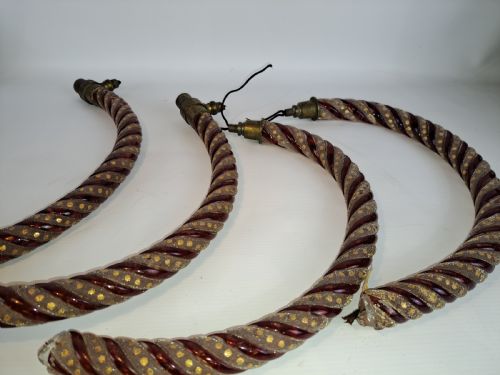
Functional tableware sits alongside decorative objects like lustres and ganging bells. Decanters and tumblers represent the practical domestic glassware of the period, while chandelier stems and arms highlight architectural lighting applications.
Production methods and materials
Maker's applied a thin layer of ruby or cranberry glass over clear or frosted crystal before cooling. Artisans then cut, etched, or engraved through the coloured surface to reveal the transparent glass underneath.
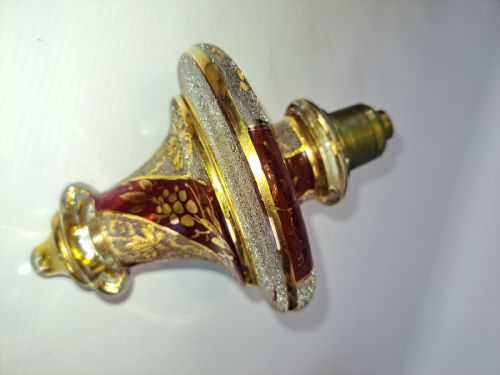
Gold leaf and enamel details were frequently added to enrich the surface decoration. Brass fittings appear on functional items such as cruet sets, combining mixed media within single pieces.
Red Flashed Glass Retail Price Guide 2026
Typical asking prices for red flashed glass among the pieces listed under this phrase on Sellingantiques today, from the lower quarter to the upper quarter. They describe what is for sale here now, not the wider market.
Listings feature items from the eighteenth, nineteenth, and early twentieth centuries, including Victorian and Edwardian periods.
Distinguishing quality across the range
Depth and consistency of the ruby overlay distinguish finer items from simpler production. Superior pieces display precise control during the cutting and flashing process, ensuring clean boundaries between the red layer and clear glass.
The finesse of surface ornament separates standard glassware from exceptional examples. Skilled engraving, crisp etching, and well-preserved gilding elevate decorative vases, decanters, and champagne coupes.
The Red Flashed Glass Glossary
- Flashing
- A thin layer of coloured glass applied over a colourless body before blowing and shaping. This technique creates vibrant surface hues while keeping the underlying structure transparent.
- Overlay
- A thicker layer of coloured glass cased over clear crystal, allowing deeper cuts to expose the base material. It differs from flashing by possessing greater physical depth.
- Lustre
- A mantle or vase hung with cut glass prisms designed to reflect candlelight. These decorative ornaments were popular in nineteenth-century interiors.
- Cruet set
- A matched collection of bottles for holding condiments and spirits, often housed in a silver plate frame. They formed part of formal dining arrangements during the Edwardian era.
Red Flashed Glass: Frequently Asked Questions
What is red flashed glass?
Red flashed glass is created by fusing a thin skin of coloured glass over a clear crystal base. Artisans then cut or etch through the red layer to reveal the transparent glass underneath.
This method produced rich ruby and cranberry tones without requiring the entire object to be made from expensive solid coloured glass. It became popular for nineteenth-century decanters, vases, and tableware.
How do I care for these items?
These delicate glass pieces require gentle hand washing in lukewarm water using mild detergent. Avoid abrasive sponges or harsh chemicals that can damage surface gilding and engraving.
Items with gold leaf or delicate etched patterns should be dried carefully with a soft cloth. Keep them away from extreme temperature changes to protect the historic material.
Were these items used daily?
Many decanters, tumblers, and cruet sets served practical functions on nineteenth-century dining tables. Spirit bottles and glassware were standard accessories for hosting guests.
Other items like lustres and chandelier components served decorative and architectural roles in period homes. Their survival reflects both daily utility and careful preservation.