


Red Dress Lady Portrait
A red dress lady portrait brings centuries of oil paint, canvas and giltwood frame into a room.
Red Dress Lady Portrait
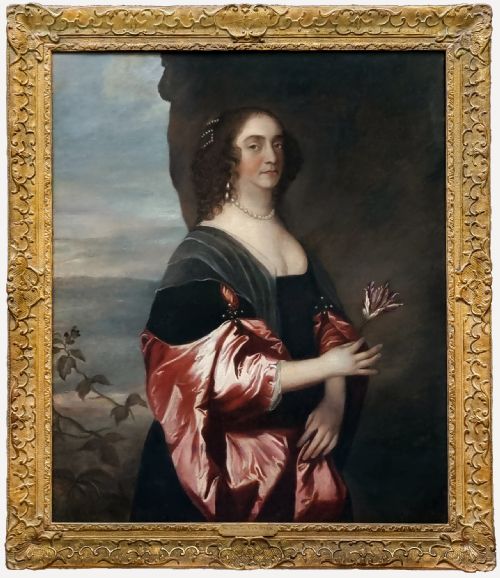
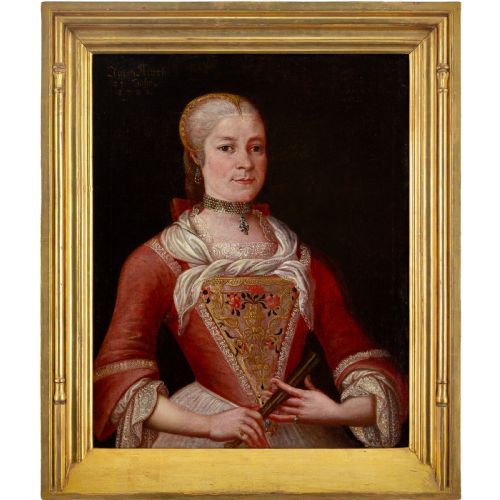
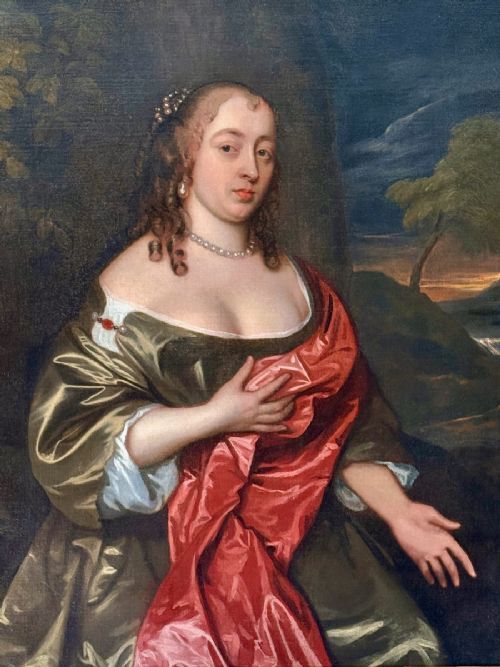
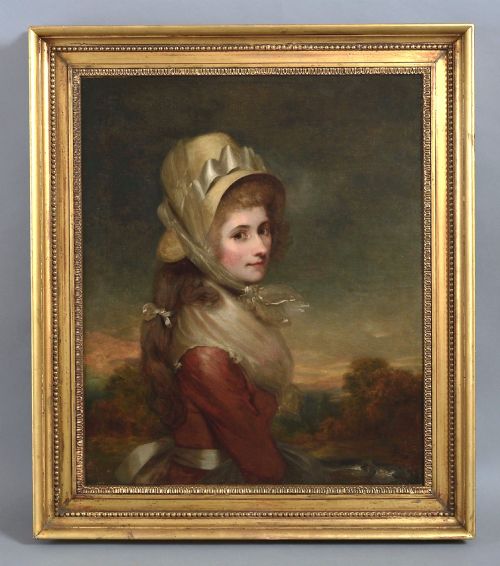
A red dress lady portrait depicts female sitters draped in crimson garments, scarlet mantles, or ruby silks, captured in oils or watercolours on canvas, panel, or paper. These works span the seventeenth, eighteenth, and nineteenth centuries, alongside specific pieces from nineteen-forty and seventeen-hundred.
Buyers frequently encounter seventeenth-century Dutch and English examples involving circles of prominent portraitists, as well as eighteenth-century Bavarian school pieces and nineteenth-century realists. These paintings often place the sitter within a landscape or beside domestic details like birds, curtains, or spaniels.
The assortment includes works attributed to named artists alongside anonymous regional studies from Georgian, Victorian, Baroque, and Regency periods. Framing typically consists of period gesso and giltwood settings that complement the rich pigments of the sitter's attire.
Materials and technique
Painters used oil paint on stretched canvas or wooden panels, building up layers to render fabrics such as silk, satin, and velvet. Watercolour and gouache on paper appear in specific works, often supported by pencil work for fine detail.
Frames rely on wood, gesso, and giltwood construction, providing heavy ornamentation that matches the period of the painting. Canvases occasionally show historical restorations or attachment to supporting boards.
Listings feature oil paintings, watercolours, and pencil works set within original giltwood frames.
Quality differences
Quality rests in the handling of fabric folds, facial expression, and anatomical proportion by the painter. Superior works capture light glinting on satin and the depth of red pigments through skilled glazing.
The integrity of the canvas, panel, and original gesso frame contributes significantly to the standing of a piece. Finer examples retain their original support without extensive overpainting or later alterations.
John Hayls·Sir Martin Archer Shee·Pierre Mignard·Sir Peter Lely·Michael Dahl·Philip Naviasky·Pieter Nason·William Owen·George Perfect Harding·Fra Galgario·John Vanderbank·William Wissing·Sir Godfrey Kneller·Jonathan Richardson·Louis Joseph Pottin
The Red Dress Lady Portrait Glossary
- Oil on canvas
- Pigments bound in a drying oil applied to a woven fabric support. This combination allowed artists to achieve rich colour saturation and subtle tonal shifts.
- Giltwood frame
- A wooden structure covered in a thin layer of gold leaf over gesso. These frames define the visual boundary of historical portraits.
- Gesso
- A plaster mixture applied to wood frames or panels to create a smooth surface for gilding or painting. It provides the foundation for ornate moulded details.
- Circle of
- An attribution indicating an artist worked closely alongside a master, absorbing their style and technique without being the master himself.
- Baroque
- An artistic style spanning the seventeenth and early eighteenth centuries characterised by drama, rich detail, and deep chiaroscuro.
Red Dress Lady Portrait: Frequently Asked Questions
What periods do these portraits cover?
The works span from the seventeenth century through the Georgian and Victorian eras up to nineteen-forty.
Most pieces cluster in the seventeenth and eighteenth centuries, reflecting popular portraiture traditions.
How were these paintings constructed?
Artists painted with oils on canvas or wood panels, occasionally using watercolour and gouache on paper.
Frames are typically made of wood finished with gesso and gilt leaf.
How do I identify the sitter?
Sitters are sometimes identified by inscriptions on the canvas, archival records, or accompanying provenance details.
Many portraits remain anonymous representations of aristocratic or society figures from their respective eras.
Where should I hang an oil portrait?
These works suit traditional reception rooms or studies where lighting can be controlled to protect the pigments.
Keep them away from direct sunlight and excessive moisture to preserve the canvas and giltwood frame.