




Red Damask Upholstered Chairs
Red damask upholstered chairs bring rich pattern and colour into a room through historical seating forms ranging from Georgian armchairs to Victorian dining sets.
Red Damask Upholstered Chairs
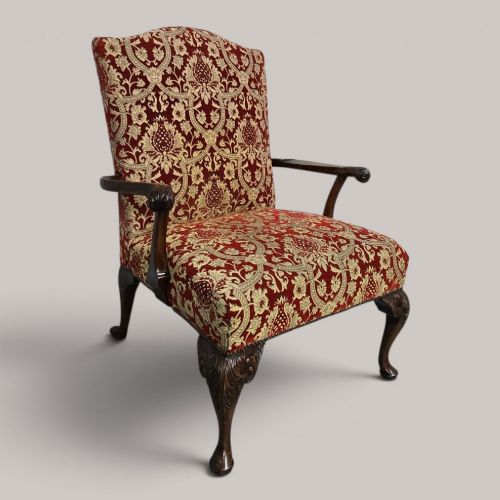
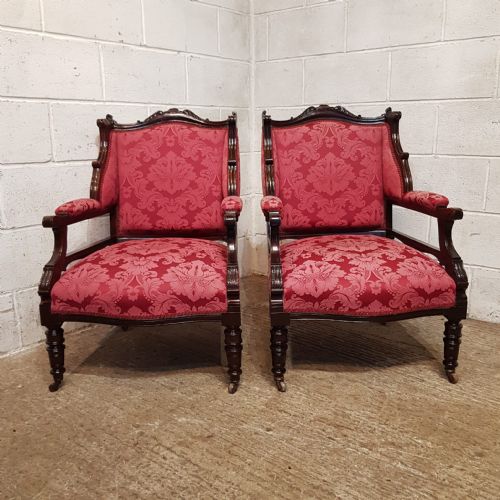
Red damask upholstered chairs span multiple centuries of design, encompassing formal dining sets, library armchairs, and country house seating. Buyers encountering this search phrase will find diverse timber frames, including mahogany, walnut, and oak, paired with patterned textile upholstery.
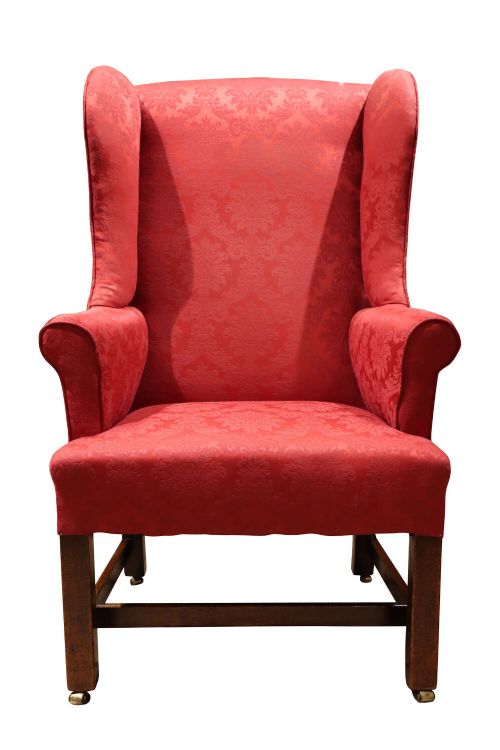
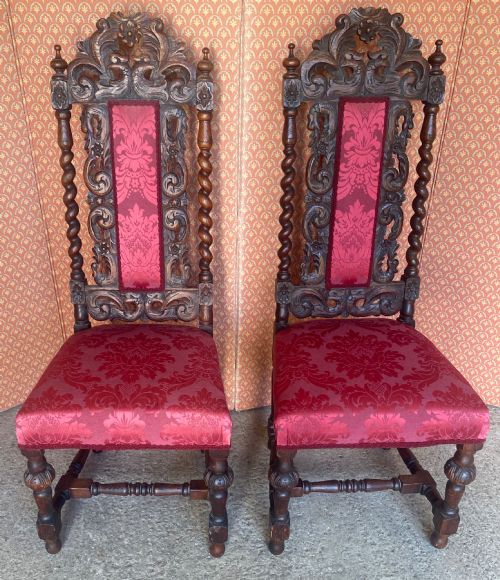
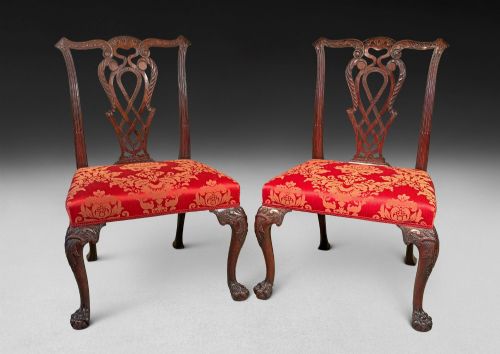
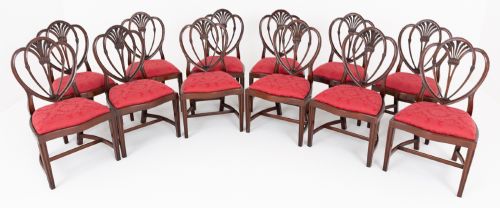
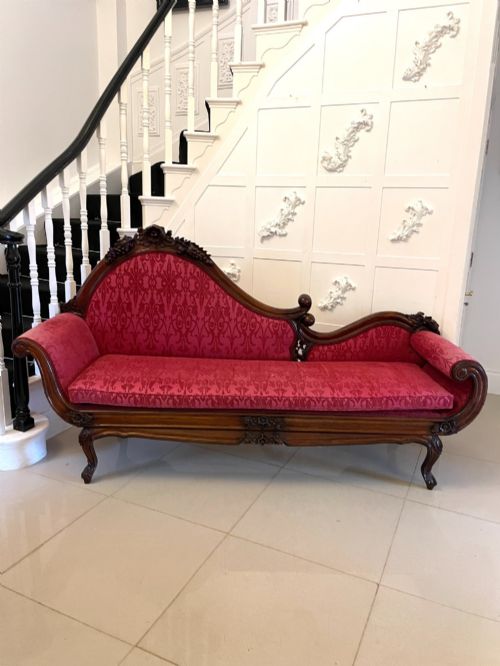
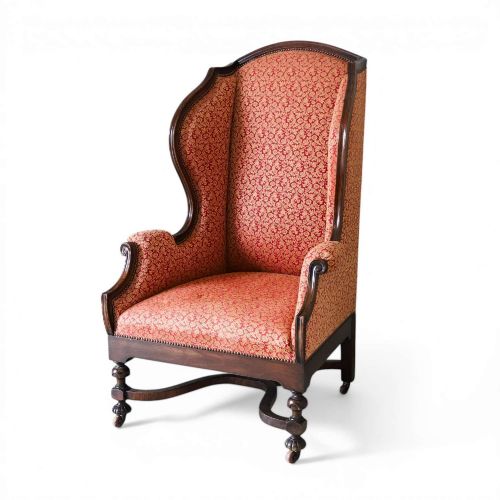
The selection ranges from eighteenth-century George III wing armchairs and Chippendale style seating to nineteenth-century Victorian and Edwardian examples. Dining chairs often appear in sets, whilst armchairs and chaise longues survive as singular statements or pairs.
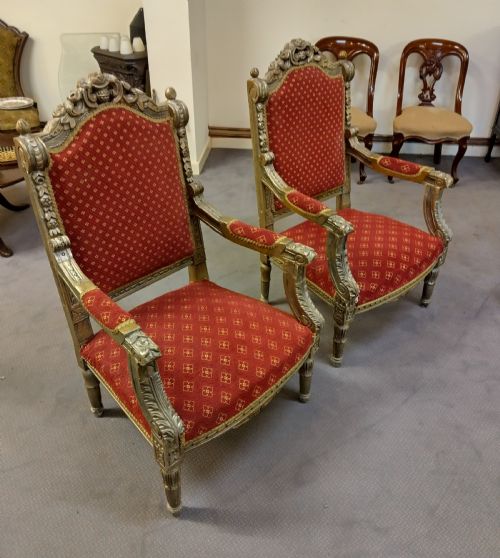
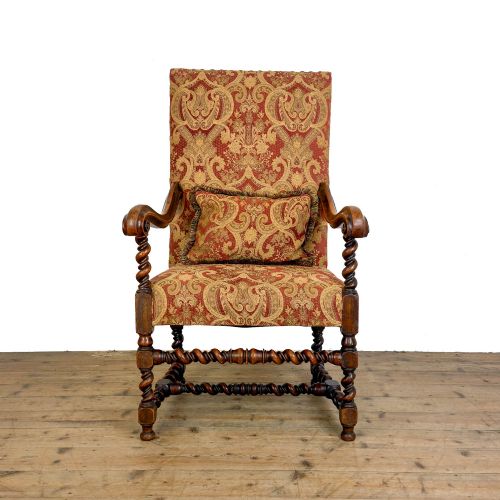
Revival styles heavily influence the available pieces, drawing upon Queen Anne, Jacobean, Carolean, and French Baroque traditions. These historical revivals demonstrate how later makers reinterpreted earlier forms using sturdy timber frames and patterned fabric covers.
Materials and construction
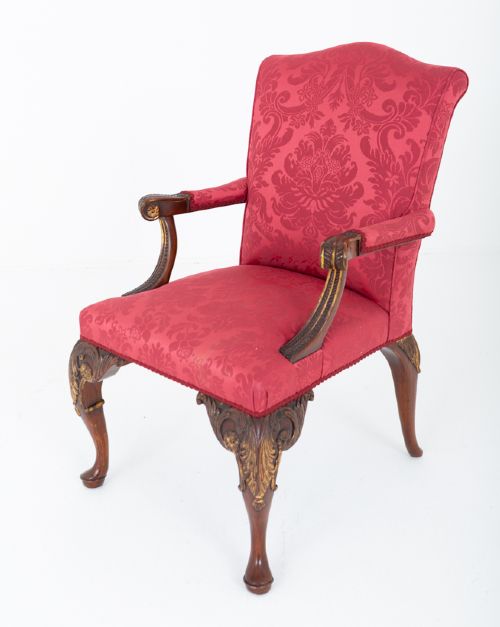
Makers utilised dense hardwoods such as mahogany, walnut, and oak to construct durable frames capable of supporting internal padding and textile covers. Timber components often received detailed hand carving, particularly along the crest rails, cabriole legs, and arm supports.
Textiles like damask fabric and velvet provided both visual texture and durability for seat cushions and back panels. Traditional joinery techniques secured the wooden frames before upholsterers applied webbing, stuffing, and outer fabric layers.
Red Damask Upholstered Chairs Retail Price Guide 2026
Typical asking prices for red damask upholstered chairs among the pieces listed under this phrase on Sellingantiques today, from the lower quarter to the upper quarter. They describe what is for sale here now, not the wider market.
Ebonised nursing chairs offer a glimpse into Victorian seating design tailored for low-seated comfort.
Assessing quality
Quality rests in the crispness of the timber carving and the architectural proportions of the chair frame. Superior pieces display harmonious lines and carefully selected wood grain that complement the richness of the damask upholstery.
The execution of the joinery and the integrity of the underlying frame determine structural longevity. Higher grade examples maintain solid weight and stability, with upholstery tailored cleanly to the contours of the wood.
White, Allom & Co.
The Red Damask Upholstered Chairs Glossary
- Damask
- A reversible figured fabric woven on a jacquard loom, traditionally featuring floral or geometric patterns that catch the light.
- Chippendale Style
- A design tradition inspired by eighteenth-century cabinetmaker Thomas Chippendale, known for interlaced ribbon backs and carved cabriole legs.
- Wingback Armchair
- An upholstered seat featuring protective side panels designed to shield the occupant from drafts.
- Cabriole Leg
- A furniture leg that curves out in a convex arc and tapers inward to a pad or claw foot.
- Giltwood
- Timber coated with a thin layer of gold leaf, frequently seen on revival frames.
Red Damask Upholstered Chairs: Frequently Asked Questions
How do I date a wooden armchair?
Dating relies on identifying timber choices, tool marks, and stylistic clues rooted in specific historical periods. Comparing the leg shape and stretcher arrangement against known revival eras helps narrow down the decade of production.
Secondary woods and construction methods hidden beneath the upholstery also reveal the manufacturing techniques employed by the workshop.
Are these chairs suitable for daily use?
Most antique seating is structurally sound enough for regular placement in a sitting room or study. Assessing the underlying frame stability ensures the piece can comfortably support everyday sitting.
Placing chairs away from direct sunlight protects both the wooden finish and the woven textile from fading over time.
What distinguishes a Gainsborough chair?
A Gainsborough chair is a wide, open-armed armchair typically featuring a padded seat and upholstered back framed in mahogany. This form originated during the eighteenth century to accommodate contemporary fashion.
Examples from later periods often replicate these proportions whilst incorporating revival carving details on the arm supports.
How should I care for damask upholstery?
Protecting textile upholstery involves regular gentle vacuuming with a soft brush attachment to remove dust accumulation. Avoiding direct sunlight prevents the red dye from losing its depth.
Professional textile cleaning remains the safest method for addressing accidental marks without damaging the woven threads.