


Pair Chippendale Chairs
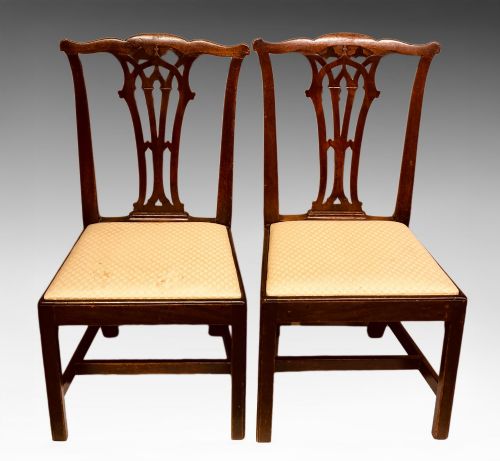
Pair chippendale chairs bring architectural mahogany framing and pierced splats to a room, offering substantial seating shaped by eighteenth-century proportion.
Pair Chippendale Chairs
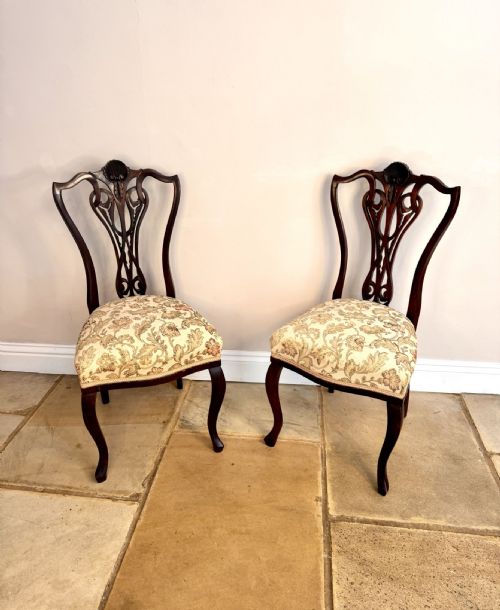
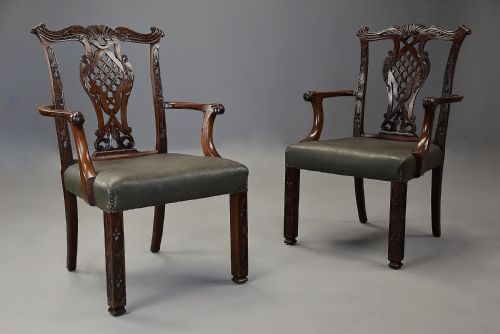
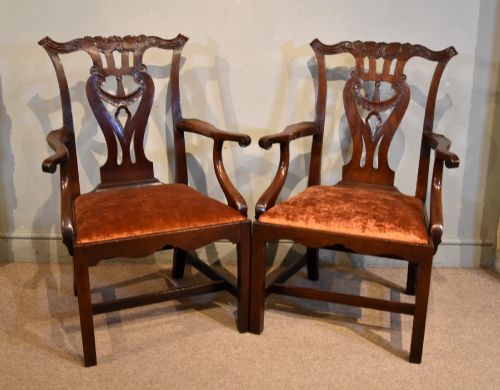
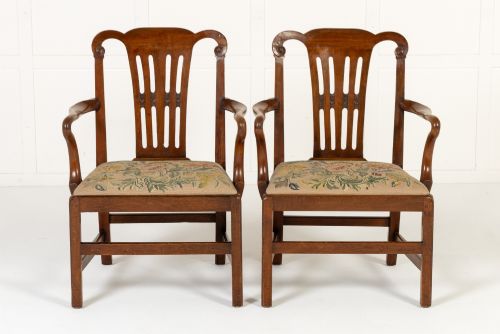
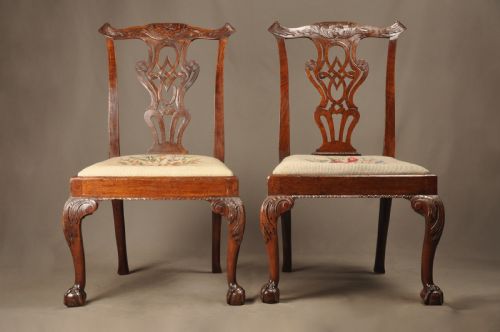
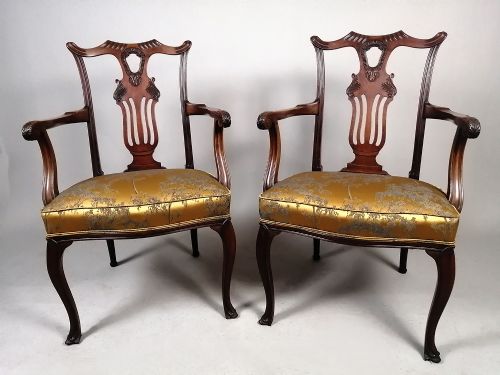
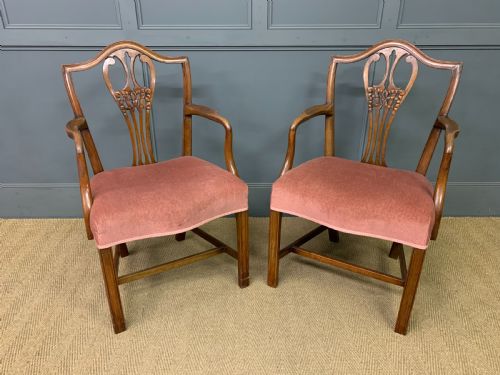
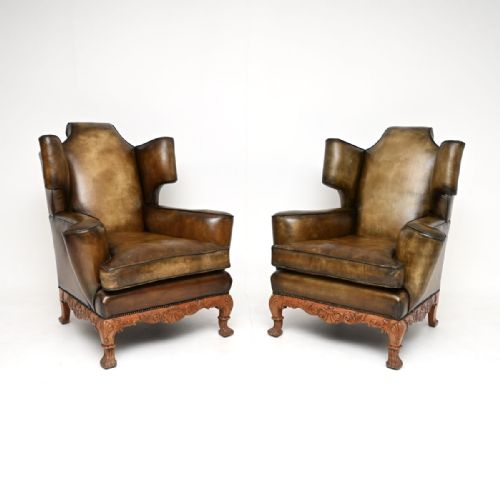
A search for pair chippendale chairs directs attention to symmetrical seating designed for dining, drawing rooms, and studies, spanning authentic eighteenth-century examples to later nineteenth-century revivals. Buyers encounter dining chairs, open armchairs, and library seats that share characteristic interlaced splats and carved rails.
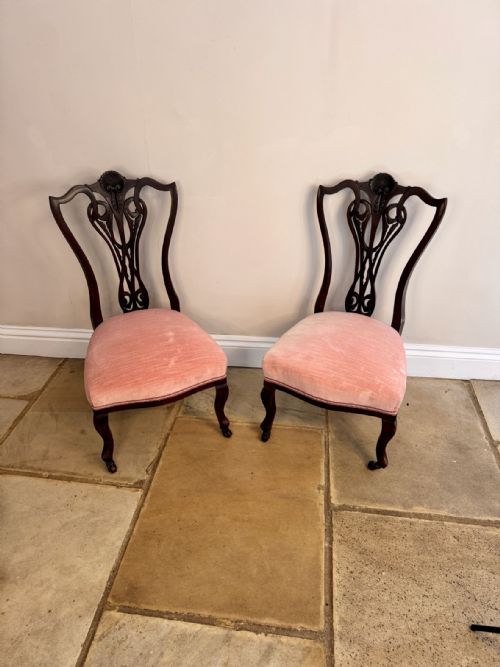
The material record shows a strong presence of mahogany alongside walnut, oak, fruitwood, and elm, often paired with contemporary or later upholstery in leather, fabric, and damask. Pieces emerge from Georgian origins as well as Victorian and Edwardian interpretations.
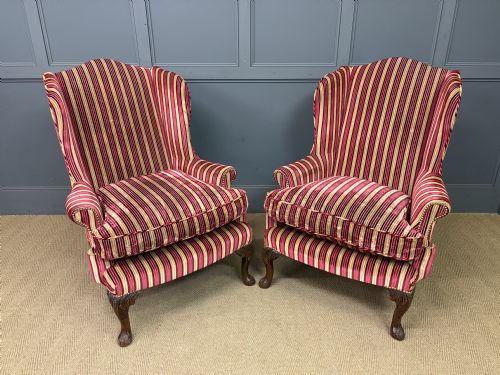
Side chairs and open armchairs dominate the selection, offering either standard dining heights or lower library and desk configurations. These matching duos provide balanced placement around tables or flanking fireplaces.
Materials and Technique
Makers relied primarily on dense mahogany, frequently utilising Cuban timber for its rich grain and weight, alongside regional hardwoods like oak, elm, and walnut for provincial pieces. Carved details were executed directly into the solid wood rather than applied as separate ornamentation.
Joinery depended on traditional mortise and tenon construction to withstand the stresses placed on chair frames and cabriole or straight legs. Seat frames were webbed and stuffed with various textiles, accommodating modern or historical upholstery fabrics.
Pair Chippendale Chairs Retail Price Guide 2026
Typical asking prices for pair chippendale chairs among the pieces listed under this phrase on Sellingantiques today, from the lower quarter to the upper quarter. They describe what is for sale here now, not the wider market.
Some provincial makers swapped mahogany for local elm, proving that country carpenters joined the fashionable conversation using whatever tree grew behind the barn.
Craftsmanship and Proportion
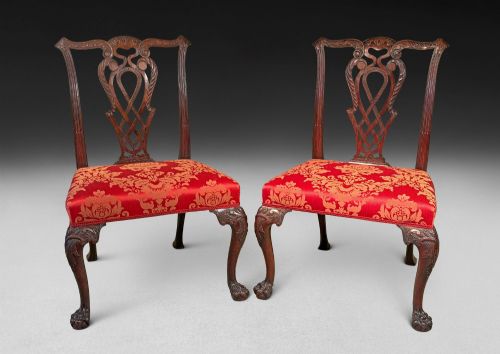
Quality rests in the crispness of the carved ribbon backs, tassel details, and claw and ball feet, where sharp hand-chiselling distinguishes superior work from softer, mechanical replication. The balance of the proportions and the grain selection of the timber dictate visual harmony.
Original structural integrity and minimal timber replacement elevate an example, ensuring the frame remains rigid and authentic to its period of manufacture.
Thomas Chippendale·Gill and Reigate
The Pair Chippendale Chairs Glossary
- Chippendale Style
- Furniture following the designs published in Thomas Chippendale's Director, or sharing the distinctive pierced splats and carved legs associated with his workshop. This descriptor covers both eighteenth-century originals and later revivals.
- Ribbon Back
- A chair back carved to resemble flowing ribbons interwoven with foliage and strapwork. It represents one of the more intricate design variations.
- Cabriole Leg
- A furniture leg that curves outward at the knee and tapers inward toward the ankle, often terminating in a claw and ball foot. This form derives from Chinese influences popularised in the eighteenth century.
- Splat
- The vertical wooden central strip down the middle of a chair back, attached to the crest rail and the seat. In these designs, the splat is frequently pierced and carved.
- Carver
- An armchair, typically featuring open wooden arms, designed to match a set of dining side chairs. These pieces were historically reserved for the head of the table.
Pair Chippendale Chairs: Frequently Asked Questions
How do I tell an original eighteenth-century pair from a revival?
Eighteenth-century examples show hand-cut joinery, timber shrinkage appropriate to age, and wear patterns consistent with centuries of use. Revival pieces from the Victorian and Edwardian periods often utilise machine-sawn elements and uniform secondary woods.
Examination of the underside and interior frame components reveals tool marks and construction methods specific to each era of production.
Were these chairs used only for dining?
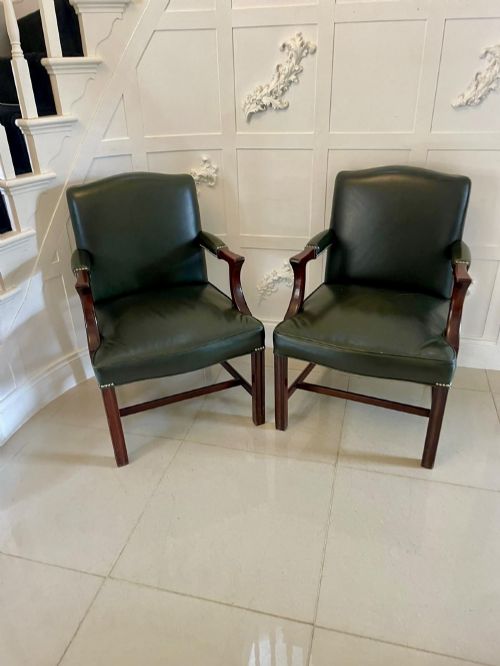
While many serve as dining furniture, the listings include desk chairs, library armchairs, and hall chairs designed for specific domestic tasks. Armchairs often functioned as occasional seating in parlours or offices.
Different heights and seat depths reflect their varied intended positions within a historic interior layout.
What is Chinese Chippendale?
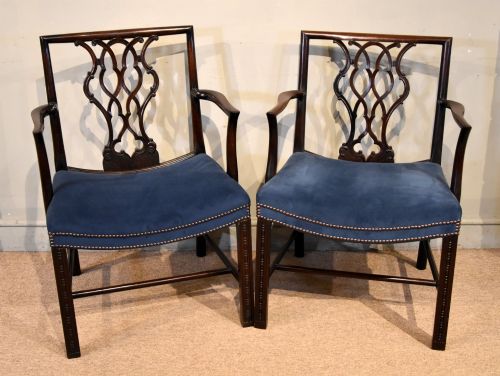
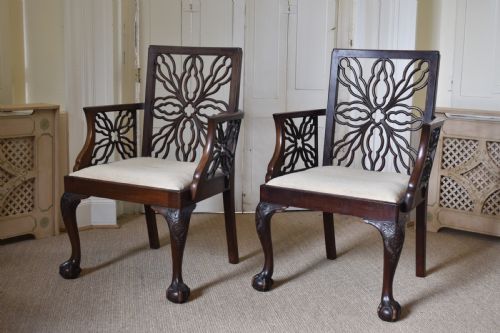
Chinese Chippendale refers to a distinct sub-style incorporating fretwork glazing, lattice patterns, and pagoda-inspired motifs drawn from Asian design traditions. It gained popularity during the mid-eighteenth century and saw strong revivals later.
Chairs in this taste feature straight square legs connected by stretchers rather than cabriole forms.
How should I care for antique mahogany frames?
Maintain wood surfaces by dusting with a dry, soft cloth and applying appropriate beeswax sparingly to nourish the grain. Avoid placing furniture in direct sunlight or near heat sources to prevent timber splitting.
Upholstery requires gentle vacuuming with a soft brush attachment to protect delicate fabrics like damask or velvet.