

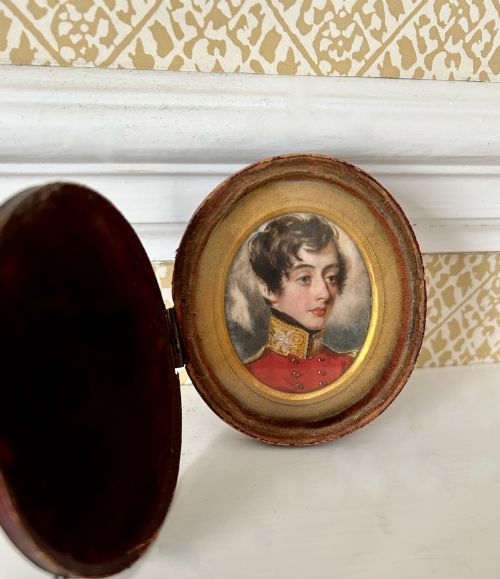
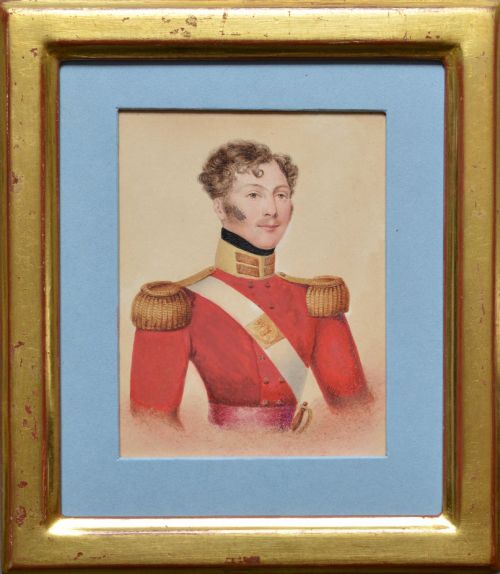
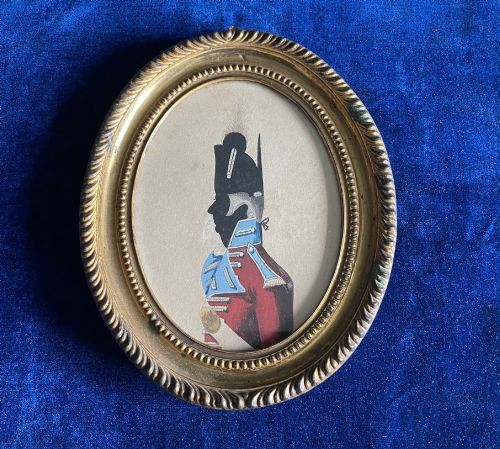
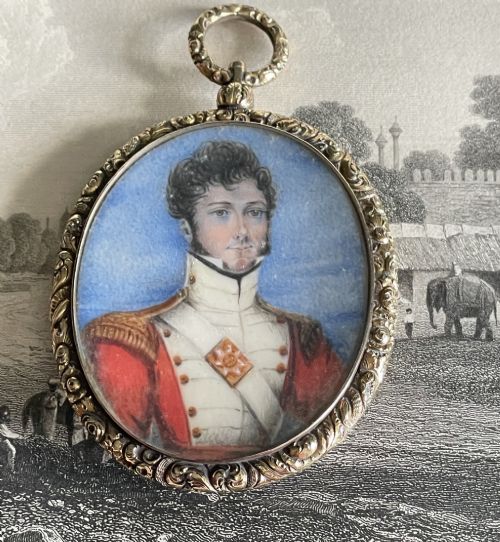
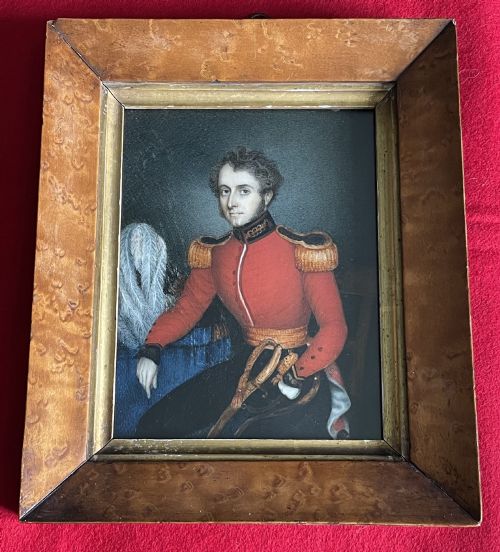


Red Coat Portrait Miniature
A red coat portrait miniature captures military history in exquisite detail, offering a tangible link to officers of past centuries.
Red Coat Portrait Miniature
A red coat portrait miniature depicts military officers in traditional scarlet uniforms, originating primarily from the eighteenth and nineteenth centuries. These portable artworks record the likenesses of figures such as dragoons, generals, and regiment officers through careful painting.
The versions encountered on this page span the Georgian, Regency, and Early Victorian eras, taking the form of miniature paintings and fine art. Subjects range from named individuals like Lieutenant-General Vernon and Captain Claridge to works by the British School.
Makers and artists working in these periods utilised watercolour on paper or ivory to achieve remarkable precision on a small scale. These portraits often depict specific historical figures, including members of the Staffordshire 80th Regiment of Foot.
Materials and construction
Artists painted these works using watercolour on delicate surfaces such as paper and ivory, capturing the vibrant red pigment of the military coats. The physical fragility of ivory and paper required immense skill from the limner to prevent fading or splitting.
Finished miniatures frequently incorporated protective glass and elaborate frames constructed from giltwood, gold leaf, and solid gold. Some pieces utilised burl wood for backing or outer framing, providing both structural support and aesthetic contrast to the portrait within.
Red Coat Portrait Miniature Retail Price Guide 2026
Typical asking prices for red coat portrait miniature among the pieces listed under this phrase on Sellingantiques today, from the lower quarter to the upper quarter. They describe what is for sale here now, not the wider market.
Materials recorded across the inventory include glass, watercolour, paper, giltwood, ivory, gold, burl wood, and gold leaf.
Judging quality in miniature painting
The integrity of the framing materials, from solid gold mounts to carved giltwood and burl wood surrounds, indicates the original importance placed on the commission. Original glass and undisturbed backing papers further elevate the standing of a piece.
George Engleheart·Sir William John Newton·Gerrit Schipper
The Red Coat Portrait Miniature Glossary
- Miniature painting
- A small-scale artwork executed with fine brushes, requiring a magnifying glass during creation. These works were intended to be portable, often worn as lockets or kept in travel cases.
- Watercolour
- A paint consisting of pigment suspended in a water-based solution, utilised extensively on paper and ivory. This medium allowed artists to achieve delicate translucent layers.
- Giltwood
- Wood carved and then treated with gold leaf or gold paint to create a decorative frame. It provides a bright, reflective border that enhances the colours of the miniature.
- Burl wood
- Wood featuring swirled grain patterns caused by tree growth deformations, prized for decorative veneering. It offers a rich, textured frame or case backing.
- Georgian
- The period spanning the reigns of the first four Georges, associated with specific shifts in portraiture and attire. Works from this era display distinct stylistic traits compared to later Victorian pieces.
Red Coat Portrait Miniature: Frequently Asked Questions
What is a red coat portrait miniature?
A red coat portrait miniature is a small painted likeness of a military officer wearing a traditional red uniform. These portable artworks date primarily from the eighteenth and nineteenth centuries.
Created during the Georgian, Regency, and Early Victorian periods, they served as personal tokens, memorials, or records of military service.
Who are the subjects in these portraits?
The subjects are typically military officers, ranging from anonymous dragoons to named generals and commanders. Some pieces document specific regiments, such as the Staffordshire 80th Regiment of Foot.
Many miniatures preserve the likenesses of historical figures of note, including Lieutenant-General Vernon and Captain Claridge.
How were these miniatures framed?
Miniatures required robust framing to protect the delicate watercolour and ivory surfaces from dust and damage. Common framing materials include solid gold, gold leaf, giltwood, and burl wood.
Protective glass fronts were standard, sometimes backed with secondary panels or housed in dedicated travel cases designed to be carried or worn.
How do I date an antique miniature?
Dating relies on the style of the uniform, the sitter's clothing, the framing materials, and the painting technique. Georgian and Regency pieces exhibit different aesthetic conventions compared to Early Victorian works.
Inscribed names, documented artist signatures, and known biographical dates of the sitters provide definitive chronological anchors for specific pieces.