

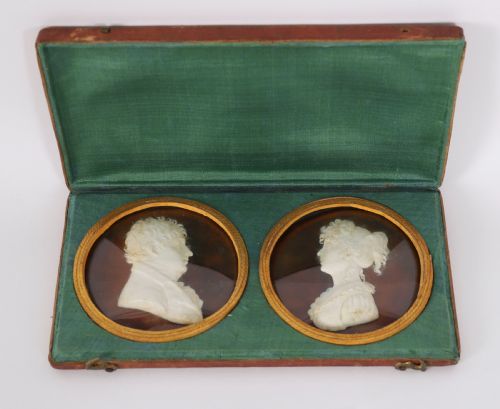


Antique Miniature Medallion
These antique miniature medallion pieces bring intimate portraits and relief carvings in glass, enamel, and wax into focus.
Antique Miniature Medallion
The objects appear in several distinct forms, ranging from wall plaques and framed wall art to brooches and pendants. Portrait miniatures dominate the selection, often depicting specific historical figures, military officers, or family members in fine detail. South Staffordshire enamel plaques and pressed white glass paste cameos represent notable variations within the category.
How they were made
Makers shaped these miniature works using materials such as glass, enamel, watercolour, wax, brass, gilt metal, ivory, wood, and porcelain. Wax portraits were modelled in low relief to capture the likeness of dignitaries and subjects during the Regency and nineteenth century. Enamel was fused to metal bases for durable wall plaques and personal jewellery like brooches and pendants.
Artisans applied watercolour painting on delicate surfaces including agate panels, porcelain, and ivory, framed within ormolu, silver, or gold settings. Pressed white glass paste created crisp cameo profiles reminiscent of classical antiquity, while South Staffordshire pieces utilised copper plates coated in enamel for vibrant coloration.
Antique Miniature Medallion Retail Price Guide 2026
Typical asking prices for miniature medallion among the pieces listed under this phrase on Sellingantiques today, from the lower quarter to the upper quarter. They describe what is for sale here now, not the wider market.
Listings feature works from the eighteenth century, Regency era, and nineteenth century, employing materials like wax, enamel, glass, and gold.
What varies in quality
Quality in an antique miniature medallion rests upon the precision of the portraiture and the fineness of the modelled relief. Finer examples display meticulous brushwork or crisp facial definition in wax and glass paste, while lesser pieces show softer contours and less refined execution. The handling of expression and likeness distinguishes workshop output.
The setting and framing contribute significantly to the overall merit of the object. Pieces housed in original 18k or 22ct gold frames, or finely cast ormolu and brass mounts, demonstrate higher craftsmanship than those in plain or later replacement surrounds. The preservation of the delicate interior media without fading or cracking also marks superior examples.
James Tassie·George Engleheart·Henry Pierce Bone
The Antique Miniature Medallion Glossary
- Medallion
- A small circular or oval tablet or plaque decorated with a portrait, figure, or ornament in relief or paint. These objects were often framed for wall display or mounted as personal adornments.
- Cameo
- A method of carving an object such as a gemstone, shell, or glass paste so that a raised image stands out from a background of a different colour. Pressed white glass paste examples mimic classical carved stones.
- Ormolu
- Finely ground high-carat gold applied to a bronze or brass object using a mercury-gilding process. This technique produced a rich metallic lustre on frames and mounts during the eighteenth and nineteenth centuries.
- Paste
- A heavy, highly refractive lead glass used to imitate gemstones or carved cameos. In portrait miniatures, pressed white glass paste created durable relief profiles.
Antique Miniature Medallion: Frequently Asked Questions
How were antique miniature medallions displayed?
These small works were frequently framed for hanging on walls as art or housed in travelling cases during the Grand Tour. Many examples also functioned as personal ornaments, designed to be worn as brooches or pendants.
Their intimate scale allowed owners to carry likenesses of family members or notable figures close at hand. Wall plaques provided a decorative focus within domestic interiors during the Georgian and Victorian periods.
What materials are common in these miniatures?
Makers utilised a diverse range of materials including glass, enamel, watercolour, wax, brass, gilt metal, ivory, and wood. Painted works often appeared on ivory, porcelain, or agate panels.
Relief pieces relied on media like moulded wax and pressed glass paste to achieve three-dimensional depth. Metal components typically featured brass, silver, or gold settings.
How do I identify a Regency period piece?
Regency items often reflect neoclassical influences, depicting subjects with classical hairstyles and drapery. Wax portrait reliefs and enamel pieces from this era frequently feature specific stylistic cues associated with early nineteenth-century portraiture.
Documentation or stylistic parallels with known makers from the early eighteen-hundreds help confirm the date. Framing styles also provide chronological markers for pieces from this timeframe.