
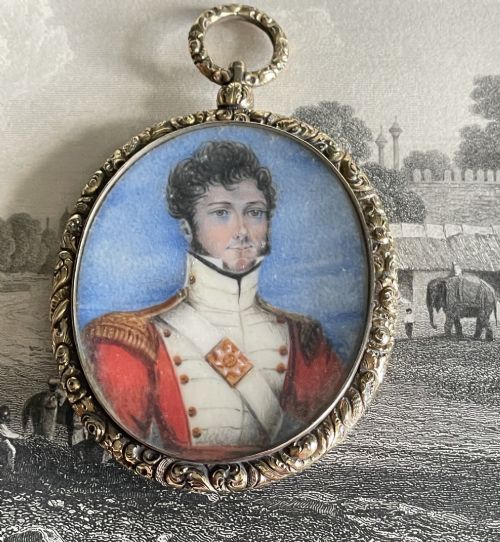


Red Coat Miniature Painting
These red coat miniature painting examples capture military history in delicate detail, offering collectors remarkable intimacy with officers and generals of past centuries.
Red Coat Miniature Painting
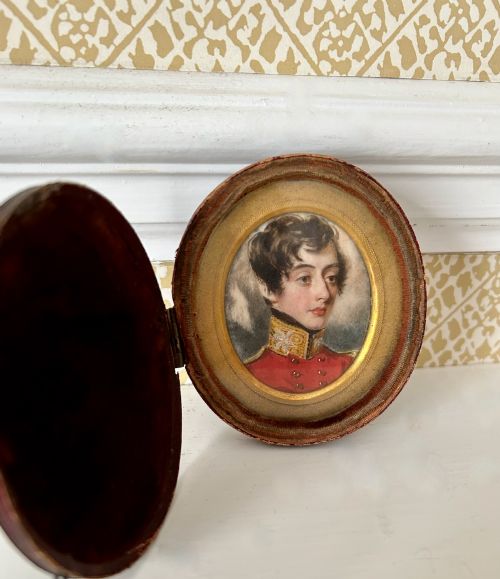
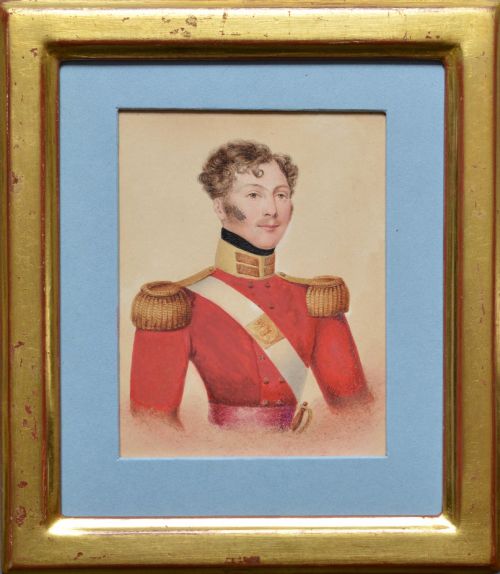
A red coat miniature painting represents a portable portrait, typically depicting military officers, dragoons, and generals dressed in their official scarlet uniforms. These works capture notable figures such as Lieutenant-General Vernon and Captain Claridge, reflecting the military hierarchies of their eras.
Most examples found here span the eighteenth and nineteenth centuries, encompassing Georgian, Regency, and Early Victorian styles. They frequently depict named subjects, including members of regiments like the Staffordshire 80th Regiment of Foot.
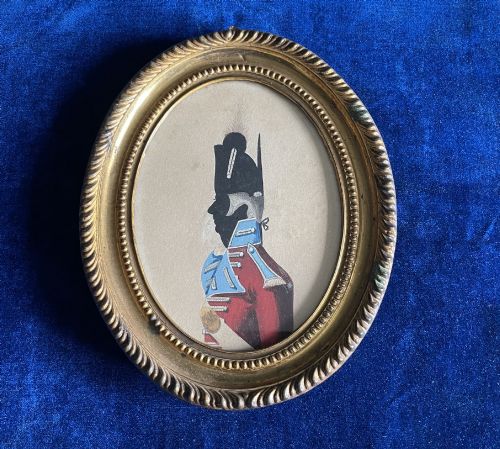
Makers and schools range from the British School to named artists such as George Engleheart, Sir William John Newton, and Gerrit Schipper. The formats vary from profile studies to detailed bust-length portraits created on delicate substrates.
How they were made
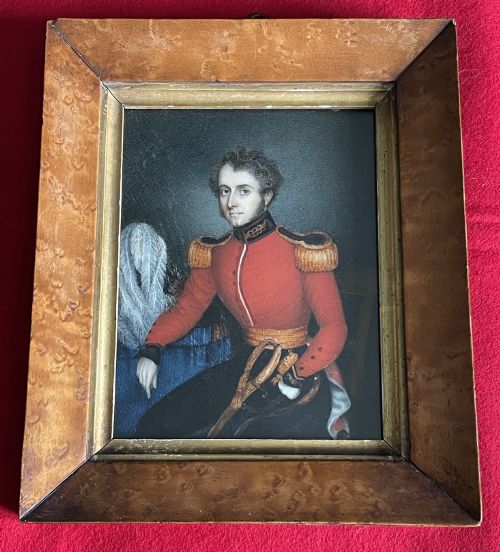
Many of these portraits feature protective glass coverings, often framed in giltwood, gold, gold leaf, or burl wood cases. These housings preserved the fragile watercolours from dust and handling while enhancing the display of the miniature.
Materials appearing across current selections include glass, gold leaf, and burl wood alongside traditional painting substrates.
What varies in quality
The precision of facial rendering and the accuracy of the uniform details distinguish exceptional works from simpler studio output. Master miniaturists captured the subtle psychological depth of sitters like General Sir James Henry Craig alongside the exact insignia of their regiments.
The quality of the surrounding frame, whether fine gold, giltwood, or burl wood, often reflects the importance of the commission. Superior pieces retain the crispness of their original watercolour pigments without fading or excessive moisture damage beneath the glass.
George Engleheart·Sir William John Newton·Gerrit Schipper
The Red Coat Miniature Painting Glossary
- Miniature painting
- A small-scale portrait, typically executed in watercolour on ivory or paper during the eighteenth and nineteenth centuries. These works required extraordinary patience and microscopic precision from the artist.
- Watercolour
- A paint consisting of pigment suspended in a water-based solution, commonly applied to ivory or paper for portrait miniatures. It allows for translucent layers of colour that mimic the softness of skin.
- Ivory
- A smooth, organic material harvested from elephant tusks, utilised as a painting surface for its luminous quality. Painters favoured it because the pale ground imparted a natural glow to human flesh tones.
- Giltwood
- Wood that has been covered with a thin layer of gold leaf or gold paint, frequently used for framing portrait miniatures. This decorative treatment provided a rich border that complemented the gold accents within the paintings.
- Burl wood
- Wood cut from a tree growth featuring intricate, swirled grain patterns, often polished to house luxury items like portrait miniatures. Its distinctive figure added texture and warmth to small desk or pocket cases.
Red Coat Miniature Painting: Frequently Asked Questions
What is a red coat miniature painting?
A small portrait depicting a military officer or general wearing a traditional red uniform, painted during the Georgian, Regency, or Early Victorian periods.
These pieces served as personal tokens of remembrance or status, often commissioned by military personnel and their families.
How can I tell the period of a miniature?
Stylistic details in the uniform, hair fashion, and framing materials provide strong clues to the date of execution. Eighteenth-century examples often lean towards profile views, while nineteenth-century works frequently feature detailed frontal or three-quarter busts.
Who are the typical subjects of these artworks?
The subjects are usually identified military figures, including captains, lieutenants, and high-ranking generals such as Sir Samuel Hulse.
Many works record specific regiments like the dragoons or the Staffordshire infantry, linking the art directly to military history.