


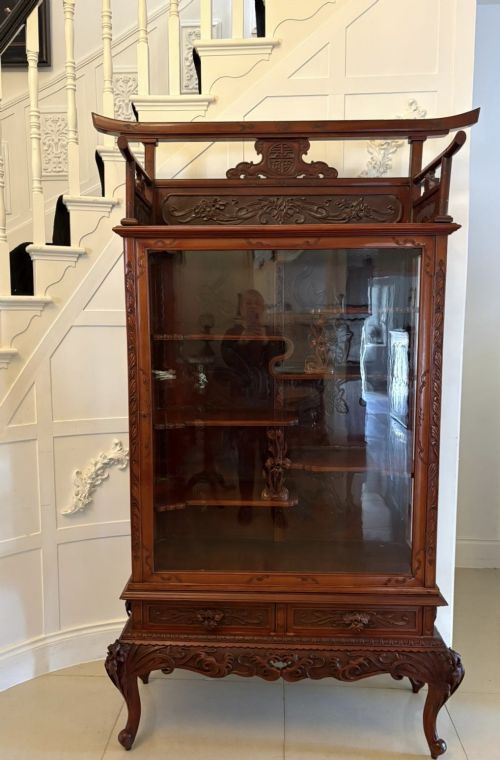
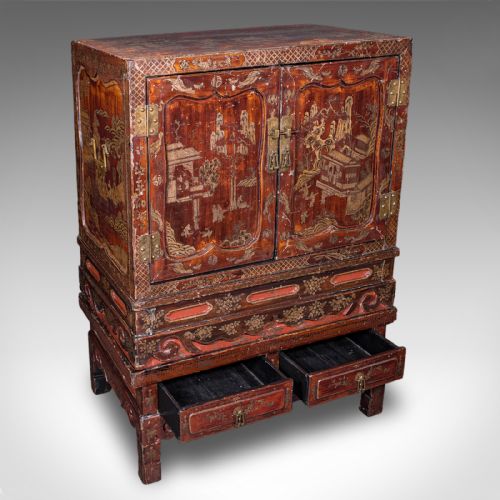
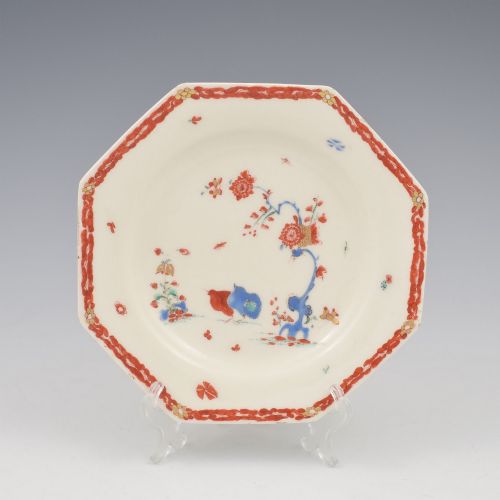
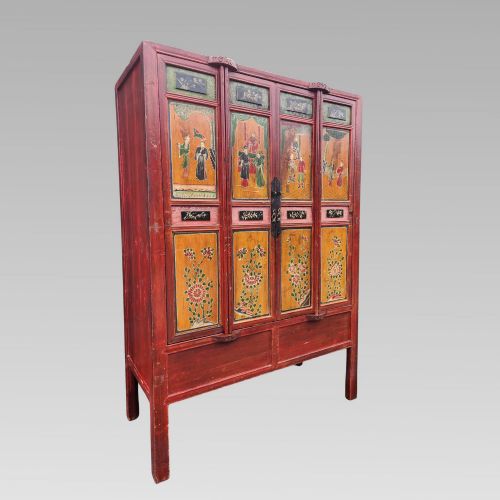


Red Chinoiserie Cabinet
These red chinoiserie cabinet examples bring rich lacquer surfaces and distinct Oriental motifs into a room, offering both bold colour and practical storage.
Red Chinoiserie Cabinet
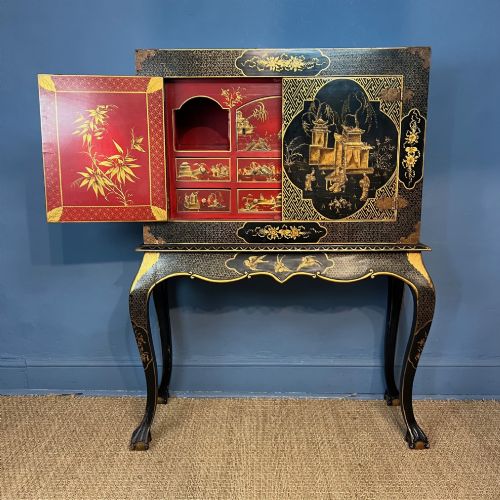
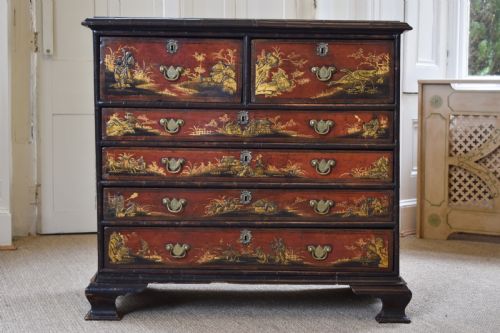
A red chinoiserie cabinet draws on Asian decorative traditions, manifesting in various forms from side cabinets and display units to bureaux and wedding chests. These pieces span the eighteenth century to the early twentieth century, encompassing Georgian, Victorian, Edwardian, and Regency Revival interpretations.
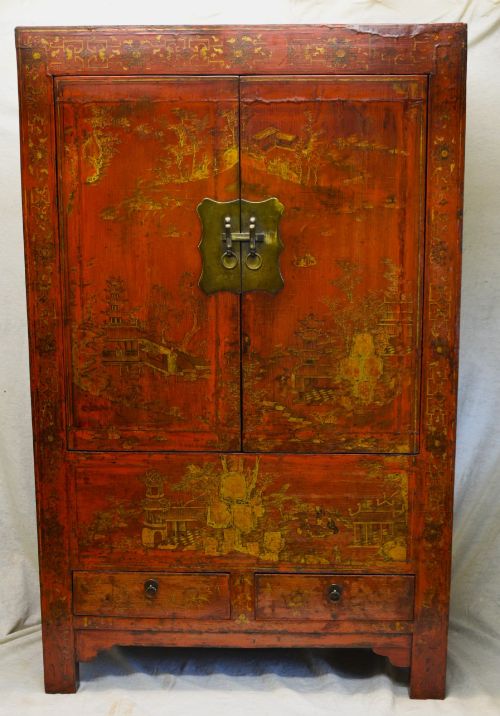
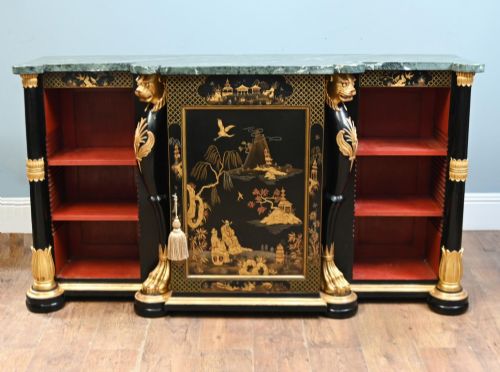
The most common formats on this page include side cabinets, display cabinets, and tall storage cupboards. Makers across different periods adopted these Oriental motifs to create striking focal points within domestic interiors.
Materials and construction methods
Construction relies upon wood and hardwood foundations prepared to receive successive layers of lacquer. Artisans applied gold leaf and gilt details to build up the intricate pictorial scenes characteristic of the style.
Brass hardware such as hinges, escutcheons, and drop handles frequently accent the red lacquered surfaces. Glass panels appear on display cabinets and bookcases, while internal shelves provide functional division.
Red Chinoiserie Cabinet Retail Price Guide 2026
Typical asking prices for red chinoiserie cabinet among the pieces listed under this phrase on Sellingantiques today, from the lower quarter to the upper quarter. They describe what is for sale here now, not the wider market.
Listings feature items spanning the 18th century to the 1930s, utilising wood, lacquer, brass, and gold leaf across diverse cabinet forms.
Evaluating craftsmanship and execution
Quality rests in the depth of the lacquer work and the precision of the gilt detailing. Superior examples exhibit layered decoration with clear definition in the figures, landscapes, and architectural motifs.
The stability of the wooden carcase and the integration of brass mountings also distinguish finer pieces. Structural integrity in doors, drawers, and stands ensures the piece functions as intended.
The Red Chinoiserie Cabinet Glossary
- Chinoiserie
- European artistic styles reflecting Chinese and East Asian artistic influences. This aesthetic gained widespread popularity across eighteenth-century furniture design and later revivals.
- Japanned
- European lacquerwork imitating Asian export lacquer. Artisans built up layers of varnish and metallic dust to create glossy decorated surfaces.
- Breakfront
- A piece of furniture where the central section projects forward from the flanking wings. This architectural arrangement appears on larger bookcases and side cabinets.
- Bureau
- A sloping desk fitted with internal drawers and pigeonholes, often raised on a stand or positioned above chest drawers. Examples frequently incorporate lacquered cabinet top sections.
Red Chinoiserie Cabinet: Frequently Asked Questions
What periods do these cabinets date from?
The pieces span several centuries, originating from the eighteenth century through to the early twentieth century. Georgian and Victorian examples sit alongside Edwardian and 1920s revival items.
Cabinet makers across these eras continually reinterpreted Asian lacquer techniques to suit contemporary British and European interiors.
How were these cabinets used originally?
Owners utilised these statement items to store prized possessions, display porcelain, or provide writing surfaces within formal reception rooms. Tall cupboards and marriage chests served practical storage needs while doubling as decorative art.
Display cabinets and breakfront bookcases allowed households to showcase fine ceramics and books behind glass doors.
How do I care for a lacquered surface?
Lacquered wood requires gentle maintenance, avoiding direct sunlight and excessive humidity which can damage the finish. Dusting with a soft, dry cloth preserves the gloss without scratching the gilt decoration.
Keep these cabinets away from direct heat sources to prevent the wood beneath from expanding and stressing the lacquer layer.
How do I distinguish an 18th-century piece from a later revival?
Examining the secondary timbers, construction joints, and hand-cut fixings helps determine the age of the wooden carcase. Eighteenth-century pieces display different construction markers compared to Regency Revival or early twentieth-century interpretations.
The style of the brass hardware and the ageing patterns within the lacquer further assist in dating the manufacture.