


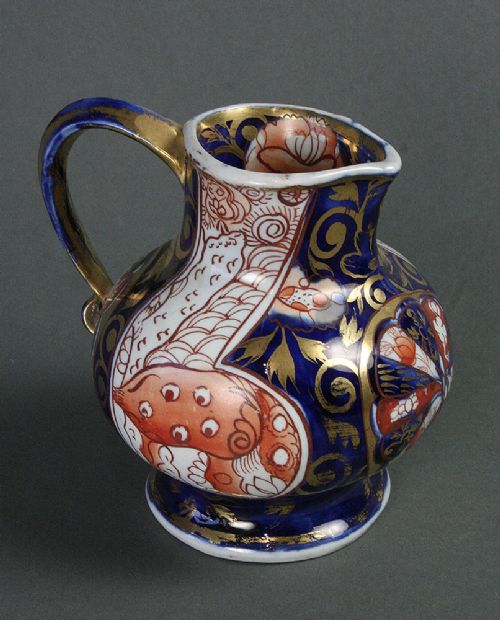
Red Ceramic Pitcher
These red ceramic pitcher pieces bring bright earthenware and porcelain into a room, offering both practical pouring vessels and striking decorative forms.
Red Ceramic Pitcher
A red ceramic pitcher spans various forms including jugs, creamers, decorative ewers, and pouch jugs across multiple periods. The selection includes Victorian, Edwardian, and Georgian examples alongside Japanese Meiji and Taisho pieces.
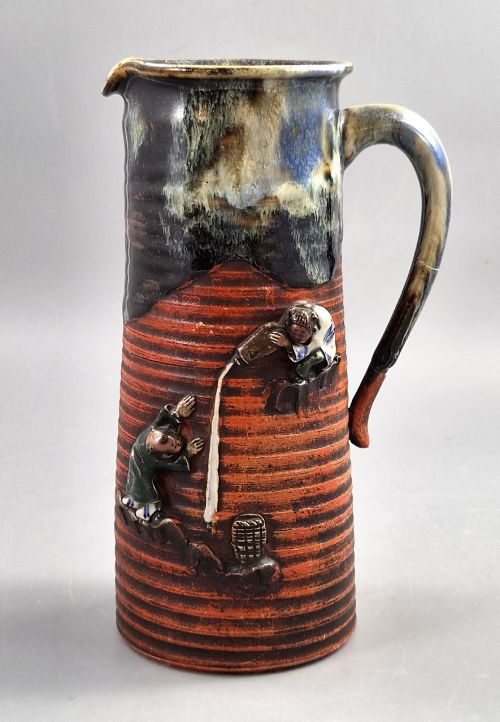
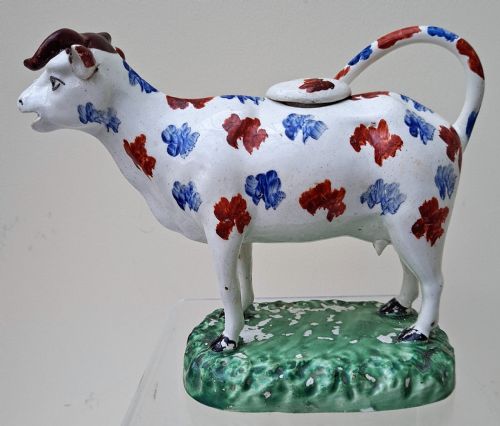
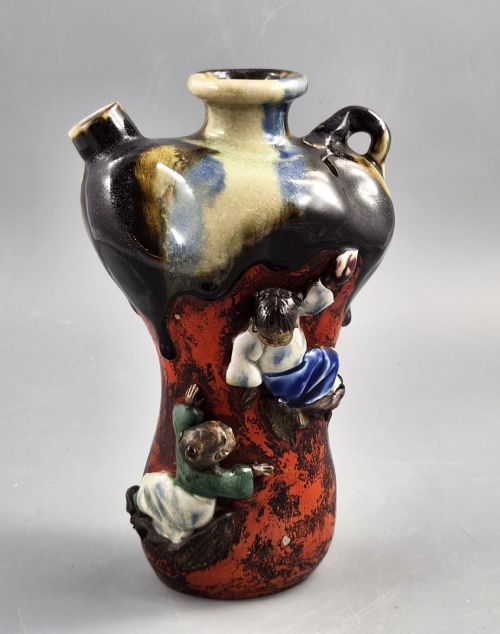
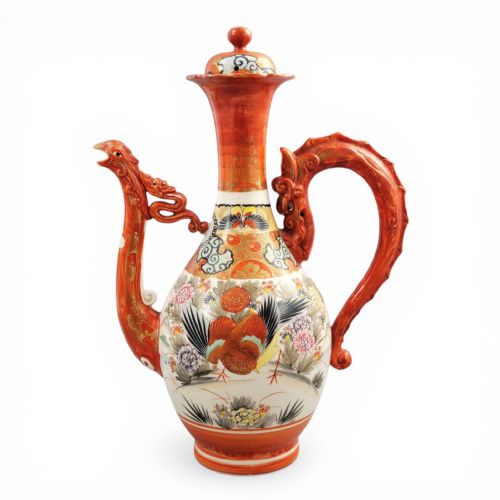
Buyers will encounter items ranging from nineteenth-century Staffordshire pottery and Mason's ironstone to Japanese Kutani porcelain and Sumida Gawa ware. Forms vary from traditional cow creamers to structured ironstone patterns and figurative poured scenes.
How they were made
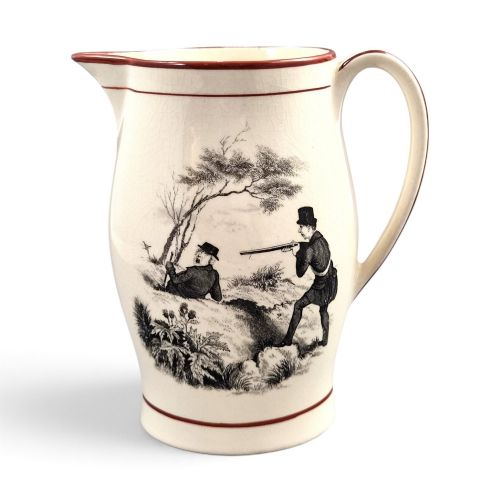
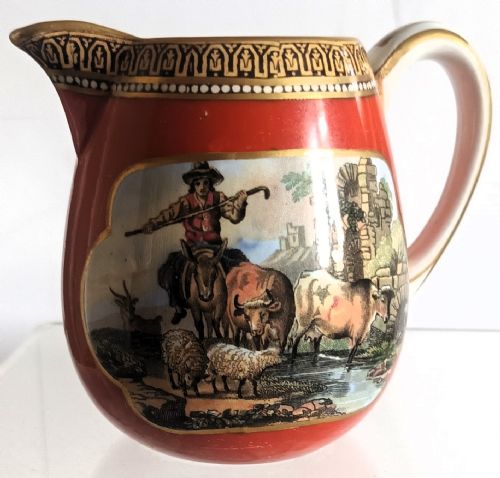
Potters shaped these pieces from earthenware, ironstone, and porcelain, applying detailed glazes and enamel colours to the surfaces. Transfer-printing and hand-painting techniques defined the decoration across both English pottery and Japanese porcelain.
Gilt and gilding highlights frequently appear on handles and rims, while specialised techniques like the raised modeling found in Sumida Gawa or Doulton Slater's patent finishes added texture to the body.
Materials across the selection include earthenware, ironstone, porcelain, glaze, enamel, and gilt.
What varies in quality
The clarity and registration of transfer-printed or hand-painted patterns separate standard production from superior examples. Crisp execution in complex motifs, such as pagoda patterns or dragon ewers with phoenix spouts, indicates finer craftsmanship.
The sophistication of the glaze and the precision of applied gilt work determine the overall refinement of the piece. Well-defined modelling in sculptural forms like cow creamers or elephant's foot patterns also elevates the standing of the work.
The Red Ceramic Pitcher Glossary
- Earthenware
- Porous pottery fired at lower temperatures which requires a glaze to become impermeable. It forms the body of many nineteenth-century jugs.
- Ironstone
- A heavy, durable type of feldspathic stoneware patented in England. It resists chipping and supports rich patterns like red scale.
- Ewer
- A large pitcher with a flared spout and handle, often used historically for water or wine rather than dairy. Decorative versions frequently display sculptural handles.
- Creamer
- A small pitcher designed specifically for holding milk or cream for tea service. Staffordshire potteries produced many notable examples in this scale.
- Transfer-printing
- A decorating technique where an engraved copper plate transfers a design onto paper and then onto the ceramic body. This allowed for intricate repeating patterns.
Red Ceramic Pitcher: Frequently Asked Questions
What is a red ceramic pitcher?
A red ceramic pitcher encompasses functional and decorative pouring vessels made from earthenware, ironstone, or porcelain featuring red tones.
These pieces range from English creamers and ironstone jugs to Japanese ewers and vases produced across the Georgian, Victorian, and later periods.
How do I identify a Georgian pitcher?
Georgian pitchers, dating roughly from the eighteenth to early nineteenth centuries, often feature creamware bodies and transfer-printed motifs.
Look for classical shapes, early earthenware weights, and traditional hand-painted or printed pastoral scenes typical of the era.
Where were Mason's ironstone jugs made?
Mason's ironstone pieces were manufactured in England during the nineteenth century using a durable ceramic body.
They frequently display bold patterns, such as the red scale or elephant's foot designs, created to rival imported Chinese porcelain.
How do I care for antique pottery?
Antique pottery and earthenware require gentle handling and hand washing to protect delicate glazes, enamel work, and gilt highlights.
Keep these vessels away from sudden temperature changes and abrasive cleaners to preserve the original ceramic surface.