
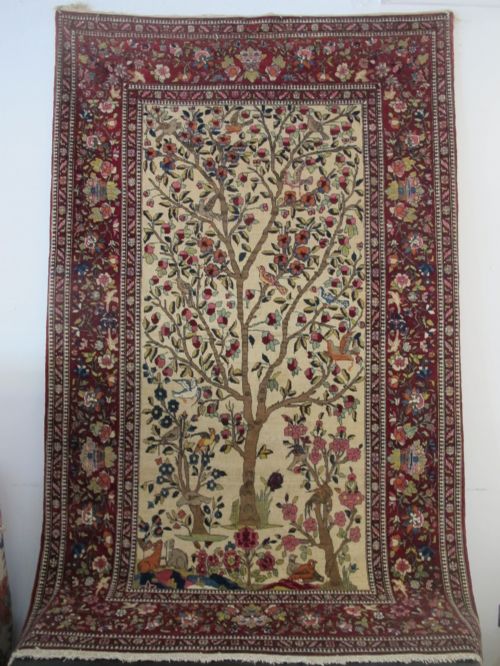


Red Border Carpet
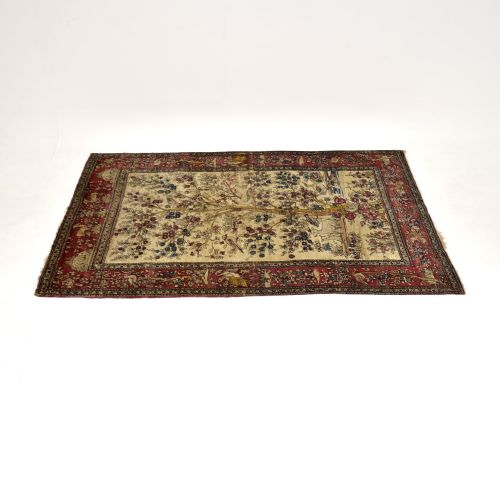
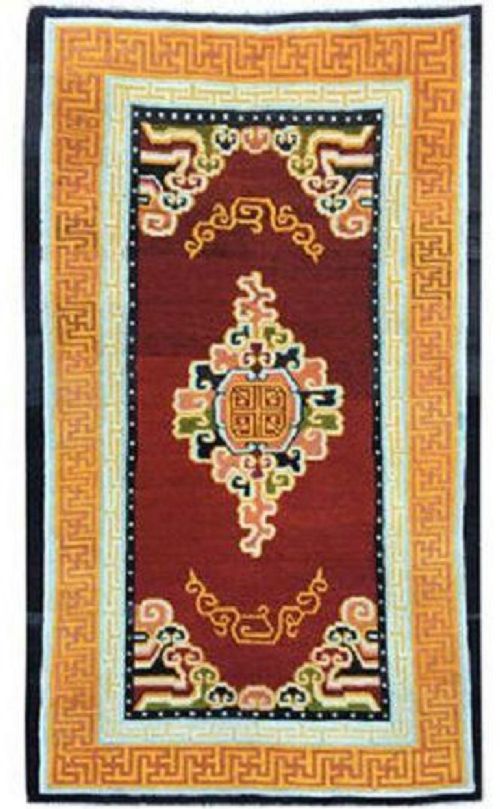
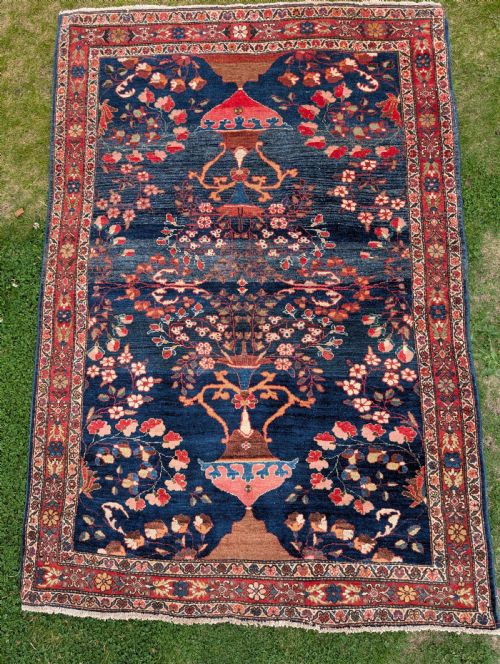
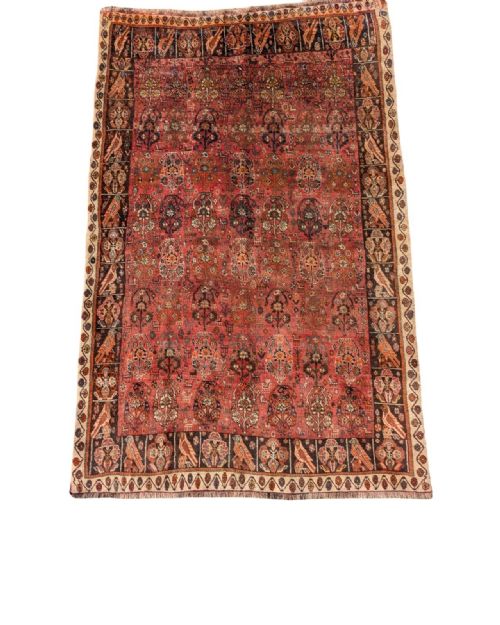
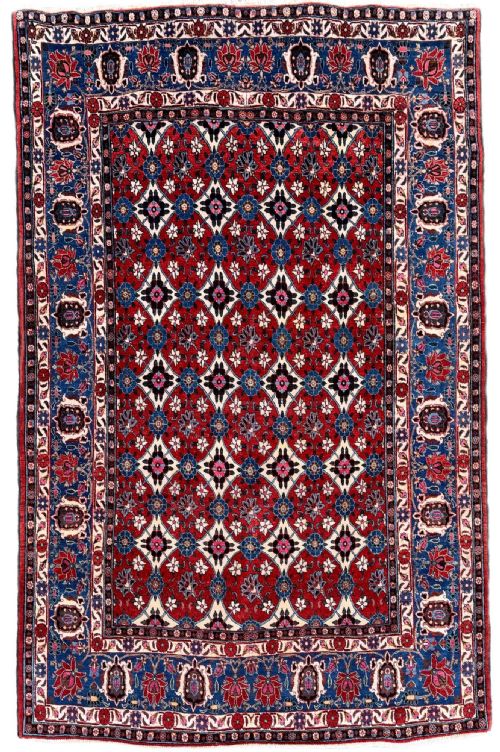
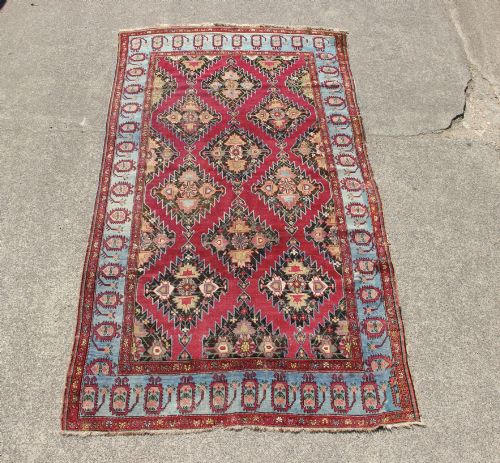
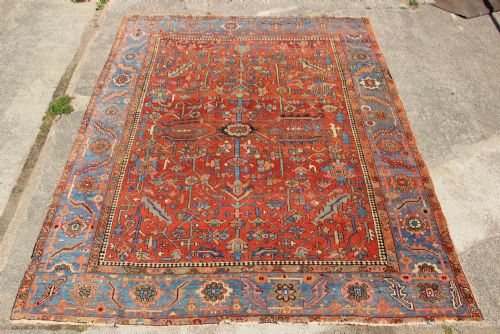
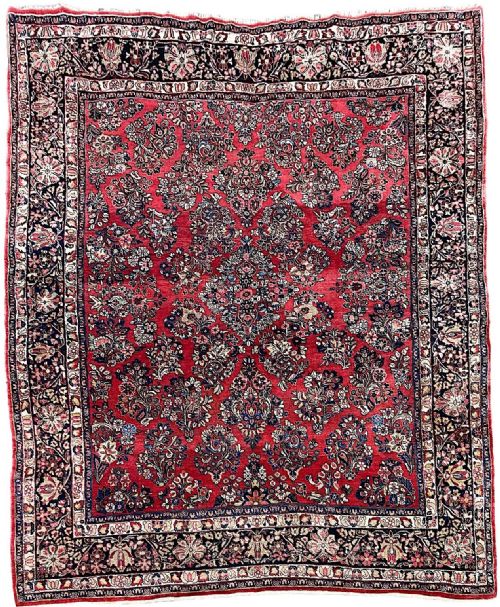
A red border carpet anchors a room with saturated framing, drawing the eye directly to intricate central medallions and tribal fields.
Red Border Carpet
A red border carpet comprises hand-knotted floor coverings defined by distinct crimson or scarlet framing, appearing frequently across Persian, Caucasian, Ottoman, and Tibetan traditions. Buyers encounter room-sized carpets alongside smaller area rugs, runners, and saddle covers dating from the mid-nineteenth century into the early twentieth century.
The selection ranges from large geometric Heriz and Bakshiash carpets to curvilinear Isfahan, Kashan, and Tabriz pieces. Regional workshops and tribal weavers utilise varied border patterns, including the specific Shekarlu border found on Khamseh tribal carpets.
Materials and construction
Weavers construct these carpets primarily using wool, hand-spun wool, and angora wool, often paired with cotton foundations for structural stability. Silk and leather appear selectively within specific regional workshops for finer detail and reinforcement.
Hand-knotting techniques dominate the production, resulting in dense piles that withstand generations of floor use. Natural dye sources provide the characteristic red tones that frame the central fields.
Listings span from the 1850s to the 1930s, featuring wool, cotton, silk, and angora wool across Persian, Caucasian, and Tibetan origins.
Assessing quality and execution
Knot density and material selection dictate the definition of the central design and the resilience of the pile. Finer wool and silk insertions allow for sharper curvilinear detailing in city carpets, whereas coarser hand-spun wool defines the robust character of tribal pieces.
The precision of the border execution and the depth of the dye saturation separate standard examples from exceptional ones. Master workshops achieve greater symmetry and tonal variation across the red framing.
The Red Border Carpet Glossary
- Medallion
- A central ornamental motif set into the field of the carpet. It often dictates the symmetry of the surrounding design.
- Warp
- The vertical threads stretched on the loom that form the structural foundation. Wefts are then inserted across these threads.
- Weft
- The horizontal threads passed through the warp to hold the knots in place. Together with the warp, it forms the backing grid.
- Pile
- The surface of the carpet formed by the cut ends of the knots. Its height influences both texture and durability.
- Field
- The central background area enclosed by the border. This space frequently displays repeating floral or geometric motifs.
Red Border Carpet: Frequently Asked Questions
How do I clean a carpet?
Professional specialist washing preserves the natural wool fibres and dye integrity without causing shrinkage or bleeding.
Regular gentle suction without a rotating brush prevents dust accumulation within the deep pile.
Where should I place a runner?
Narrow formats suit hallways, corridors, and bedside spaces where floor width is limited.
Underlay prevents slip and cushions the foundation against hard subfloors.
How do I identify a tribal rug?
Tribal pieces display bolder geometric layouts, irregular asymmetry, and coarse hand-spun wool textures.
Village and nomadic weavers worked from memory rather than precise scale drawings.
Why choose an antique carpet?
Age imparts a softened patina and mellowed red tones that modern chemical dyes cannot replicate.
Durability proven over a century ensures continued service in active domestic settings.