
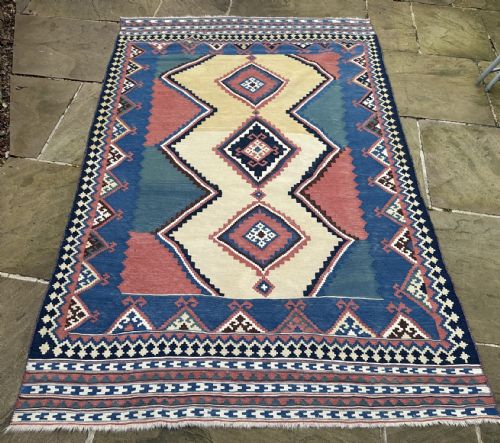

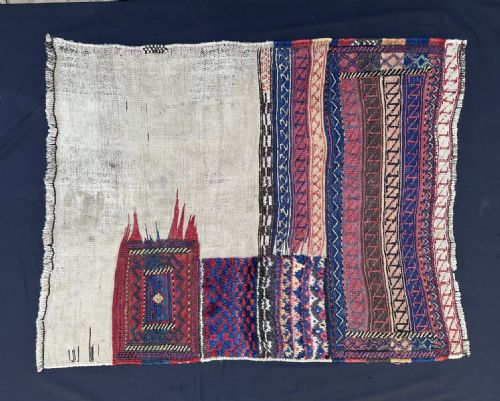
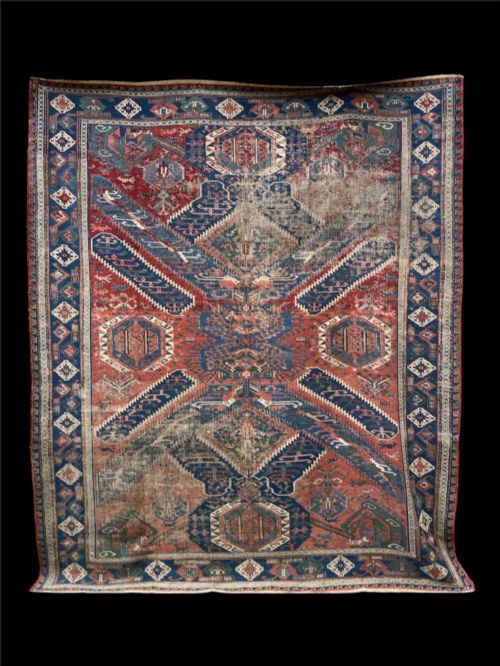


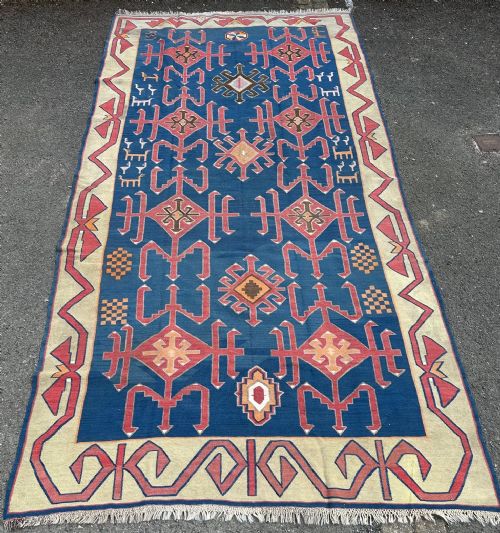


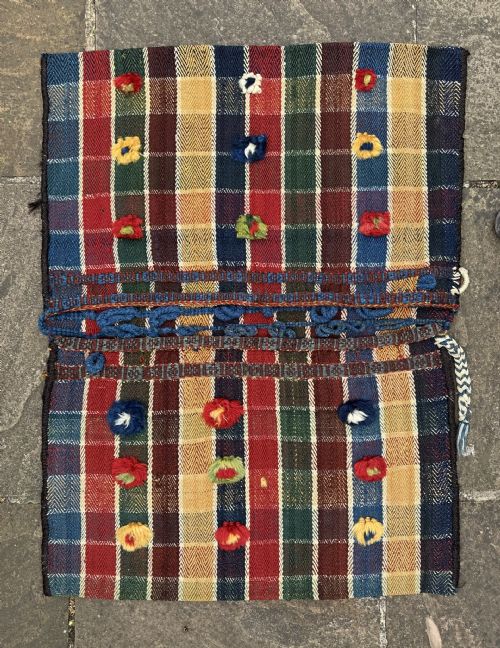
Red Blue Kilim Rug
These flatweave textiles, sought after for their geometric motifs and rich palettes, bring distinctive tribal character to floors and walls.
Red Blue Kilim Rug
A red blue kilim rug represents a tradition of flat-woven textiles produced by nomadic and settled tribal groups across Persia, the Caucasus, Anatolia, and Central Asia. The pieces available span multiple decades, originating from workshops and weaving communities from the late nineteenth century into the mid-twentieth century.
Buyers encounter diverse regional formats under this heading, ranging from utilitarian items like bread sofreh cloths and saddlebags to long runners and panels. These floor coverings and wall displays reflect the distinct aesthetic preferences and utilitarian needs of makers such as the Qashqa'i, Baluch, Shahsavans, and Kurdish weavers.
Object types vary widely in function and construction, encompassing complete storage bags, compartment designs, and multi-strip coverings. The geographic origins stretch from West Persia and the Shirvan region to the rugged terrain of Daghestan and the valleys of Anatolia.
Materials and construction methods
Makers utilised locally sourced materials, predominantly relying on wool, hand-spun wool, cotton, and occasional additions of goat hair for structural durability. These natural fibres were combined to create tight, slit-weave or flat-woven surfaces without a traditional piled nap.
Colour palettes were achieved through the application of natural dyes, which yield subtle variations in tone across the field of the textile. Individual panels were frequently woven in multiple parts and joined together, or constructed across several distinct strips as seen in larger regional works.
Listings feature wool, hand-spun wool, cotton, and natural dyes across periods ranging from the 1860s to the 1940s.
Factors influencing quality and distinction
Quality in these flatweaves rests on the tightness of the weave and the precision of the geometric or medallion design execution. Finer examples display meticulous attention to structural integrity, particularly where multiple strips join or where complex banded and shield motifs repeat.
The sophistication of the natural dye palette also dictates the standing of a piece, with harmonious, soft tones marking out superior examples. Furthermore, the crispness of tribal symbols, such as eye-dazzler patterns or compartment layouts, separates standard utilitarian items from exceptional weaving.
The Red Blue Kilim Rug Glossary
- Kilim
- A flat-woven carpet or rug produced without a pile by tightly interlacing warp and weft threads. This technique creates a lightweight textile with identical patterns visible on both sides.
- Sofreh
- A flat-woven cloth traditionally utilised for dining, serving bread, or wrapping food items within nomadic households. These rectangular textiles often feature striking geometric layouts.
- Mafrash
- A large storage bag or container constructed for nomadic travel and domestic organisation. They are typically assembled from multiple flat-woven panels featuring banded or compartment designs.
- Warp
- The stationary vertical threads stretched onto a loom before weaving begins. The supplementary weft threads are passed through these structural lines to form the pattern.
- Sumak
- A decorative flatweave technique where pattern threads are wrapped around the warp threads before passing to the next. This creates a textured surface with increased weight and durability.
Red Blue Kilim Rug: Frequently Asked Questions
How were these tribal flatweaves used originally?
Nomadic communities utilised these textiles for practical domestic purposes, including floor coverings, bedding storage, animal transport, and dining cloths. Items like sofreh cloths were specifically designated for handling bread and gathering communal meals.
Over time, these durable flatweaves adapted to the changing needs of tribal life, serving both functional utility inside tents and portable storage during seasonal migrations.
Can I hang a flatweave rug on the wall?
Many collectors display these textiles on walls to protect them from foot traffic and to highlight their intricate geometric designs. Lighter panels and specialised eating cloths are particularly well-suited for vertical display.
Proper mounting methods distribute the weight evenly across the upper edge to prevent distortion of the wool fibres and structural seams over time.
How do I distinguish regional weaving styles?
Regional attribution relies on specific structural characteristics, colour palettes, and recurring geometric motifs unique to particular tribes or valleys. For instance, pieces from the Caucasus often feature distinct shield or dragon motifs, while Persian tribal works frequently display medallion or compartment layouts.
Examining the treatment of borders and the choice of natural dye combinations further clarifies the geographical origin of the textile.
What distinguishes a runner from a standard rug?
Runners are characterised by their elongated, narrow proportions, designed specifically for corridors, doorways, and narrow spaces within a home. Their dimensions dictate a repeating vertical composition rather than a centered medallion layout.
These narrow formats require specialised weaving adjustments to maintain straight edges and structural stability across extended lengths.