




Red Blue Hallway Rug
These red blue hallway rug examples bring patterned warmth to corridors, combining traditional Persian and Caucasian weaving styles in long formats suited to narrow spaces.
Red Blue Hallway Rug
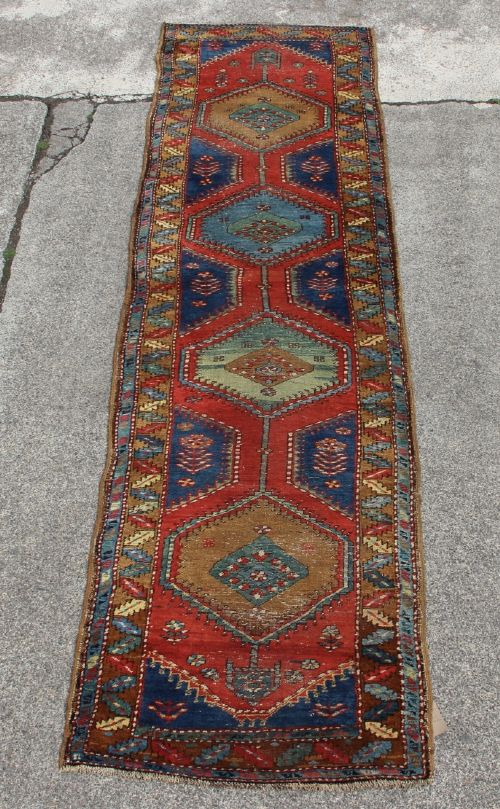
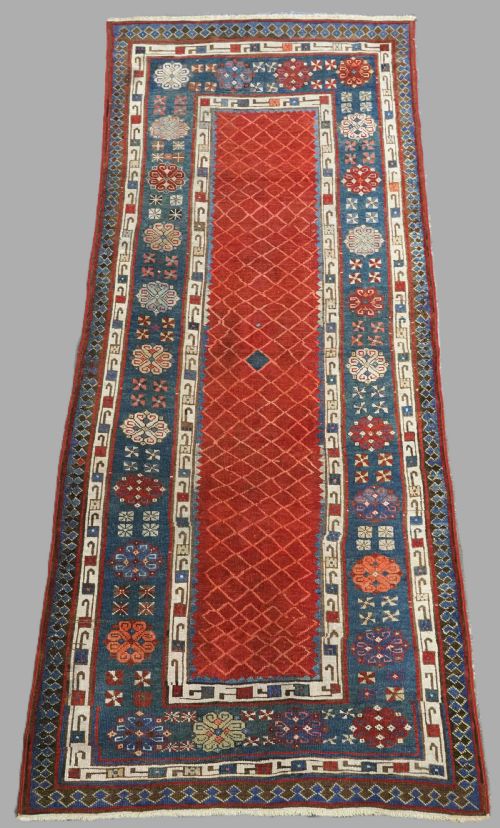
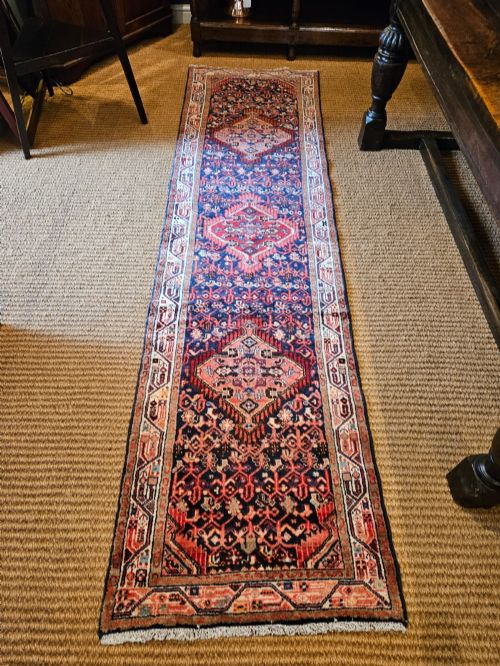
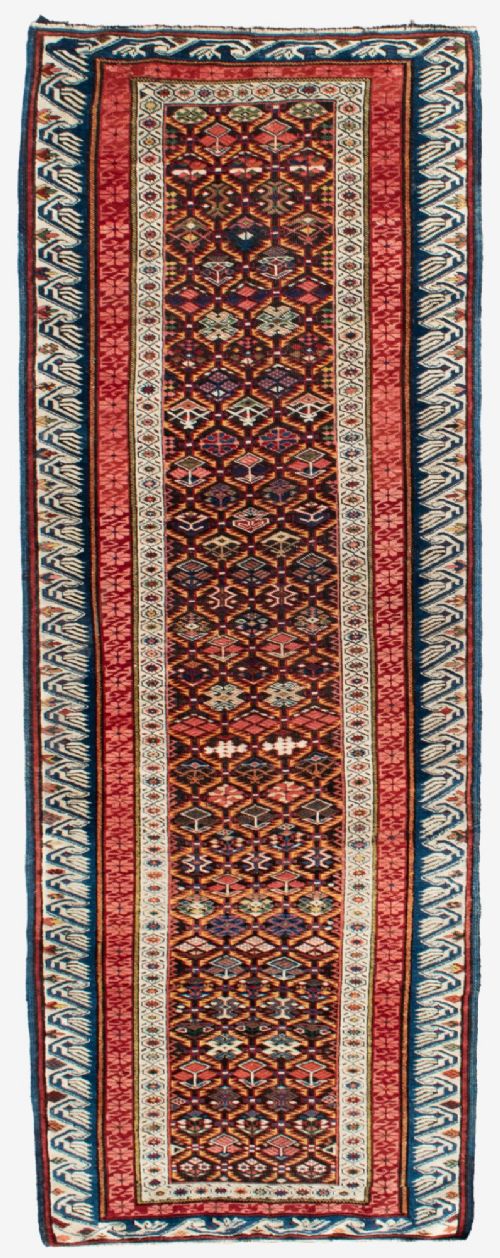
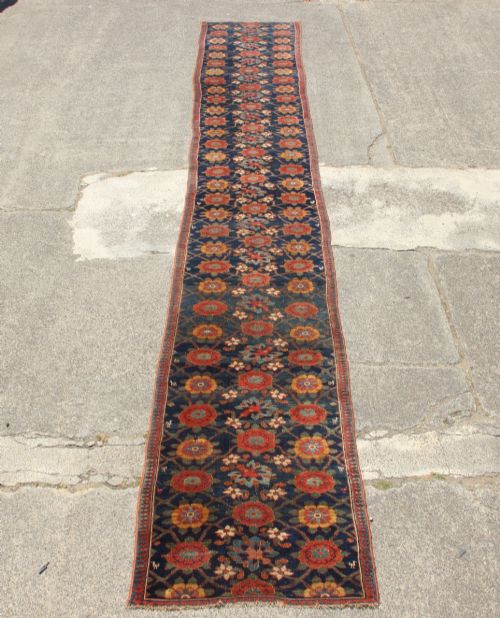
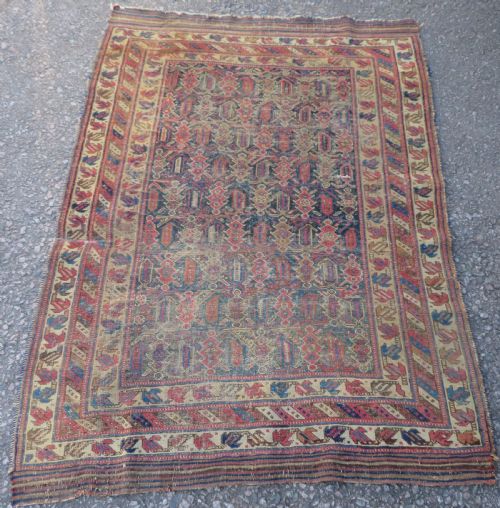
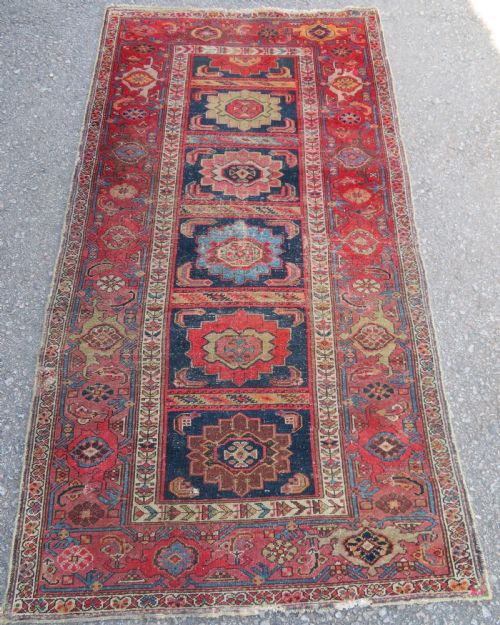
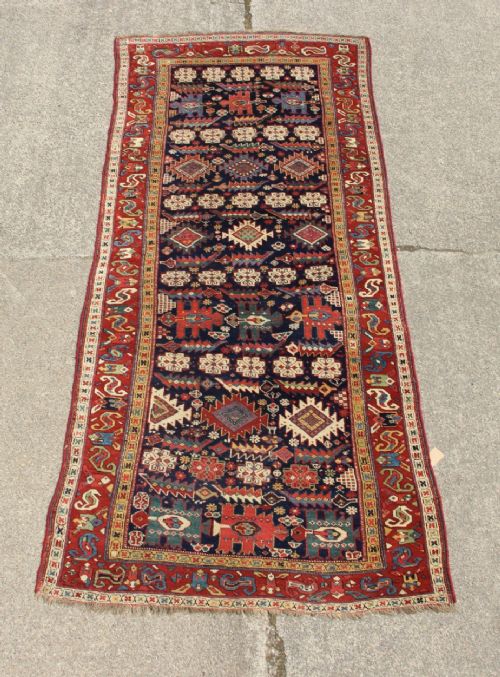
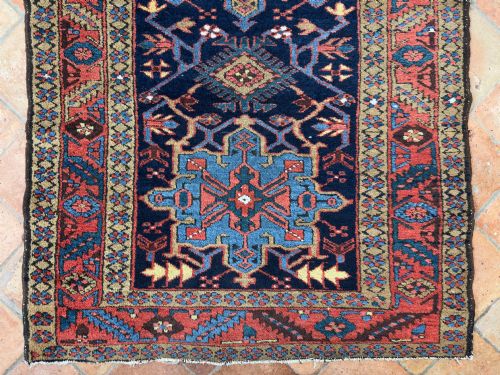
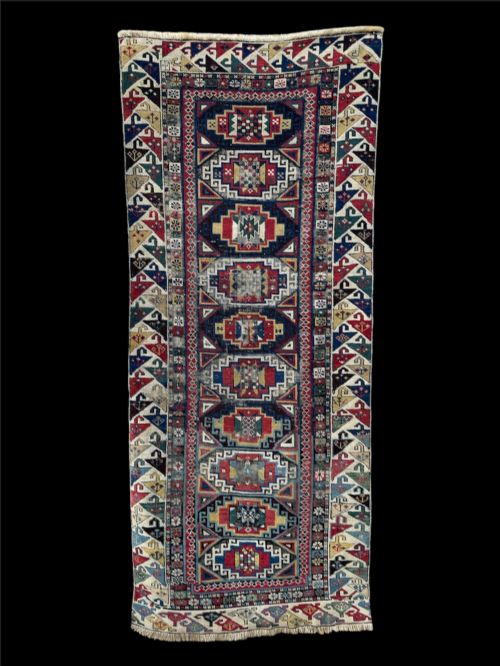
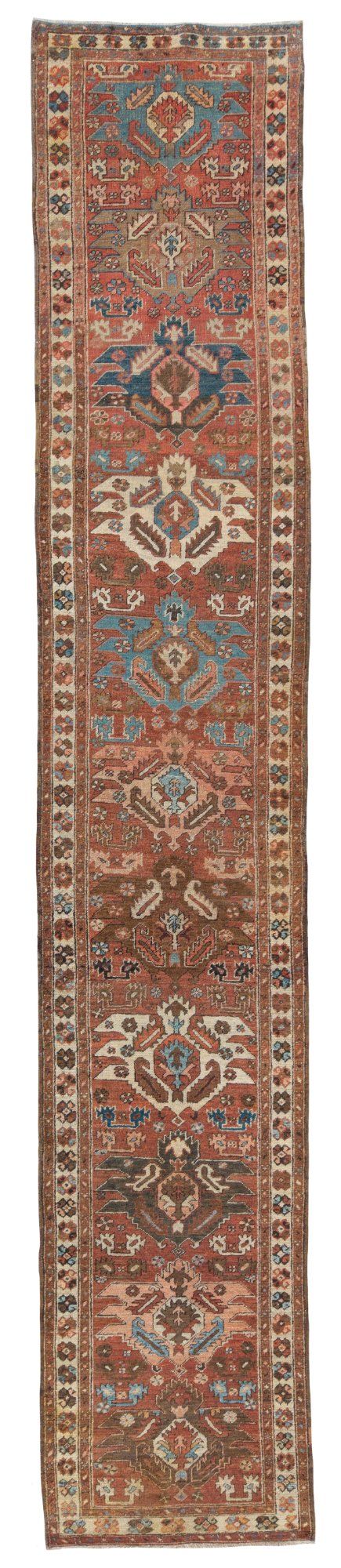
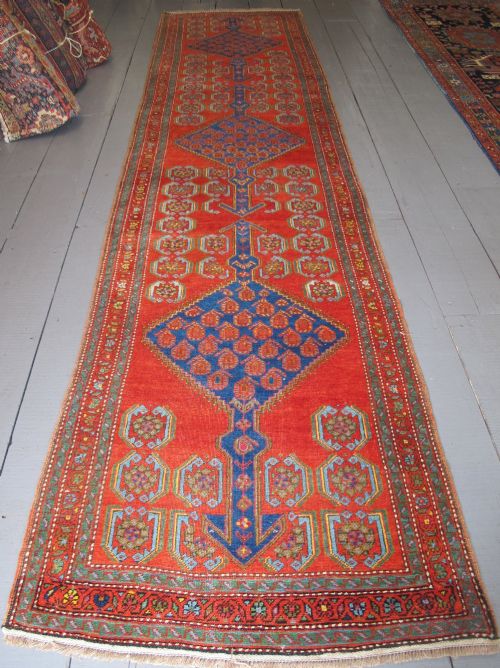
A red blue hallway rug is typically encountered as an antique runner originating from Persian or Caucasian workshops, dating from the nineteenth and early twentieth centuries. These pieces serve to line corridors and narrow spaces with geometric and tribal motifs.
The selections span distinct regional weaving traditions, including Heriz, Kazak, Shirvan, and Hamadan styles. Each variety brings specific regional colour palettes and border arrangements suited to long floors.
Materials and construction
The construction relies primarily on wool and hand-spun wool foundation yarns combined with cotton structural elements. Weavers knotted these fibres tightly to withstand heavy corridor footfall over generations.
Natural dyes provide the characteristic red and blue tones seen across the pieces. These plant and mineral colourants yield depth and variation that chemical alternatives do not replicate.
Current selections span weaving traditions from 1860 through 1930, utilising hand-spun wool and natural dyes.
Differences in quality
Quality rests in the precision of the knotting and the crispness of the tribal design work. Denser knot counts allow sharper geometric lines in medallions and lattice patterns.
The condition of the wool pile and the integrity of the original selvedges dictate the grade of an individual piece. Retaining balanced proportions across long narrow dimensions requires high weaving skill.
The Red Blue Hallway Rug Glossary
- Runner
- A long, narrow carpet format designed specifically for hallways, corridors, and staircases. These pieces measure significantly longer than they are wide.
- Selvedge
- The bound or reinforced side edges of a rug that prevent the foundation threads from fraying. Careful finishing here protects the structural integrity.
- Medallion
- A central ornamental motif set into the field of a rug, often diamond or octagonal in shape. Weavers use these to anchor the visual symmetry.
- Natural dye
- Colour derived from plants, insects, or minerals rather than synthetic compounds. These materials age with a soft patina.
- Knot count
- The density of individual knots tied per square inch or centimetre. Higher counts generally indicate finer execution.
Red Blue Hallway Rug: Frequently Asked Questions
How do I place a long runner in a narrow corridor?
Centre the runner down the length of the hallway, leaving equal strips of bare floor visible on either side. This frames the textile and protects the edges from heavy wall friction.
Ensure that doors swing freely over the pile height of the wool. Using a suitable underlay prevents shifting on wooden or tiled floors.
How do I distinguish Persian from Caucasian hallway pieces?
Persian pieces often display curvilinear florals, Herati patterns, or large geometric medallions associated with Heriz and Hamadan weaving. The wool tends towards supple handling and intricate borders.
Caucasian pieces like Kazak or Shirvan runners favour bolder, highly geometric tribal motifs with primary blocks of saturated red and blue. The colour contrasts are sharper and more direct.
Why do these runners have uneven widths?
Hand-knotted village and tribal rugs were produced on traditional upright looms without industrial tensioners. Slight variations from one end of a runner to the other reflect the organic nature of hand weaving.
These minor irregularities confirm the handmade origin of the piece. They separate antique tribal floor coverings from modern machine-woven replicas.
How should I clean and maintain an antique wool runner?
Vacuum the runner gently using suction only, avoiding rotating brush bars that can pull at the wool pile. Regular cleaning prevents grit from settling deep into the foundation.
Professional specialist washing is recommended for thorough cleaning. Keep antique wool away from direct, prolonged sunlight to preserve the natural dyes.