



Red Bakhtiari Floor Rug
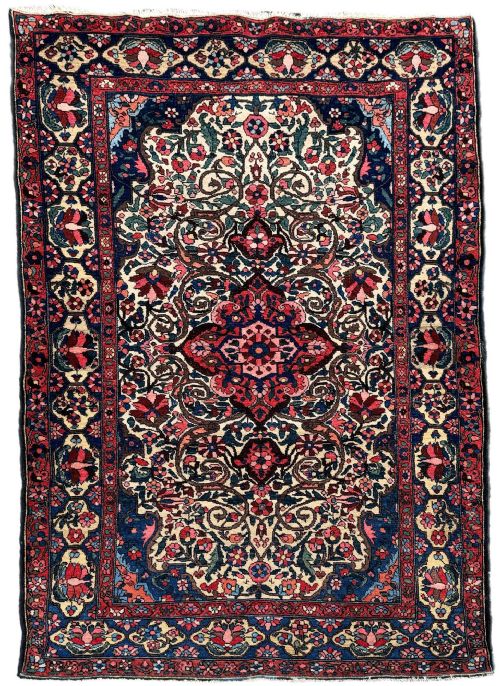
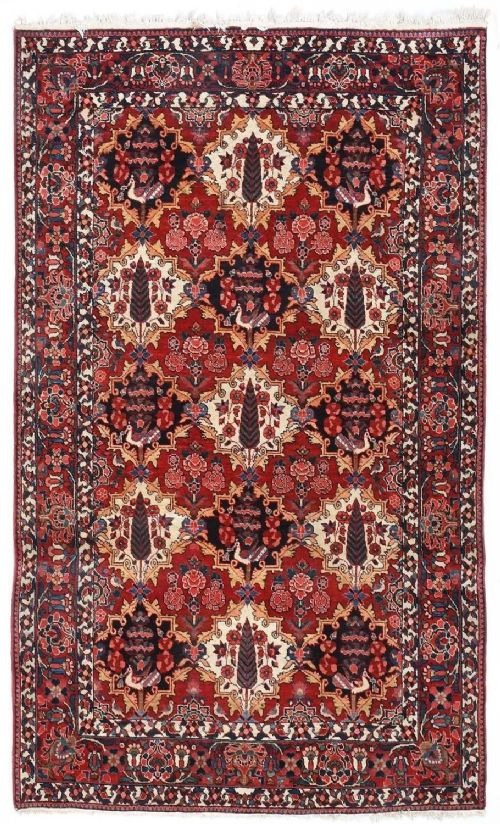
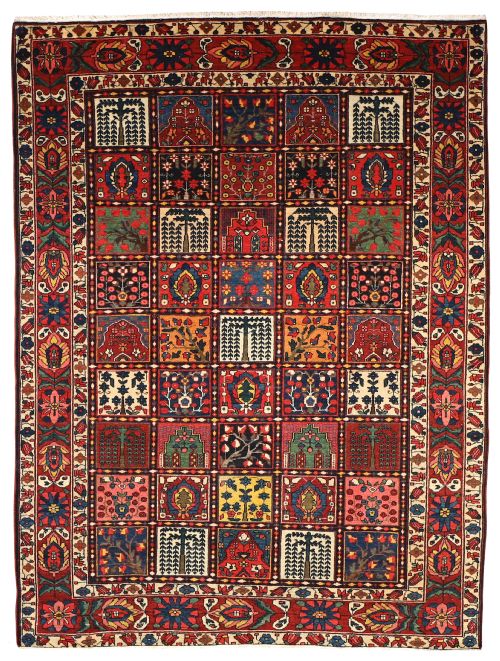
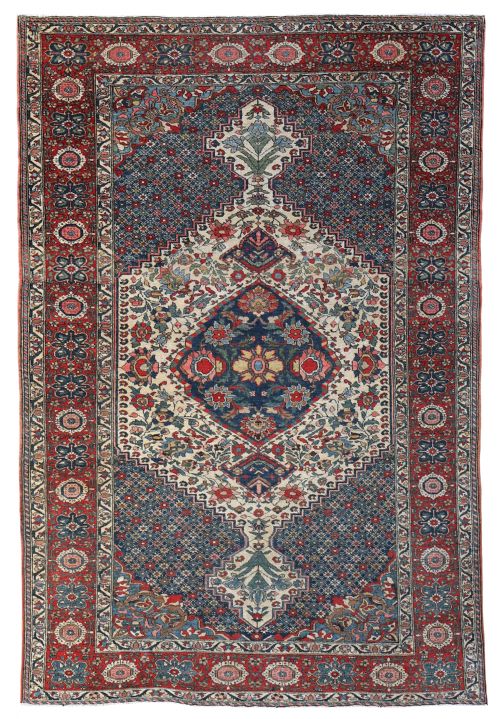
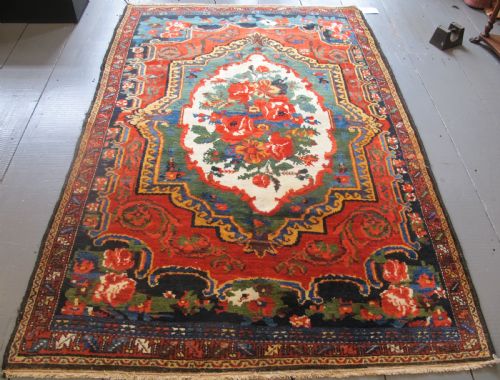
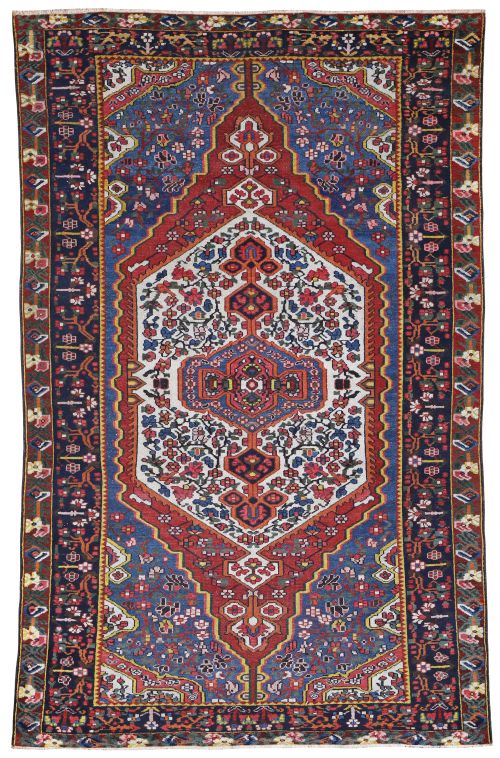
A red bakhtiari floor rug brings the bold geometric motifs and rich vegetable dyes of Western Persia straight into a room.
Red Bakhtiari Floor Rug
A red bakhtiari floor rug is a heavy wool carpet woven by the tribal and village communities of the Chahar Mahal region in Western Persia. These floor coverings emerge from a long tradition of nomadic and village craft, often displaying striking tribal patterns or formal garden layouts.
Most examples found here date from the nineteenth and early twentieth centuries, spanning periods from the eighteen-eighties up to nineteen-thirty. Buyers encounter both smaller area rugs and larger village carpets, all tied to the weaving traditions of Persian Bakhtiari and Kurdish tribes.
The regional palette relies heavily on rich madder reds set against deep blues, ivories, and golds. Buyers often find these floor coverings utilised in studies, hallways, and living spaces where a durable and characterful textile is required.
Materials and construction
Every red bakhtiari floor rug is built on a foundation of hand-spun cotton warps andwefts, which provide the structural stability for the thick pile. Artisans knot the heavy wool tightly by hand onto this cotton grid, creating a dense and resilient surface designed to withstand decades of foot traffic.
The wool used in these textiles comes from local flocks raised in the high mountain pastures of Western Persia, yielding a natural lanolin content that keeps the fibres supple. Natural dyes derived from plants and roots, particularly madder for the characteristic reds, give the wool its deep and enduring tone.
Red Bakhtiari Floor Rug Retail Price Guide 2026
Typical asking prices for red bakhtiari floor rug among the pieces listed under this phrase on Sellingantiques today, from the lower quarter to the upper quarter. They describe what is for sale here now, not the wider market.
Some weavers tucked small tribal amulets or mismatched knots into the borders to ward off the evil eye.
Judging the work
The finesse of a red bakhtiari floor rug depends on the density of the knotting and the crispness of the tribal design. Higher-grade examples display precise geometric lines and intricate floral or garden compartments that require exceptional skill from the weaver.
Condition and pile retention also dictate the standing of a piece within its period. Examples that retain their original outer borders and have even, uncompromised wool across the field command greater appreciation among collectors.
The Red Bakhtiari Floor Rug Glossary
- Chahar Mahal
- The high mountain valley region in Western Persia where these tribal and village floor coverings are traditionally woven.
- Madder
- A natural red dye extracted from the roots of the Rubia plant, forming the dominant colour base for these carpets.
- Warp
- The stationary vertical cotton threads stretched across the loom that carry the structural integrity of the woven rug.
- Weft
- The horizontal cotton threads passed through the warps after each row of knots to bind the structure together firmly.
- Medallion
- The central ornamental design motif placed in the field of the carpet, often taking a geometric or floral shape.
Red Bakhtiari Floor Rug: Frequently Asked Questions
How do I clean a wool rug?
Regular gentle vacuuming without a beater bar removes loose dirt from the deep wool pile. Professional specialist cleaning is necessary when deeper washing is required.
Avoid using domestic chemical detergents or hot water extraction on antique pile textiles. These harsh treatments strip the natural lanolin from the wool and damage the cotton foundation.
Are these rugs durable enough for hallways?
The dense hand-knotted wool construction makes these textiles exceptionally hard-wearing for high-traffic zones. Their robust nature originally served nomadic and village households on stone floors.
Using a quality underlay prevents slipping and cushions the cotton foundation against hard flooring surfaces. This simple addition significantly extends the working life of an antique carpet.
How do I date an older carpet?
Dating relies on examining the specific wool texture, natural dye palette, and structural weave characteristics. Stylistic shifts between nineteenth-century tribal work and nineteen-thirties village output provide clear clues.
Comparing the knot structure and border motifs with documented examples helps narrow down the decade of production. Documentation and regional attributions in the listings further confirm the era.