

Red Woven Textile
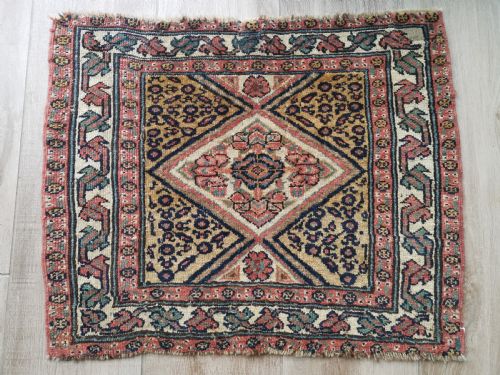
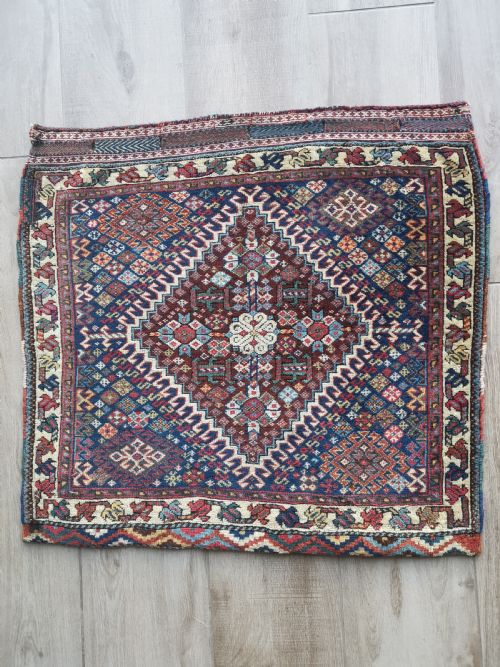
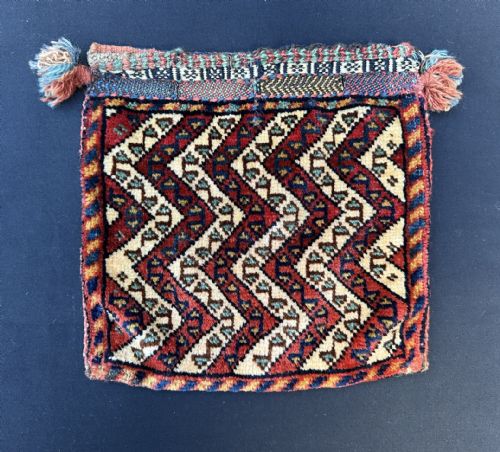
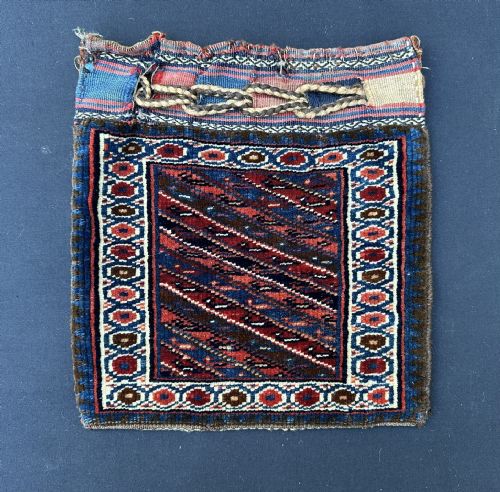
These red antique woven textile pieces range from nomadic saddle bags and horse covers to nineteenth century shawls, offering rich colour and tribal heritage for your home.
Red Woven Textile
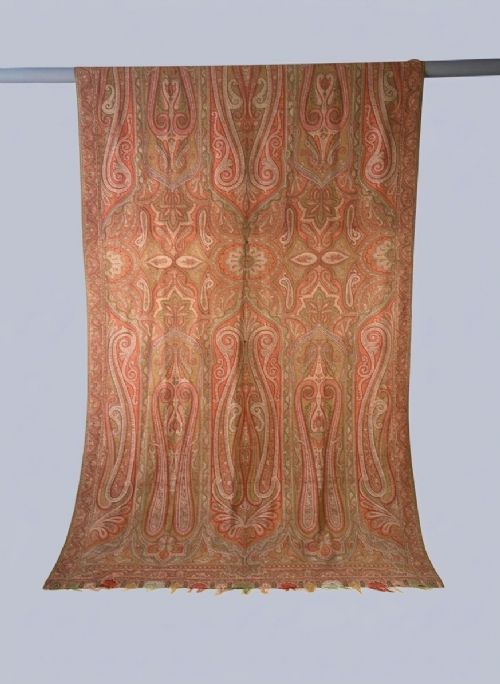
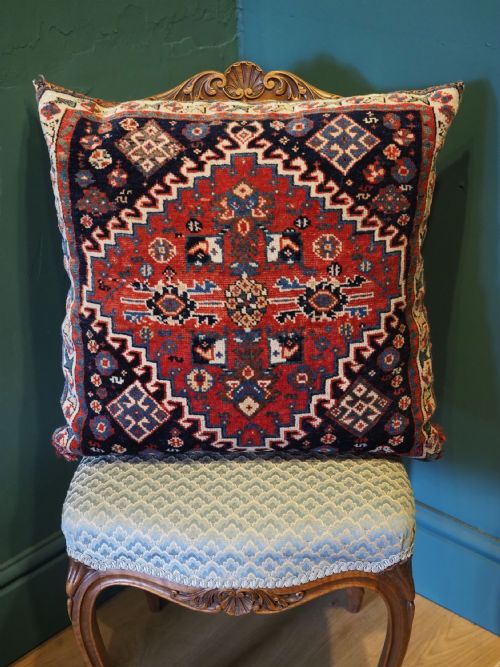
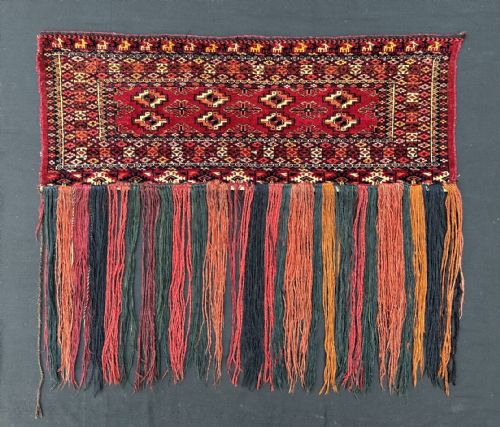
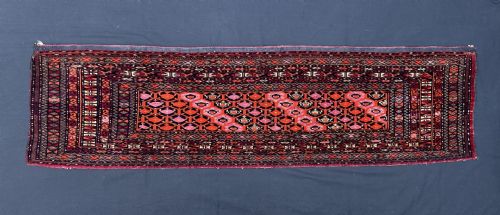
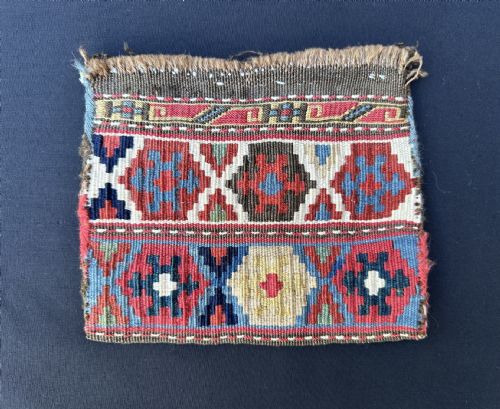
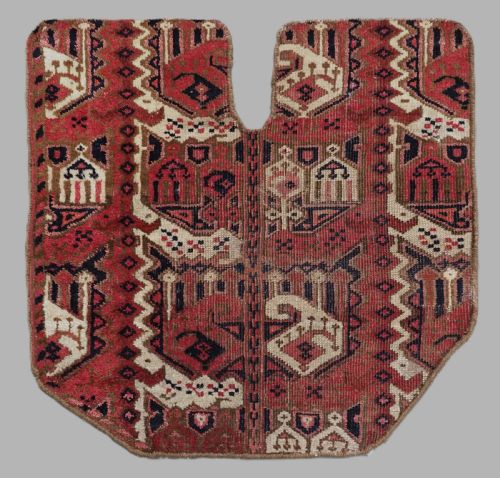
The pieces on this page lean heavily towards tribal weaves from regions like the Caucasus, Central Asia, and Persia, dominated by rich madder reds and deep crimson wools. You will find specific tribal pieces attributed to groups including the Yomut, Ersari, Tekke, Qashqai, and Shahsevan, alongside traditional Scottish and Victorian Paisley shawls.
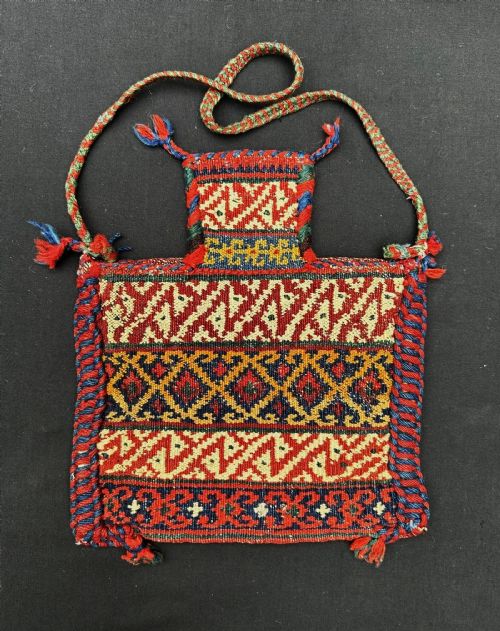
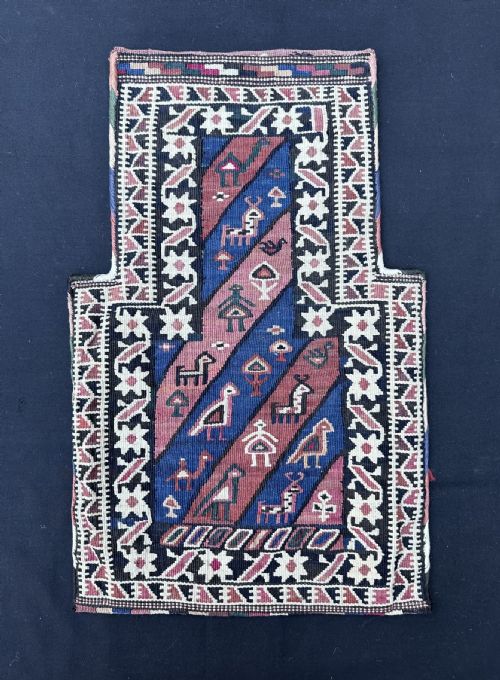
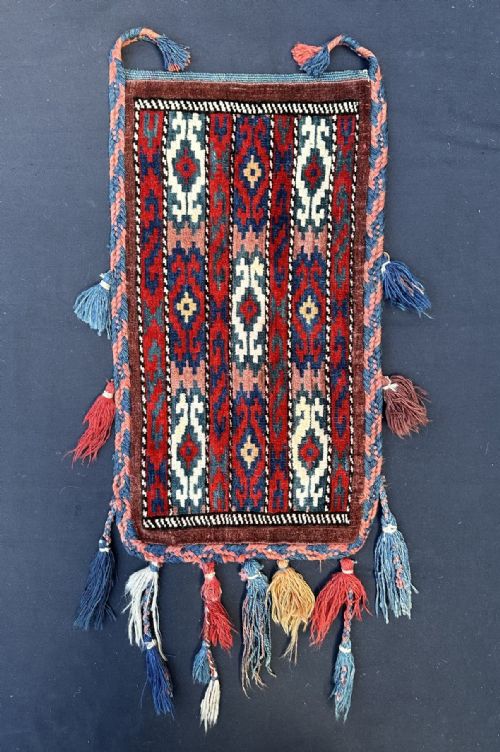
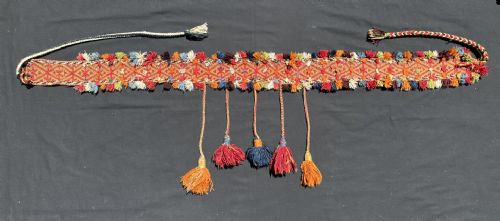
Domestic and ceremonial items form the backbone of the selection, moving from utilitarian salt bags and spindle bags to decorative horse covers and wall-hanging tapestries. These works reflect the practical daily routines and nomadic traditions of their makers, translated into enduring textile art.
Materials and construction methods
Construction relies primarily on wool, hand-spun wool, and cotton, often utilising natural dyes to achieve deep reds, browns, and indigo contrasts. Weavers employed durable pile and flatweave techniques to ensure functional items like saddle bags and storage sacks could withstand heavy nomadic use.
Fibre preparation involved spinning local wool by hand before applying natural dyestuffs, producing variegated tones that age with considerable character. Structural integrity depended on tight knotting or flatweaving, occasionally supplemented by leather details and original wool tassels.
Object forms range from bread sofrehs and spindle bags to ceremonial animal trappings and Victorian wool shawls.
Factors influencing quality and execution
Quality rests upon the fineness of the weave, the clarity of the tribal motifs, and the preservation of the original natural dyes. Tighter knot counts and precise geometric execution distinguish superior bagfaces and storage sacks from simpler utilitarian examples.
The survival of original elements, such as wool backs, tassels, and complete borders, elevates the status of a piece. Faded natural dyes and well-preserved structural integrity indicate careful historical maintenance and superior initial material selection.
The Red Woven Textile Glossary
- Torba
- A small storage bag produced by Turkmen tribes. These items were traditionally used inside tents for household storage.
- Sofreh
- A flatwoven spread or cloth used for kneading dough or serving meals. They frequently display minimalist tribal layouts.
- Asmalyk
- A ceremonial camel trapping produced by Yomut tribes. These pentagonal hangings decorated animal flanks during wedding processions.
- Chuval
- A large tent bag used by Turkmen nomads for bedding and clothing. They display repeated gul motifs across the face.
Red Woven Textile: Frequently Asked Questions
How were these bags used?
Nomadic tribes utilised these woven bags for practical storage inside tents, holding salt, bread, tobacco, or personal possessions during seasonal migrations.
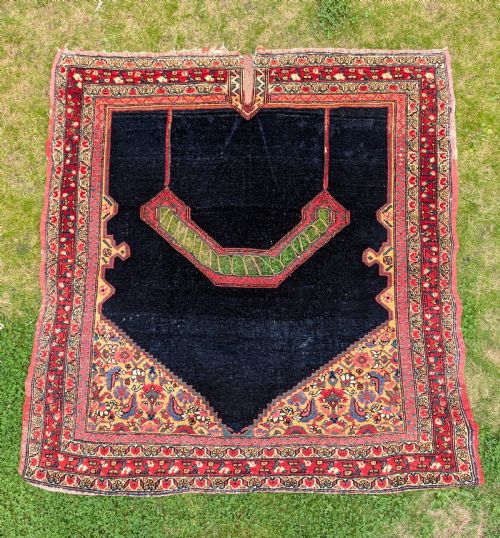
Larger versions served as camel and horse trappings for ceremonial events like weddings, while flatwoven sofrehs functioned as dining surfaces.
Where do these pieces originate?
The listings originate largely from Central Asian oases, Persian provinces, and nineteenth century European looms. Turkmen tribes, Qashqai nomads, and Scottish weavers represent the primary geographic sources.
Specific regions include Turkmenistan, South Persia, Azerbaijan, and Paisley in Scotland.
How should I display them?
Smaller bagfaces and trappings suit wall mounting or placement on flat surfaces as decorative accents. Larger textiles like horse covers or shawls can be draped over furniture or hung securely.
Keep them away from direct sunlight to protect the natural dyed wool fibres from fading.
How do I identify tribal designs?
Tribal attribution relies on specific geometric motifs, border arrangements, and characteristic colour palettes associated with particular groups. Yomut and Ersari pieces display distinct gul patterns and border structures.
Consulting specific regional attributions helps connect a piece to its maker.