

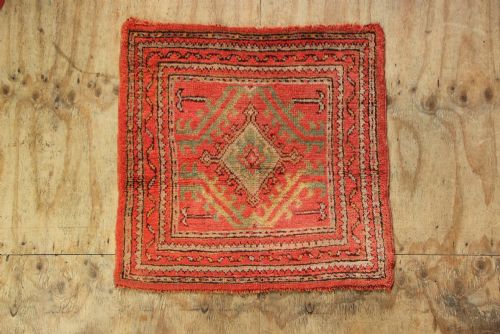


Red and Green Rug
A red and green rug brings warmth and grounded pattern to a room, offering centuries of weaving traditions from Anatolia, Persia, and beyond.
Red and Green Rug
A red and green rug encompasses woven floor coverings originating from diverse traditions, including Anatolian, Caucasian, and Persian workshops. Buyers searching for a red and green rug encounter pieces ranging from village carpets to expansive room-sized carpets.
The inventory on this page spans several centuries, featuring pieces dated from the eighteenth century through to the early twentieth century. Common formats include square formats, room-sized carpets, runners, and specific regional prayer rugs.
Village and tribal traditions represent a significant portion of the available pieces, bringing geometric motifs and spontaneous designs to the foreground. Town and court workshops also appear, offering more formal compositions executed in wool, cotton, and silk.
Materials and construction
Weavers relied principally on wool for the pile, utilising cotton for foundations in many town carpets and wool or mixed materials in village pieces. Silk occasionally appears in finer workshop productions, adding subtle sheen and allowing for intricate detail.
Dyes derived from natural sources created the characteristic red and green palettes seen across these pieces, grounding the textiles in traditional regional craft. Hand-knotting techniques varied by origin, with Caucasian and Anatolian village weavers employing robust structural knots distinct from Persian town methods.
Red and Green Rug Retail Price Guide 2026
Typical asking prices for red and green rug among the pieces listed under this phrase on Sellingantiques today, from the lower quarter to the upper quarter. They describe what is for sale here now, not the wider market.
Assessing quality in antique carpets
Quality rests in the handling of the palette and the clarity of the design, where balanced proportions elevate a piece above standard domestic output. The saturation and interaction of red and green tones dictate much of the visual impact.
Structural integrity and knot density influence durability and the crispness of the rendered motifs. Finer village and court carpets display precise execution in their borders and central medallions, whereas simpler tribal pieces derive their character from asymmetry and organic dye variations.
Mohtasham Kashan
The Red and Green Rug Glossary
- Anatolian
- Pertaining to the region of Asia Minor, known for rich village and prayer rug traditions. These pieces often feature bold geometric or stylized floral vocabulary.
- Caucasian
- Originating from the Caucasus region between the Black Sea and the Caspian Sea. Rugs from this area typically display strong polygonal motifs and crisp coloration.
- Prayer rug
- A small format carpet featuring a mihrab or niche design used historically for daily prayers. Konya and Ghiordes examples frequently follow this layout.
- Kilim
- A flat-woven carpet lacking a pile, produced by tightly interlacing warp and weft threads. These textiles offer lighter weight and sharp geometric patterns.
- Medallion
- A central ornamental motif dominating the field of a carpet. Town and workshop carpets utilise this element to anchor symmetrical compositions.
Red and Green Rug: Frequently Asked Questions
How do I clean an antique rug?
Gentle surface brushing and professional specialist cleaning are essential for preserving natural dyes and fragile wool foundations.
Avoid immersion washing or harsh chemical treatments that strip natural oils from the fibres.
Where were these rugs made?
The pieces originate primarily from weaving centres across Turkey, the Caucasus, Persia, and India.
Specific towns and regions like Ushak, Kashan, and Karachov developed distinct local styles and knotting techniques.
Can I use these rugs in high traffic areas?
Many sturdy village carpets and room-sized carpets withstand regular domestic use when paired with a quality underlay.
Fine silk pieces and fragile nineteenth-century prayer rugs suit low-traffic display spaces better.
How do I date an antique rug?
Stylistic markers, structural analysis of the foundation materials, and dye characteristics help establish the period.
Comparing knot types and regional design evolution provides reliable clues to age.