


Red Accent Tables
Red accent tables bring vibrant colour and surface utility to a room through painted finishes, rich woods and decorative lacquer.
Red Accent Tables
Red accent tables encompass a variety of small occasional pieces, including side tables, lamp tables and gueridon tables designed to sit beside seating or anchor corners. Buyers seeking these items will find surfaces finished in bold lacquers, painted polychrome, or constructed from naturally reddish timbers like mahogany and walnut.
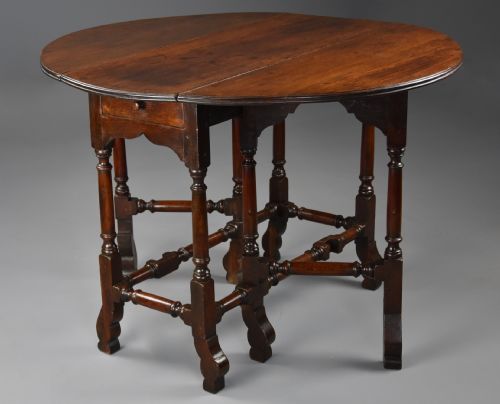
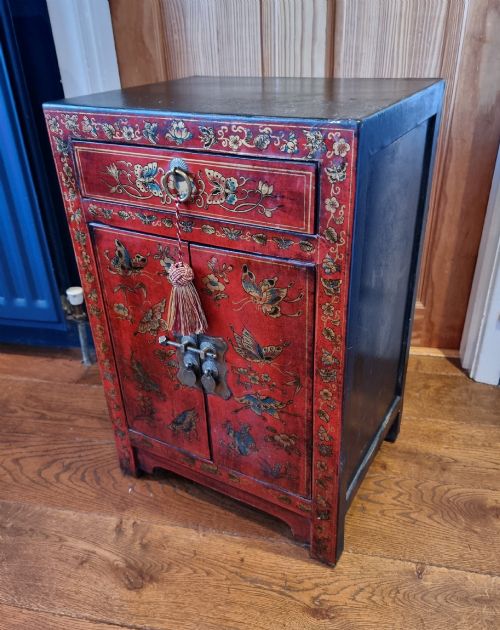
The selections span numerous periods and aesthetics, ranging from eighteenth-century gateleg and tea tables to nineteenth-century Chinoiserie and Edwardian marquetry. Chinese export pieces, Burmese lacquer, and Japanese elm tables also appear alongside European revival styles.
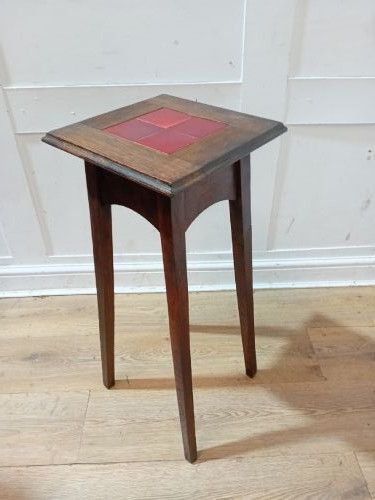
Most examples function primarily as small side or occasional surfaces, though the category occasionally stretches to include plant stands, lowboys, and small cupboards. The defining characteristic remains the striking red tone, whether achieved through pigment, lacquer, or dense hardwood grain.
Materials and construction
Construction relies heavily on traditional cabinet-making timbers such as mahogany, oak, elm, and walnut, often paired with decorative surface treatments. Wood is frequently carved, turned, or veneered to form tripod bases, gatelegs, or rectangular frames.
Colour is applied through specialist techniques including hand-painted polychrome decoration, layered lacquer, and gilding. Many pieces incorporate contrasting materials such as inset marble tops, brass mounts, or velvet inserts to elevate the design.
Listings feature woods like mahogany, elm, walnut, and oak alongside decorative lacquer and marble tops.
Evaluating quality and craftsmanship
Quality rests primarily on the integrity of the timber and the skill executed in the surface decoration. Hand-painted Chinoiserie details and intricate lacquer work demonstrate superior craftsmanship compared to simpler stencilled or later applied finishes.
Structural stability in smaller frames, such as tripod bases and gateleg joints, separates fine cabinet-making from basic utility furniture. Original surface patination and intact secondary materials, such as genuine marble tops or brass mounts, elevate the standing of a piece.
François Linke·Bruno Zach·Karl Palda
The Red Accent Tables Glossary
- Guéridon
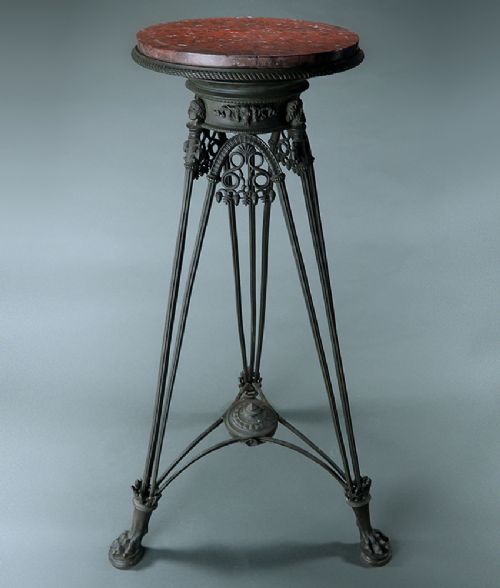
- A small French table, often circular and supported by a central pillar or three legs. These frequently feature marble tops.
- Chinoiserie
- European decorative style inspired by Chinese art and design, characterised by painted lacquer and figurative scenes. It gained immense popularity during the eighteenth and nineteenth centuries.
- Gateleg table
- A drop-leaf table with hinged flaps supported by legs that swing outward like gates. This design allows the surface area to expand or contract.
- Bijouterie table
- A glass-topped display table designed for showcasing small collectables and jewellery. They often feature velvet linings inside the glazed compartment.
- Marquetry
- Decorative inlay work where small pieces of wood veneer are fitted together to form pictorial designs. Artisans utilise contrasting timbers to create detailed patterns.
Red Accent Tables: Frequently Asked Questions
What rooms suit red accent tables?
These tables fit easily beside seating in drawing rooms, studies, or hallways where a splash of colour and a small surface are useful. Their compact footprints allow them to act as focal points without overwhelming the surrounding space.
Because they appear in styles ranging from Asian lacquer to European revival, matching one to an existing interior depends largely on the specific shade and period details of the piece.
How do I care for lacquered surfaces?
Lacquered and painted surfaces require gentle dusting with a soft, dry cloth and protection from direct sunlight to prevent fading. Avoid using abrasive cleaning agents or excessive moisture on antique finishes.
Placing coasters beneath cups or objects protects the decorative top from heat marks and moisture rings over time.
Are marble topped tables heavy?
Marble inserts add substantial weight to the top of an occasional table, which actually helps anchor the piece and prevents tipping. However, this weight requires care when lifting or moving the furniture.
The marble itself is usually removable from the wooden base, making transport somewhat simpler if handled with caution.