




Chinese Chippendale Side Tables
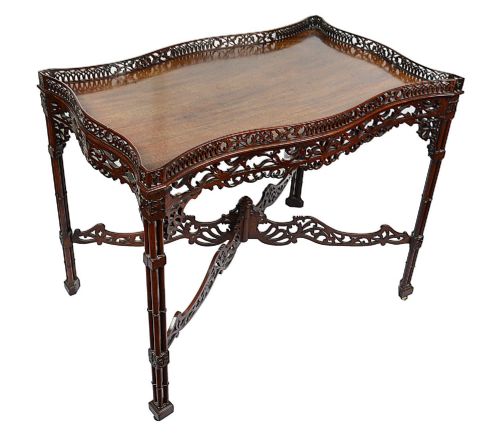
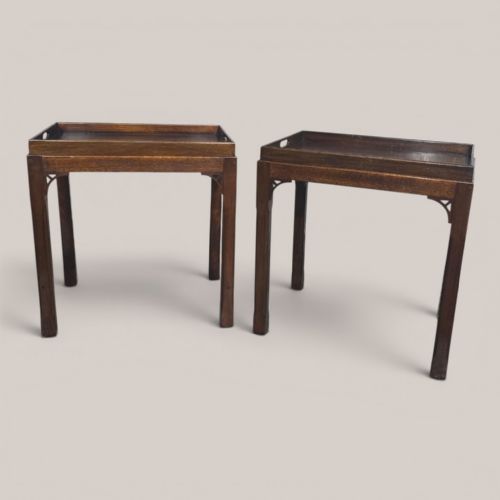
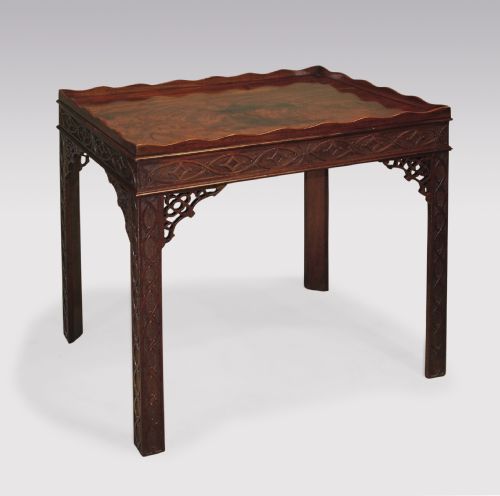
These Chinese Chippendale side tables bring together intricate fretwork and solid mahogany, offering a distinct focal point for any room.
Chinese Chippendale Side Tables
When you search for chinese chippendale side tables, you encounter formal occasional furniture built in mahogany, painted timber, and flame mahogany veneer. These pieces span the eighteenth century, the Victorian era, and later revival periods into the nineteen thirties.
The forms on this page include console tables, writing tables, Pembroke tables, lamp tables, and silver tables. Most examples draw upon eighteenth-century proportions while displaying the characteristic Chinese Chippendale style and related revival manners.
Buyers meet both genuine eighteenth-century examples and later interpretations from the nineteenth and twentieth centuries. Each version adapts fretwork galleries and carved supports to serve as functional side tables in a modern interior.
How They Were Made
Cabinetmakers constructed these tables primarily from solid mahogany and flame mahogany veneer, occasionally employing painted timber for scarlet or monochrome finishes. Brass hardware appears on drawer fittings and pull handles where writing or console forms require storage.
Carpenters shaped the timber using traditional joinery methods, applying detailed carving to legs, rails, and aprons. Pierced fretwork galleries and lattice patterns were hand-cut to emulate the aesthetic of eighteenth-century pattern books.
Chinese Chippendale Side Tables Retail Price Guide 2026
Typical asking prices for chinese chippendale side tables among the pieces listed under this phrase on Sellingantiques today, from the lower quarter to the upper quarter. They describe what is for sale here now, not the wider market.
Listings on this site span the eighteenth century, Victorian era, Edwardian period, and nineteen-thirties revivals.
What Varies in Quality
Quality rests upon the crispness of the hand-carved ornament and the depth of the fretwork detailing. Finer tables exhibit sharp, clean lines in the woodwork, whereas lesser revival pieces display softer edges and moulded rather than carved motifs.
The choice of materials also dictates standing, with figured flame mahogany veneer and dense solid timber marking out superior examples. Construction integrity, seen in the tightness of joints and the retention of original brass fittings, separates standard production from exceptional work.
Butler
The Chinese Chippendale Side Tables Glossary
- Chinese Chippendale
- A sub-style of the Georgian period featuring fretwork, lattice patterns, and pagoda motifs inspired by Chinese design. It gained popularity through mid-eighteenth-century pattern books and later Victorian revivals.
- Pembroke Table
- A small rectangular table with hinged drop flaps on either side, often fitted with a single drawer. Introduced in the eighteenth century, it served as a versatile breakfast or writing table.
- Silver Table
- A specialised occasional table with a raised gallery around the edge of the top to prevent tea service or silverware from sliding off. These items frequently date to the eighteenth century.
- Console Table
- A table designed to stand against a wall, traditionally supported by brackets or console legs rather than four independent vertical posts. They often feature elaborate carving along the front apron.
- Flame Mahogany Veneer
- A thin slice of mahogany timber cut from the fork of the tree where the branches join the trunk, creating a distinct flickering flame pattern. Cabinetmakers applied this to prominent surfaces for visual impact.
Chinese Chippendale Side Tables: Frequently Asked Questions
What is a Chinese Chippendale side table?
These tables are occasional pieces of furniture that incorporate pierced fretwork, lattice patterns, and carved woodwork derived from eighteenth-century design. They encompass forms such as console, writing, and lamp tables.
Pieces range from eighteenth-century originals to Edwardian and later twentieth-century revivals. Each version utilises mahogany or painted timber to create an ornate focal point.
How were these tables used historically?
Historically, these tables functioned as display surfaces for porcelain, silver, or lighting in formal reception rooms. Writing and Pembroke variants provided a portable surface for correspondence and light paperwork.
Silver tables specifically held tea services and tableware, secured by raised galleries around the top edge. Console tables stood against walls to anchor decorative arrangements in a room.
How do I live with a side table?
Living with these tables involves placing them in hallways, sitting rooms, or bedrooms where their carved details remain visible. Their compact footprints allow them to function as lamp stands or small display surfaces.
To care for the timber, keep them away from direct heat sources and sunlight that might dry out the mahogany or fade painted finishes. Regular dusting preserves the intricate fretwork without damaging the surface.
How do I tell periods apart?
Distinguishing between an eighteenth-century piece and a later revival involves examining the timber ageing, construction joints, and tool marks. Eighteenth-century examples show hand-cut joinery and natural patination developed over centuries.
Nineteenth and twentieth-century revival pieces, such as those from the Victorian, Edwardian, or nineteen-thirties periods, often display machine-assisted precision or different secondary woods beneath the mahogany veneer.