




Red Chippendale Tables
These red chippendale tables and related forms offer rich mahogany timber and classic revival styling for sophisticated period interiors.
Red Chippendale Tables
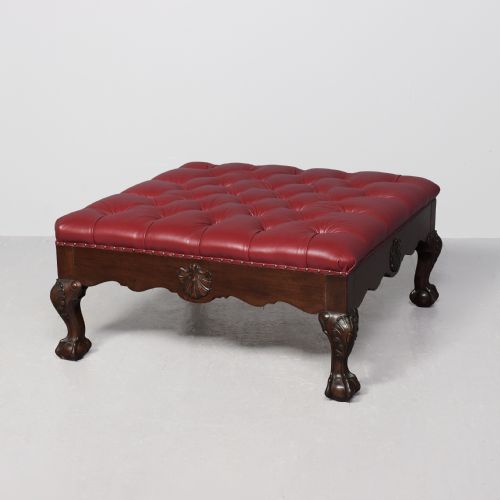
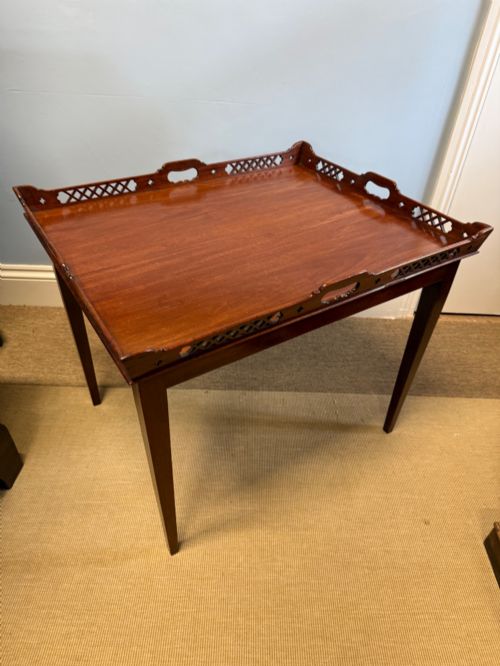
When searching for red chippendale tables, collectors encounter a diverse selection of side tables, occasional pieces, and games tables spanning the eighteenth century to the twentieth century. Mahogany dominates the selection, frequently paired with red, burgundy, or scarlet leather and hide upholstery on stools and writing surfaces.
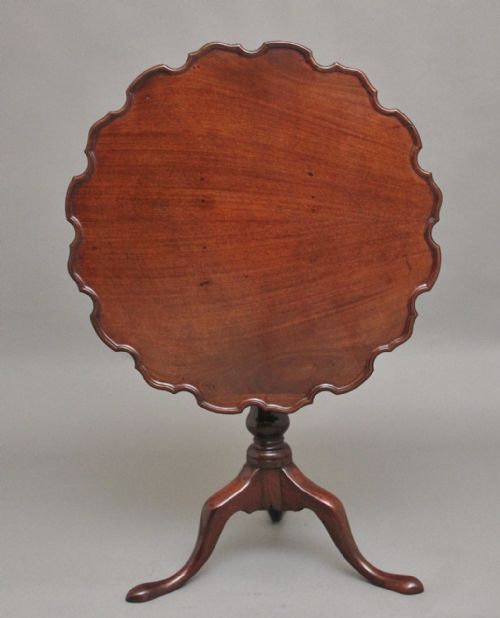
The objects listed range from authentic eighteenth-century George III pieces to later revival items produced during the Victorian, Edwardian, and 1930s periods. Forms include tripod tables, tray tables, lowboys, and bijouterie cabinets, reflecting the enduring popularity of Thomas Chippendale's design vocabulary.
Buyers are most likely to encounter Chippendale Revival and Georgian style pieces manufactured in mahogany, often featuring carved details and occasional painted timber finishes. These items serve both functional and decorative roles in traditional room schemes.
Materials and Construction
Makers relied primarily on solid mahogany and mahogany veneers, shaping the dense timber to achieve crisp carved details and sturdy frames. Brass hardware, such as castors and hinges, frequently complements the woodwork.
Leather and hide inserts in shades of red, burgundy, and scarlet provide durable writing and display surfaces on desks and stools. Glass panels feature in bijouterie display tables, while velvet appears on upholstered seating.
Even a modest side table once held everything from heavy tea sets to a very sleepy household cat.
Assessing Quality and Execution
The sophistication of the timber carving and the crispness of the joinery separate standard items from superior examples. Finely executed pie crust edges, serpentine shaping, and gallery tops demonstrate greater artisan skill.
The choice of secondary woods and the preservation of original hardware or upholstery surfaces also influence the character and integrity of each piece.
The Red Chippendale Tables Glossary
- Chippendale Revival
- A late nineteenth and early twentieth century movement reproducing or adapting eighteenth century furniture designs. It reinterprets classic motifs for modern homes.
- Tripod Table
- A small occasional table supported by a central pillar on three legs. They are typically designed for easy movement around a room.
- Bijouterie Table
- A glass topped display table designed to showcase small decorative objects and collections. These pieces often feature hinged lids.
- Lowboy
- A small kneehole dressing table or side table with one or more rows of drawers. This form dates back to the late seventeenth century.
- Serpentine Gallery
- A raised, undulating wooden border fitted around the top of a table. It prevents items from sliding off the surface.
Red Chippendale Tables: Frequently Asked Questions
What periods do these tables come from?
The selection spans from eighteenth-century George III origins through nineteenth-century Victorian pieces to Edwardian and 1930s revival items.
Most items reflect either original eighteenth-century craftsmanship or later revival periods that emulate those classic proportions and details.
How do I identify a Chippendale style piece?
Look for characteristic mahogany construction, intricate wood carving, and traditional forms such as tripod tables, tray tables, and side tables.
Revival pieces often incorporate recognizable eighteenth-century silhouettes alongside period-appropriate brass hardware and leather upholstery.
Where were these tables used originally?
These tables served various domestic functions in drawing rooms, libraries, and dining spaces as side tables, writing desks, or games tables.
Upholstered centre stools and footstools provided additional seating or surface utility within principal reception rooms.
How should I care for mahogany furniture?
Maintain the timber by keeping pieces away from direct heat sources and strong sunlight to protect the polished mahogany finish.
Dust regularly with a soft, dry cloth and condition leather surfaces periodically to preserve their red or burgundy tones.