


Reclining Library Armchair
A reclining library armchair is a seat designed for serious reading and deep rest, combining mechanical adjustment with solid period timbers.
Reclining Library Armchair
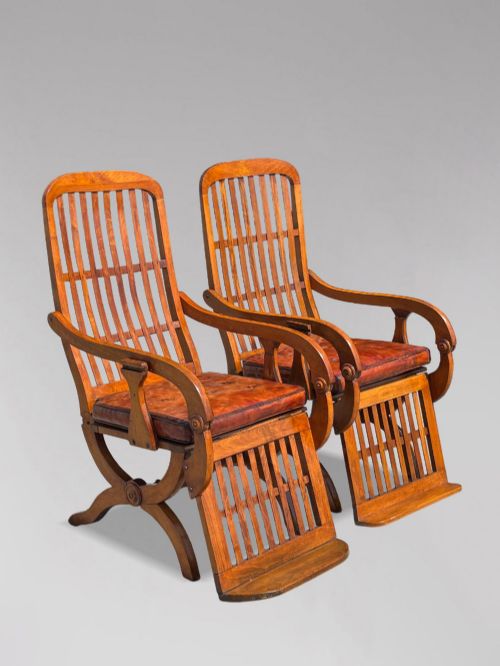
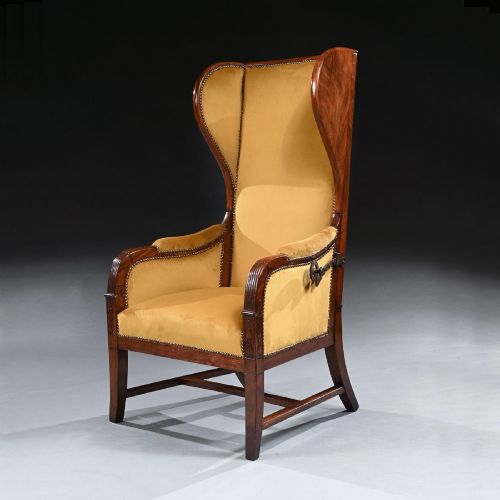
A reclining library armchair delivers both upright support for reading and adjustable angles for rest, engineered during the Georgian, Regency, and Victorian eras. These chairs respond to a nineteenth-century demand for domestic comfort through mechanical innovation.
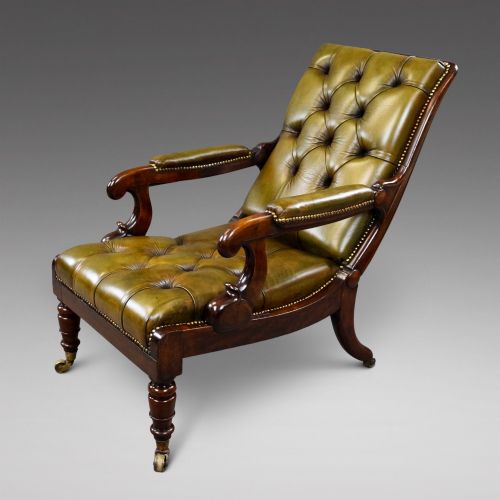
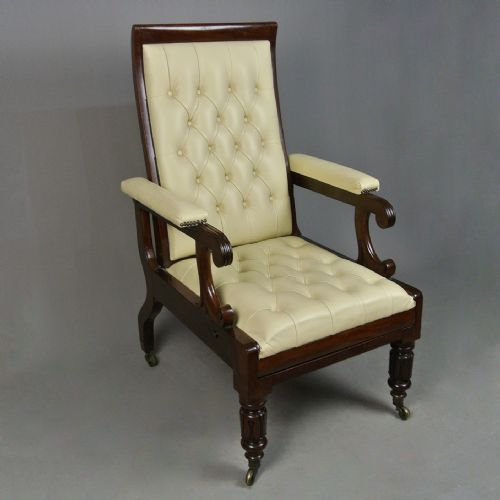
The version most commonly met on this page is the mahogany or walnut frame upholstered in buttoned leather, often resting on castors for easy movement across study floors.
Makers such as Daws, Minter, and Foot and Son developed distinct reclining mechanisms involving brass ratchets, screw adjustments, and folding footrests to alter the pitch of the back.
How They Were Made
Cabinet makers utilised dense timbers including mahogany, walnut, rosewood, and oak to construct sturdy frames capable of supporting complex mechanical actions without twisting.
Upholstery relied on horsehair stuffing beneath supple layers of brown, oxblood, or burgundy leather, secured with brass tacking and deep buttoning to hold the padding firm during adjustment.
Several examples double as invalid wheel chairs, proving that nineteenth-century inventors took lounging with a book very seriously indeed.
What Varies in Quality
The sophistication of the internal mechanism dictates the primary tier of quality, distinguishing simple manual ratchets from patented, smooth-operating screw or hydraulic actions by known makers.
Timber selection and secondary framing integrity separate standard production seating from bespoke library pieces carved with refined mouldings and fitted with original brass castors.
Robert Daws·Minter·John Ward·Foot and Son·Heals
The Reclining Library Armchair Glossary
- Mechanical armchair
- A seat fitted with internal ratchets, hinges, or screws that alter the angle of the back and seat without destabilising the frame.
- Buttoned leather
- Upholstery pulled tight with deep tufts secured by buttons, creating uniform tension across the padded backrest.
- X frame
- A structural base formed by intersecting timber members that cross in an X shape beneath the seat, common in Regency designs.
- Castor
- A small wheel fitted to the base of a chair leg to allow smooth rolling across carpets and wooden floorboards.
Reclining Library Armchair: Frequently Asked Questions
How do the reclining mechanisms work?
Most mechanisms rely on a hand-operated brass ratchet or a screw action hidden within the arm supports, allowing the user to push the backrest to a chosen angle.
Heavier Victorian examples often incorporate extending footrests or reading desks attached directly to the frame for complete relaxation.
Are these chairs comfortable for daily use?
The dense horsehair stuffing and deep leather upholstery provide firm, supportive seating rather than the soft sink of modern foam.
Their ergonomic angles were originally engineered for long hours of study and recovery.
How do I identify a patent reclining chair?
Makers frequently stamped their names and patent details onto the brass adjustment mechanisms or castors beneath the seat.
Design registrations from the Regency and Victorian periods point directly to workshops such as Daws or Foot and Son.
Where were these chairs used originally?
Gentlemen positioned them beside tall mahogany bookcases in private libraries, studies, and smoking rooms for quiet reading.
Later Victorian versions also served in convalescent spaces where patients required adjustable support throughout the day.