



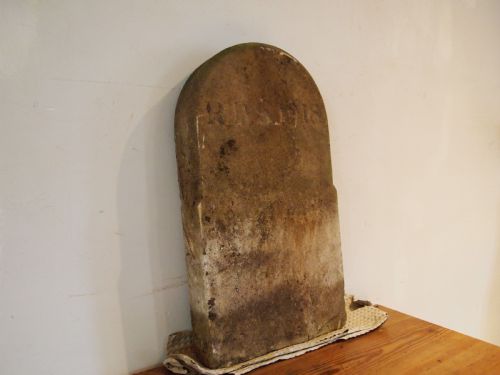
Reclaimed Stone Garden Ornament
A reclaimed stone garden ornament grounds a border or terrace with authentic weight, carrying centuries of weathering on granite, sandstone, and limestone.
Reclaimed Stone Garden Ornament
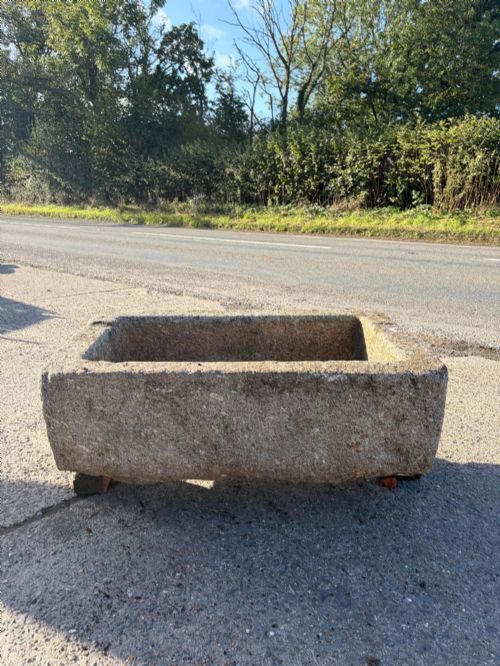
A reclaimed stone garden ornament encompasses architectural salvage and structural remnants shifted from agricultural, ecclesiastical, or domestic settings into the open air. Buyers searching for a reclaimed stone garden ornament encounter functional agrarian pieces and decorative masonry that have spent decades or centuries exposed to the elements.
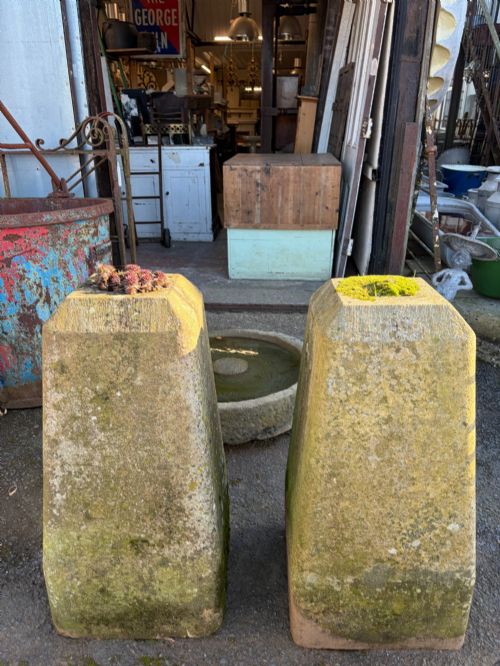
The selection ranges from robust staddle stones and Cornish granite troughs to Gothic limestone pinnacles and millstones. Pieces from the eighteenth and nineteenth centuries dominate the inventory, alongside pre-sixteenth century fragments and mid-twentieth century garden figures.
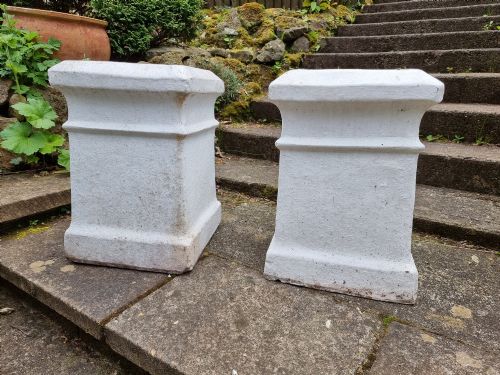
Forms vary from utilitarian grindstones and pedestals to bird baths, planters, and architectural fragments such as gate lions and window pinnacles. Each object bears the distinct marks of its original purpose and subsequent outdoor weathering.
Materials and masonry methods
These items are shaped from hard natural geologies including Cornish granite, Yorkshire limestone, Purbeck stone, and sandstone. Stonemasons utilised traditional hand-chiselling techniques to hew troughs, staddle stones, and architectural pinnacles from solid blocks of regional rock.
Surface patination develops naturally over decades through the accumulation of moss and lichen growth on the stone exterior. Utility pieces such as millstones and grindstones show circular tool scoring from their working life, while architectural fragments retain precise Gothic or classical detailing.
Reclaimed Stone Garden Ornament Retail Price Guide 2026
Typical asking prices for reclaimed stone garden ornament among the pieces listed under this phrase on Sellingantiques today, from the lower quarter to the upper quarter. They describe what is for sale here now, not the wider market.
Some staddle stones have spent so long in the mud they have grown beards of moss thicker than the cap itself.
Factors determining quality and character
Quality rests in the integrity of the material, the honesty of the weathering, and the clarity of the original form. Uniformity of the stone and the presence of natural biological growth like thick moss or lichen enhance the visual depth of an item.
Provenance and architectural origin elevate certain pieces, such as structural elements salvaged from minsters or established estates. Structural soundness remains paramount, ensuring that heavy granite troughs and sandstone pinnacles retain their load-bearing or water-holding capacity without compromising fractures.
The Reclaimed Stone Garden Ornament Glossary
- Staddle stone
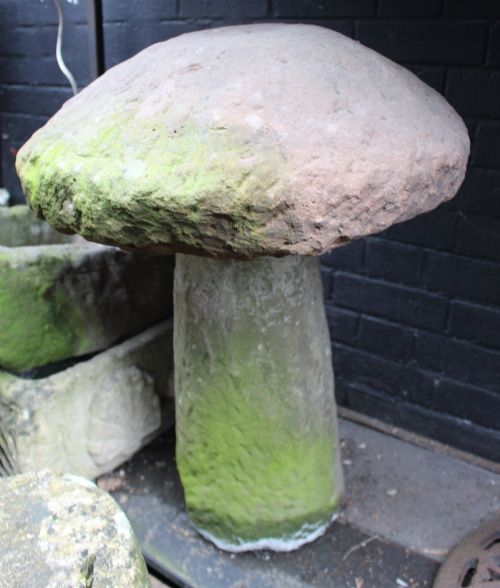
- A mushroom-shaped stone support originally used to elevate granaries and grain ricks above damp ground and vermin. These feature a distinct cap sitting atop a tapered base.
- Granite trough
- A heavy rectangular vessel hewn from solid Cornish or regional granite, historically used for watering livestock or agricultural processing.
- Architectural salvage
- Building elements such as pinnacles, capitals, and stone fragments removed from demolished structures and repurposed for landscape design.
- Millstone
- A large circular stone wheel used historically for grinding grain or minerals, frequently featuring a central eye and radial dressing grooves.
- Patina
- The surface alteration and mellowing of stone caused by age, weathering, and biological growth such as lichen and moss.
Reclaimed Stone Garden Ornament: Frequently Asked Questions
What is a staddle stone used for?
Originally, staddle stones supported wooden granaries to keep stored grain dry and safe from rodents. In modern gardens, they serve as sculptural focal points on lawns or near borders.
Pairs or single stones provide a rustic, architectural anchor that introduces historical depth to planting schemes.
How do I clean lichen off stone?
Most dealers and owners prefer to leave moss, lichen, and weathering untouched because this organic patination proves age and exposure. Scrubbing destroys the surface character that makes reclaimed stone desirable.
If cleaning is necessary for safety or placement, gentle brushing with water usually suffices without harming the stone.
Are stone troughs frost-proof?
Natural hard stones like granite, sandstone, and limestone withstand freezing temperatures well due to their dense composition. However, standing water inside troughs can freeze and expand, putting pressure on the interior walls.
Ensuring drainage holes remain clear prevents ice damage during severe winter weather.
How heavy are these garden ornaments?
Solid granite troughs, staddle stones, and millstones weigh hundreds of kilograms and often require mechanical lifting equipment for placement. Their substantial mass keeps them stable on the ground without requiring mortar or fixings.
Planning the exact final location before delivery is essential due to the sheer weight of the material.