
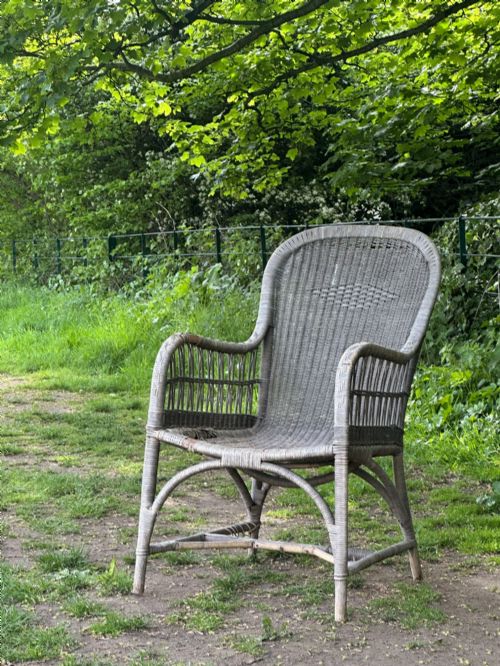
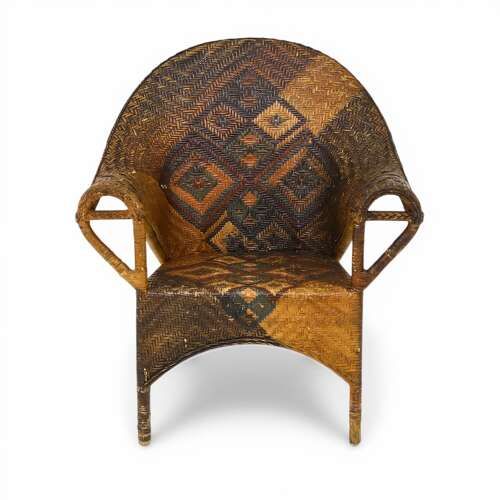


Rattan Armchair
These rattan armchair pieces bring organic texture and relaxed seating indoors and out, spanning multiple historic periods and regional styles.
Rattan Armchair
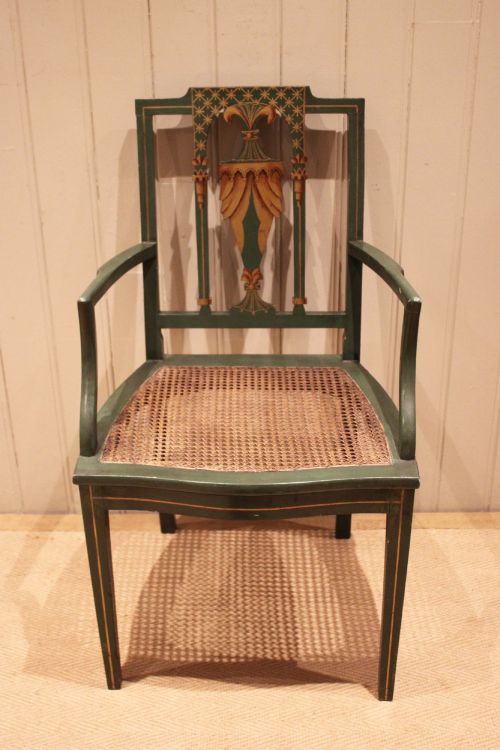
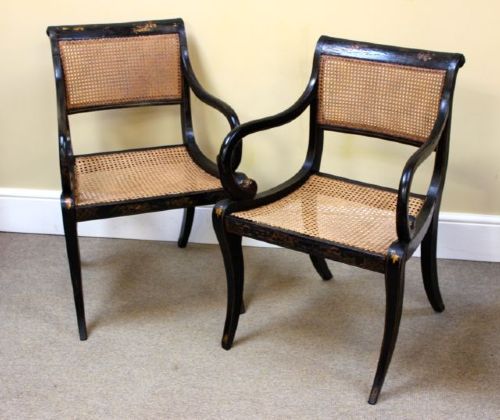
A rattan armchair combines woven natural materials with supportive wooden frames, creating seating designed for comfort and relaxed living. When exploring a rattan armchair collection, buyers encounter a diverse range of forms, from nineteenth-century library chairs to twentieth-century garden loungers.
The selection includes specific regional and stylistic interpretations such as Anglo-Indian colonial pieces, Chinese export chairs, and sturdy British designs. Pieces originate from periods including the Regency era, the Victorian epoch, and through the twentieth century up to the 1940s.
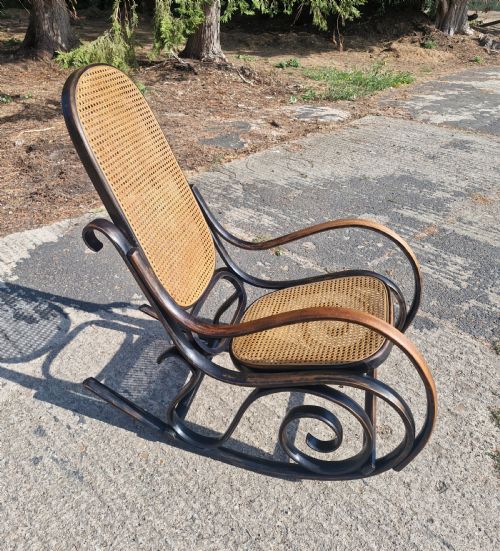
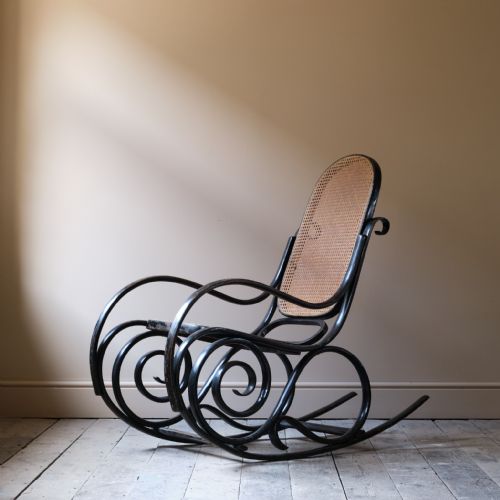
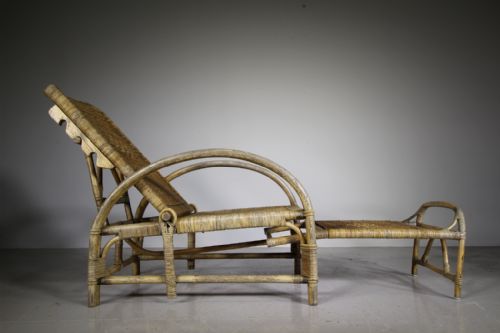
Forms vary significantly across the inventory, encompassing standard armchairs, rocking chairs, reclining garden armchairs, and substantial lounge chairs. Materials are often combined within a single piece, integrating cane, bamboo, willow, and wood with upholstered fabric elements.
Materials and Construction
Construction relies heavily on the integration of plant-based materials like rattan, cane, bamboo, and willow, shaped and woven by hand over rigid structural frames. Hardwoods such as mahogany, teak, and general timber provide the primary framework for many pieces, occasionally complemented by brass fixings.
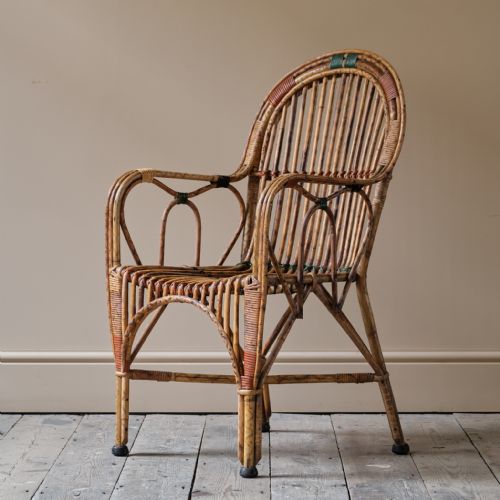
Techniques range from steam-bent wood to intricate handwoven seating and panels, as seen in traditional bergere chairs and twentieth-century wicker work. Makers utilise painted finishes on select wooden and wicker surfaces, alongside natural sun-bleached treatments on older lounge chairs.
The inventory spans the Regency period, Victorian era, Edwardian years, and early twentieth-century decades like the 1920s, 1930s, and 1940s.
Evaluating Quality and Execution
Quality in these seating pieces rests upon the tightness and regularity of the handweaving and the structural integrity of the underlying wooden frame. Finer examples display meticulous attention to proportion, comfortable ergonomics, and sophisticated framing such as well-drawn mahogany or carved elements.
The distinction between standard production and superior work often lies in the complexity of the secondary materials, such as finely turned wooden supports, barley twist details, or robust bentwood engineering. Maker attribution also influences standing, with documented workshop output commanding distinct recognition.
Angraves of Leicester·Dryad of Leicester·Dryad & Co
The Rattan Armchair Glossary
- Bergere chair
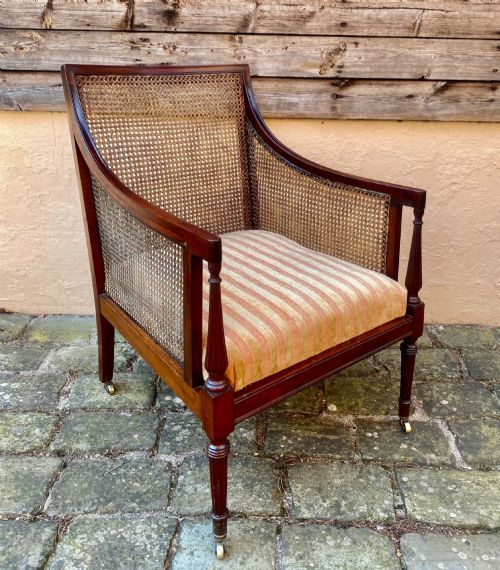
- A type of upholstered armchair with an enclosed wooden frame where the back and sides are typically filled with cane or wicker work. These often feature loose squab cushions for additional seating comfort.
- Cane
- Strips of material derived from the outer bark of the rattan palm, used primarily for woven seat and back panels. It offers a smooth surface and considerable tensile strength.
- Bentwood
- Wood that has been heated, usually with steam, and then bent into curved shapes to form structural components. This technique allows for flowing, continuous lines without traditional joinery.
- Anglo-Indian Colonial
- Furniture produced in the Indian subcontinent during British rule, often combining local materials and craftsmanship with European furniture forms. These pieces frequently utilise tropical hardwoods and elaborate weaving.
- Regency
- A British architectural and design style spanning the early nineteenth century, characterised by classical restraint, elegant proportions, and revival motifs. Chairs from this period often display refined mahogany frames.
Rattan Armchair: Frequently Asked Questions
What is a bergere armchair?
A bergere armchair is a French-inspired seating design featuring a visible wooden frame with woven cane or wicker sides and back. These chairs typically include a plush seat cushion and provide a lighter visual weight than fully upholstered upholstered seating.
Originating in earlier centuries, the form persisted into the Edwardian period, maintaining its characteristic combination of wooden structure and breathable woven panels.
Where were plantation chairs used?
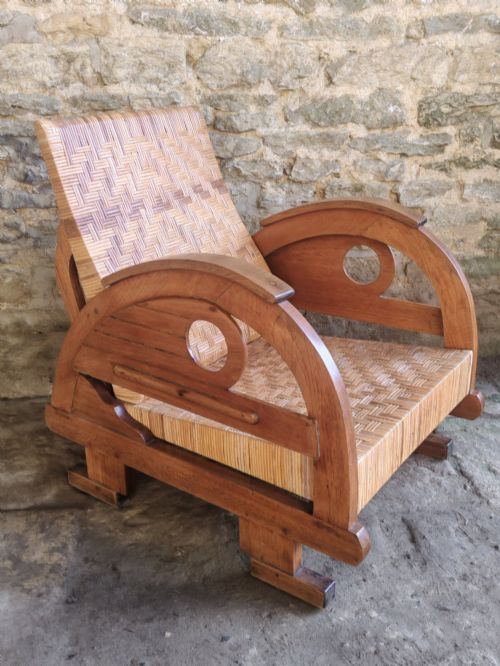
Plantation chairs were utilised in colonial homesteads and verandas, designed specifically for tropical climates where cooling airflow was essential. Their wide proportions and extended arms allowed occupants to recline comfortably during hot weather.
Constructed from durable timbers like teak and paired with woven seating, they served as functional domestic furniture in regions such as Ceylon and the broader British Empire.
How do I care for rattan furniture?
Rattan and cane furniture requires gentle dusting with a soft brush and protection from excessive moisture or direct sunlight to prevent drying and cracking. Maintaining moderate indoor humidity helps preserve the natural flexibility of the plant fibres.
Harsh chemical cleaners should be avoided in favour of slightly damp cloths for spot cleaning, ensuring the material dries thoroughly afterwards.
Are these chairs suitable for conservatories?
Many of these chairs, particularly wicker and rattan garden or conservatory models, are well-suited for sunrooms and enclosed garden spaces. Their organic materials harmonize naturally with plant life and bright, sunlit environments.
Historical pieces require mindful placement away from extreme temperature fluctuations and intense direct sun to protect their original finishes and structural integrity.