



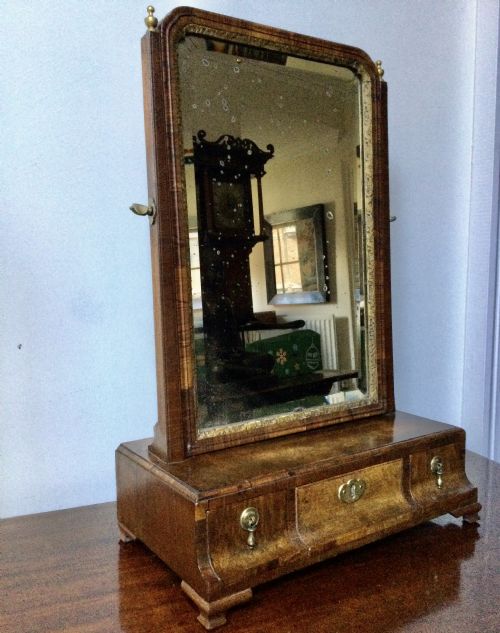

Queen Anne Table Mirror
A queen anne table mirror is a compact dressing glass designed to sit upon a chest or stand, prized for its subtle veneers and elegant arched crests.
Queen Anne Table Mirror
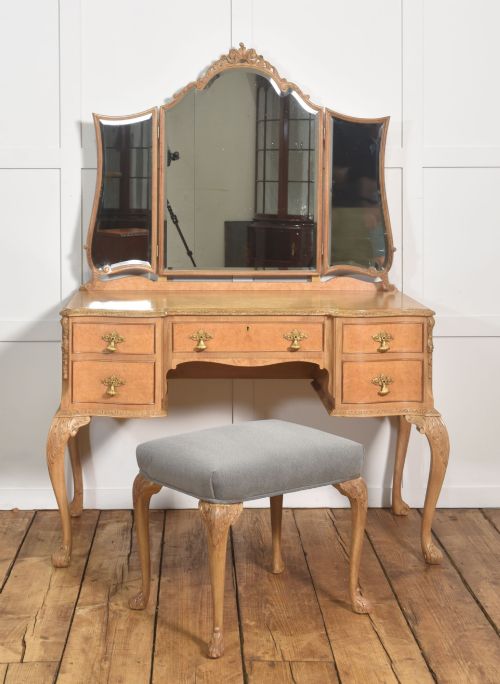
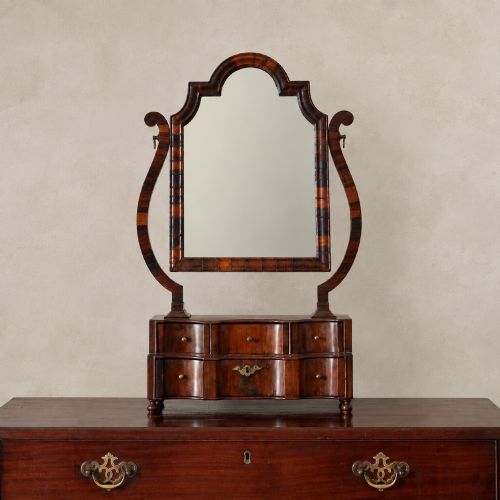
A queen anne table mirror is a low, movable glass set into a frame and mounted on a base, built to assist with personal grooming in the bedchamber. These objects appear in several forms, ranging from simple upright plates to mirrors fitted over miniature bureau or box bases containing small drawers. The versions most commonly met on this page date either from the early eighteenth century or from later revival periods in the nineteenth and twentieth centuries.
The materials recorded in these listings are primarily walnut and burr walnut veneer, occasionally accompanied by brass fitments, glass, wood, and black lacquer. Alongside standard English pieces, the selection includes examples influenced by Chinese export taste, as well as revival pieces executed in the Victorian era and around nineteen-twenty. Buyers encounter various designations for the same form, including toilet mirrors, dressing table mirrors, and box mirrors.
How they were made
Carpenters constructed these pieces using native timbers, applying figured burr walnut veneers to primary surfaces to create rich grain patterns across the frame and base. Early makers employed fine dovetail joints for the miniature drawers within the box stands, ensuring stability without heavy ironwork. Brass bracket feet and adjustable side screws allowed the mirror plate to tilt to the required angle.
Surface decoration on certain pieces involves black lacquer work, reflecting contemporary Asian influences popular during the period. The glass itself is held within shaped mouldings, often featuring the characteristic arched top associated with the style.
Queen Anne Table Mirror Retail Price Guide 2026
Typical asking prices for queen anne table mirror among the pieces listed under this phrase on Sellingantiques today, from the lower quarter to the upper quarter. They describe what is for sale here now, not the wider market.
Some miniature bureau bases hide secret compartments just large enough for a love letter.
What varies in quality
The distinction between ordinary and superior examples rests upon the choice of veneer and the crispness of the cabinetwork. High-grade pieces display carefully matched burr walnut figures that wrap symmetrically around the drawer fronts and frame edges, whereas lesser examples rely on plain timber or mismatched grain. The delicacy of the fret-cut cresting and the proportion of the mirror plate relative to its base also separate finer interpretations from routine production.
Age and original construction integrity further differentiate the selection. Pieces retaining their primary mirror glass and original brass hardware hold greater historical coherence than those altered by later replacements. The finesse with which the miniature drawers operate within their housings reveals the hand of a more accomplished workshop.
The Queen Anne Table Mirror Glossary
- Burr walnut
- Timber taken from a tree growth that produces intricate, swirling grain patterns. Cabinetmakers sliced this wood into thin veneers to ornament the most visible surfaces of fine furniture.
- Toilet mirror
- A smaller mirror designed to stand upon a dressing table or chest of drawers. The term derives from the French word toilette, denoting the morning routine of dressing and grooming.
- Box mirror
- A tabletop mirror incorporating a small drawer base beneath the upright frame. This form provides secure storage for small personal items while supporting the glass above.
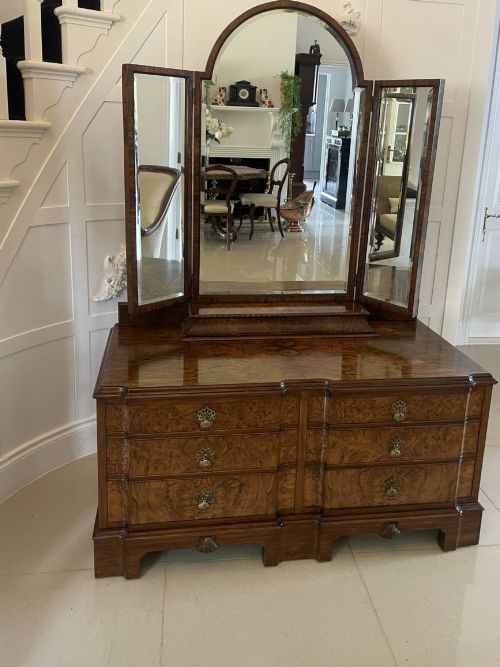
- Triptych dressing table mirror
- A three-panel mirror arrangement featuring a central glass flanked by two smaller adjustable side wings. This layout allows the user to view profiles from multiple angles.
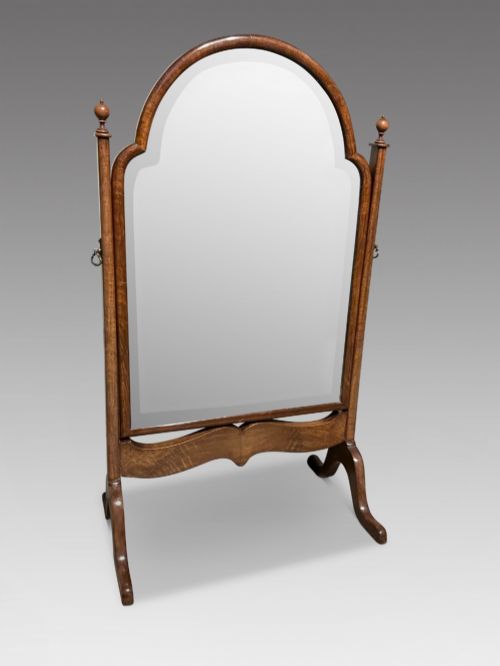
- Cheval mirror
- A full-length freestanding mirror suspended on a frame with four legs. Unlike table mirrors, these large glasses stand directly upon the floor.
Queen Anne Table Mirror: Frequently Asked Questions
What is a queen anne table mirror?
A queen anne table mirror is a tabletop dressing glass featuring a shaped frame, often with an arched crest, mounted on a supporting stand or box base.
These pieces were designed to sit on chests or tables in bedrooms, providing a movable surface for grooming before full-length dressing mirrors became common.
How were these mirrors used originally?
Owners placed them on top of commodes or dedicated dressing tables during the morning routine to assist with personal grooming and styling.
Small drawers incorporated into the base held cosmetics, pins, and jewellery, keeping daily essentials close to hand.
How do I tell an 18th-century mirror from a later revival?
Examination of the timber construction, secondary woods, and mirror plate fixings helps distinguish period work from later interpretations.
Eighteenth-century examples typically display hand-cut joinery and older plate characteristics, whereas revival pieces from the Victorian era or nineteen-twenty often show more uniform machine-prepared woods.
How do I care for a walnut table mirror?
Keep the piece away from direct sunlight and sudden temperature shifts to protect the delicate burr walnut veneers from drying and splitting.
Dust gently with a dry, soft cloth and avoid modern chemical polishes that can damage historic finishes.