




Queen Anne Swing Mirror
A queen anne swing mirror brings warmth and functional elegance to a room, offering period charm through rich timber and clean proportions.
Queen Anne Swing Mirror
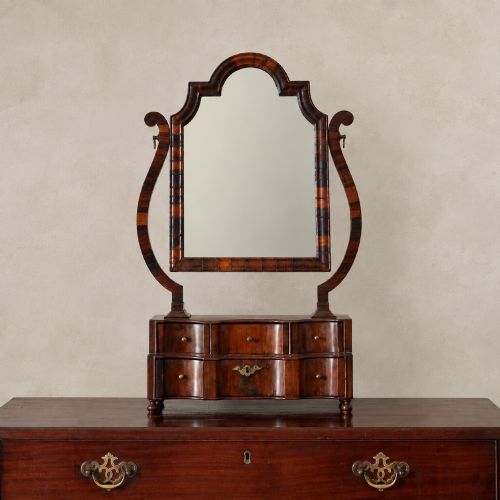
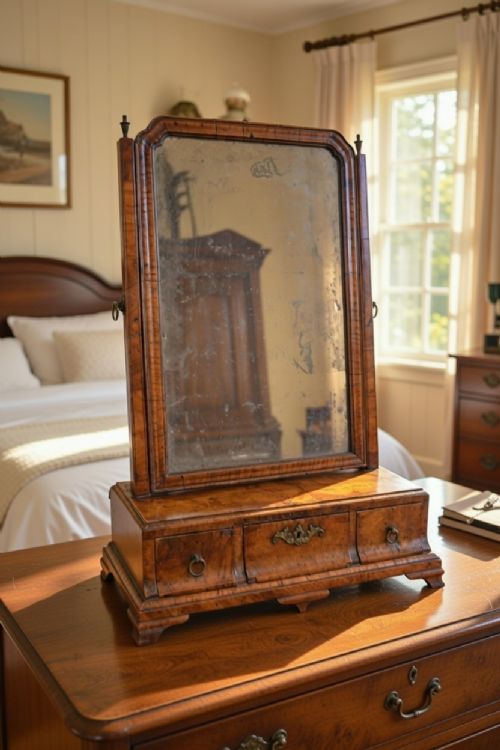
A queen anne swing mirror is a portable or floor-standing glass designed for grooming and dressing, most commonly encountered as an 18th-century toilet or dressing table mirror framed in timber.
The inventory on this page ranges from authentic 18th-century pieces to later 19th-century and 1920s revivals, spanning formats like box mirrors, bureau bases, and larger cheval mirrors.
These items were originally placed on chests of drawers or dedicated dressing tables, combining storage drawers in the base with an adjustable tilting glass above.
How they were made
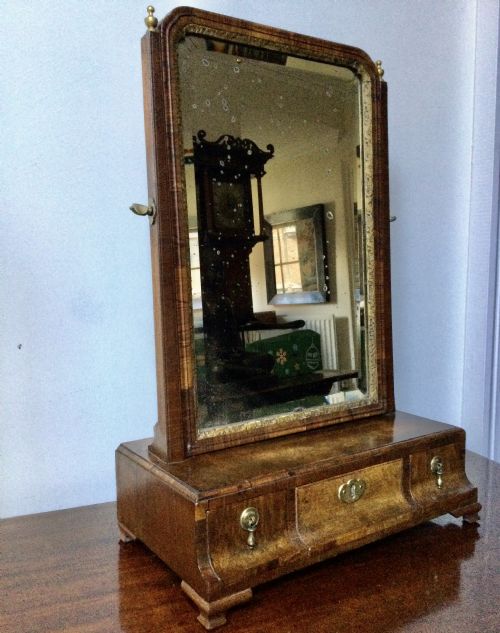
Cabinetmakers built these frames primarily from walnut and burr walnut, occasionally incorporating laburnum or finished with black lacquer, reflecting the prevailing taste of the period.
Brass fittings such as swing arms, plates, and small drawer knobs provide the mechanical pivots and functional hardware necessary for tilting the mirror plate.
Queen Anne Swing Mirror Retail Price Guide 2026
Typical asking prices for queen anne swing mirror among the pieces listed under this phrase on Sellingantiques today, from the lower quarter to the upper quarter. They describe what is for sale here now, not the wider market.
One exceptional survival incorporates a miniature bureau base with a sloping lid, proving that 18th-century makers loved hiding tiny secrets.
What varies in quality
The sophistication of the timber figuring and veneer selection sets the finer examples apart, particularly where burr walnut or contrasting laburnum is utilised on the surface.
Integrity of construction in the miniature base drawers and the proportion of the upright supports relative to the glass plate determine the overall aesthetic balance.
The Queen Anne Swing Mirror Glossary
- Toilet mirror
- A small table mirror designed for personal grooming, usually featuring a set of small drawers in the base. It sits upon a table or chest.
- Cheval mirror
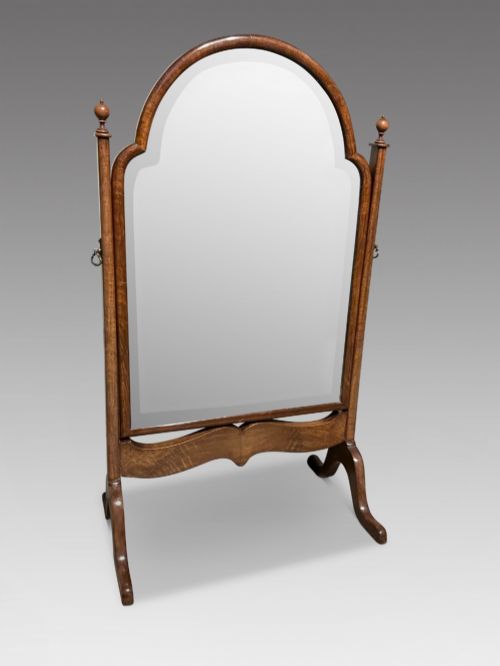
- A full-length swing mirror supported by a standing frame with four legs. This form allows the user to view their entire outfit.
- Laburnum
- A dense hardwood often used for contrasting decorative borders and oyster veneers in early cabinetmaking. Its grain creates distinct circular patterns.
- Box mirror
- A toilet mirror constructed with a deep rectangular box base containing small drawers. The mirror frame swings between two upright arms attached to this box.
Queen Anne Swing Mirror: Frequently Asked Questions
What is a queen anne swing mirror used for?
These mirrors were designed for personal grooming, hair styling, and adjusting dress in private chambers. They provided a moveable glass surface combined with small compartments for trinkets.
Today, they function as decorative tabletop accessories on chests of drawers, dressing tables, or sideboards, offering both practical reflection and period character.
How do I date a swing mirror?
Dating relies on examining the timber species, construction joints, mirror glass characteristics, and hardware. Earlier pieces from the 18th century often feature specific walnut grains, hand-cut dovetails, and bevelled glass plates.
Revival pieces from the 19th century or 1920s typically show different secondary woods, machine-cut elements, or alternative finishing techniques that distinguish them from period originals.
Where should I place a toilet mirror?
A toilet mirror requires a stable surface of appropriate height, such as a chest of drawers, a console, or a dedicated dressing table. Placing it where natural light falls across the glass enhances its practical use.
Ensure the piece is set back safely from the edge of the furniture to protect the projecting base and brass swing arms from accidental knocks.
What is the difference between a toilet mirror and a cheval mirror?
A toilet mirror is compact and sits on top of a table or chest, incorporating a small box base with drawers. It frames the upper body and face.
A cheval mirror is a much taller, floor-standing piece supported by an independent frame with uprights and feet, allowing a full-length view of the person.