




Queen Anne Style Side Chairs
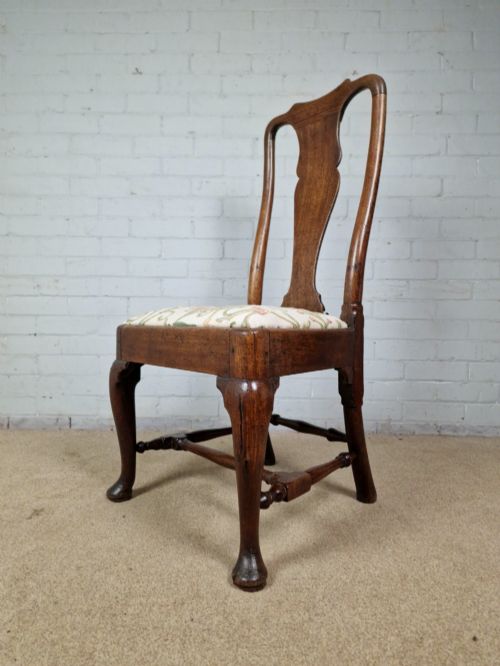
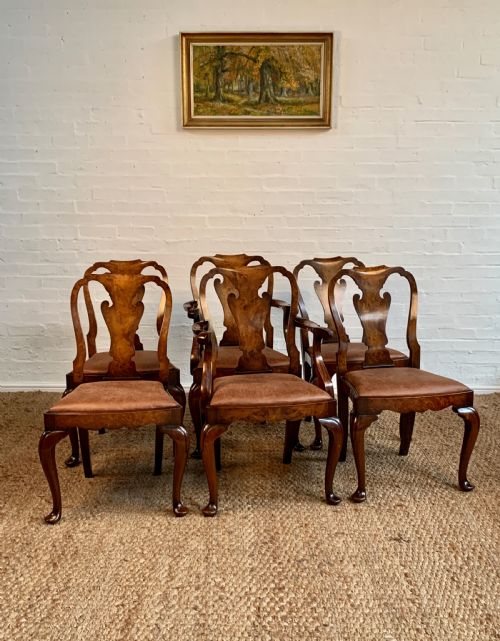
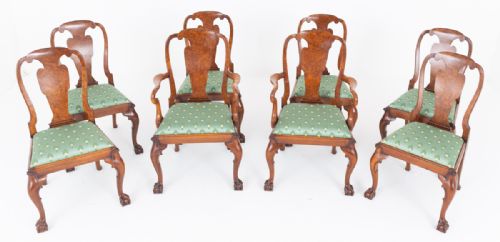
Queen Anne style side chairs bring upright elegance to a room, defined by their distinctive vase-shaped splats and graceful cabriole legs.
Queen Anne Style Side Chairs
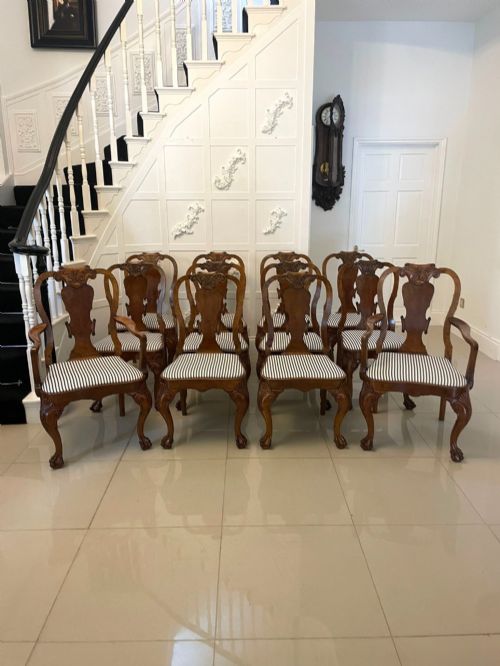
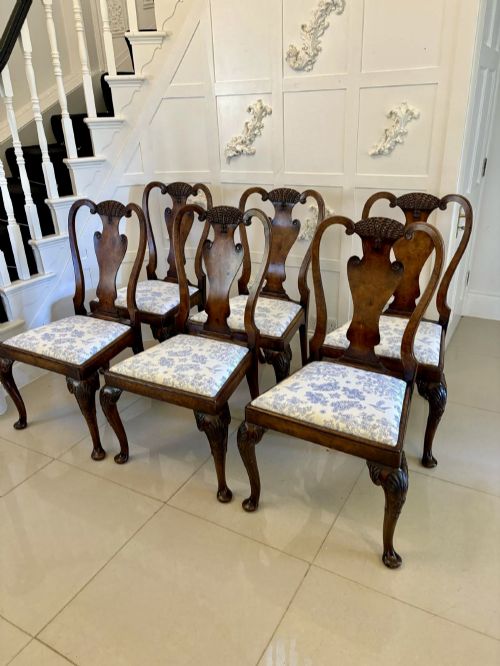
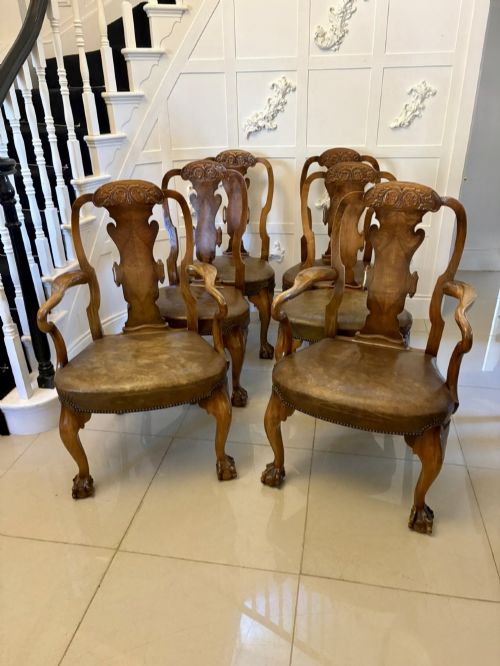
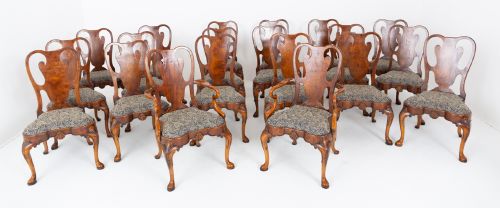
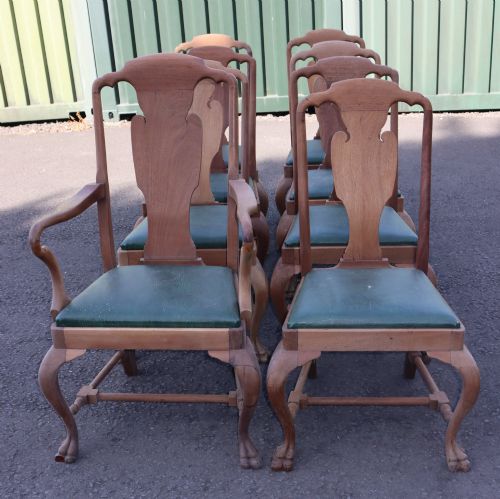
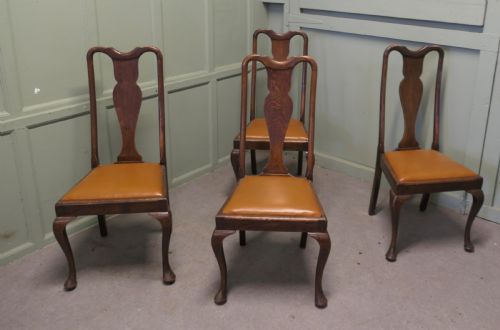
The seating range spans single walnut side chairs, large dining sets in mahogany and oak, and occasional pairs upholstered in leather or period textiles. Makers utilised traditional forms such as the solid vase splat and pad foot across various timbers, including burr walnut and cherry.
Materials and Construction
Cabinetmakers constructed these frames primarily from solid hardwoods like walnut, mahogany, oak, and elm, often selecting burr walnut veneers for decorative grain patterns on high-status sets. Joinery relied on sturdy mortise and tenon joints to support the characteristic slender curves of the backrest and legs.
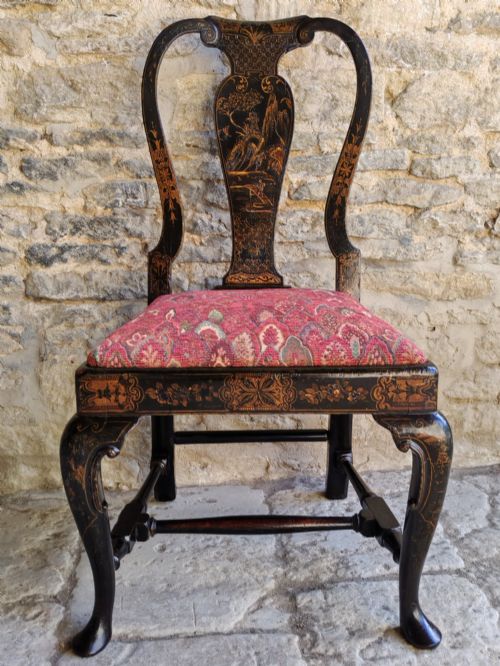
Seats were traditionally upholstered over webbing and stuffing using leather, silk, fabric, or modern textile replacements. Decoration frequently involved carved shell motifs, Dutch marquetry, japanning, or parcel-gilt highlights applied to the timber frame.
Period origins range from eighteenth-century craftsmanship through nineteenth-century Victorian interpretations to Edwardian revival suites.
Craftsmanship and Proportion
Quality rests in the fluidity of the cabriole leg and the precise contouring of the central splat, where superior examples exhibit hand-carved details and balanced proportions. The choice of timber grain, particularly matched burr walnut or dense old-growth mahogany, elevates the standing of a set.
Consistency across large dining sets distinguishes exceptional groups from assembled collections, as uniform patination and matching wood selection indicate cohesive origin and skilled workshop production.
Charles Tozer·Daniel Marot·Spillman & Co
The Queen Anne Style Side Chairs Glossary
- Cabriole leg
- A furniture leg that bends outward in a convex curve and tapers inward in a concave curve, ending in a pad or club foot. This characteristic form mimics animal limbs and defines much of the seating from this tradition.
- Vase splat
- The central vertical wooden slat of a chair back shaped like a classical vase or fiddle. It provides ergonomic lumbar support while offering a canvas for grain display or subtle carving.
- Pad foot
- A simple, rounded foot shape that sits flat on the floor without a separate shoe or claw. It is commonly found at the base of cabriole legs on earlier walnut and oak seating.
- Japanning
- A European imitation of East Asian lacquerwork involving layered resin varnishes and raised gilt decoration. This technique appears on decorative revival and eighteenth-century frames alike.
- High-back
- A chair design featuring an elevated backrest that extends well above the user's shoulders. Such proportions are frequently associated with late seventeenth and early eighteenth-century seating.
Queen Anne Style Side Chairs: Frequently Asked Questions
How do I spot a reproduction set?
Revival pieces often display machine-cut joinery, standardised timber grain, and twentieth-century upholstery methods beneath modern fabric layers.
Examining the underside of the seat frame reveals tool marks and wood ageing patterns that distinguish Edwardian reproductions from genuine eighteenth-century construction.
What timbers were used for these chairs?
Walnut and mahogany dominate the higher-end examples, while oak, elm, and cherry appear frequently in regional or sturdier dining configurations.
Burr walnut veneer was regularly applied to the backsplats and seat rails during revival periods to create decorative visual contrast.
Are these chairs suitable for daily dining?
Many sturdy sets from the nineteenth and twentieth centuries withstand regular seating use, provided the frame joints remain tight and stable.
Fragile antique examples with delicate splats or historic silk upholstery are better suited for occasional use or decorative placement.
What is an Anglo-Dutch influence?
Anglo-Dutch styling refers to the exchange of design ideas between England and the Netherlands following the reign of William and Mary.
This aesthetic incorporates tall backs, carved crest rails, and richly figured walnut timbers into standard dining chair forms.