



Queen Anne Style Buffet
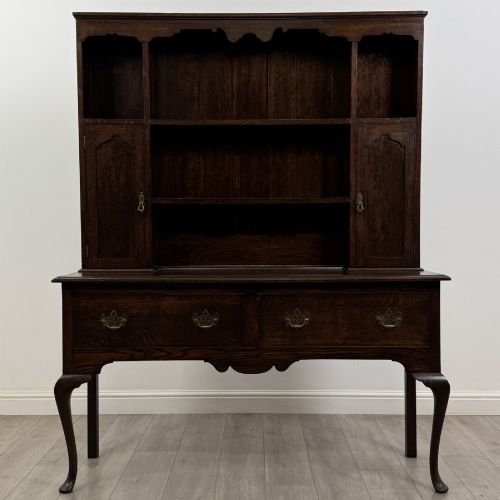
These queen anne style buffet pieces are sturdy serving furniture built to anchor a dining room with classical walnut grain and cabriole lines.
Queen Anne Style Buffet
When you search for a queen anne style buffet, you are looking at twentieth-century interpretations of earlier eighteenth-century designs. These pieces function primarily as sideboards, servers, and side cabinets for dining spaces. Most examples found here originate from the Edwardian era through the nineteen-thirties.
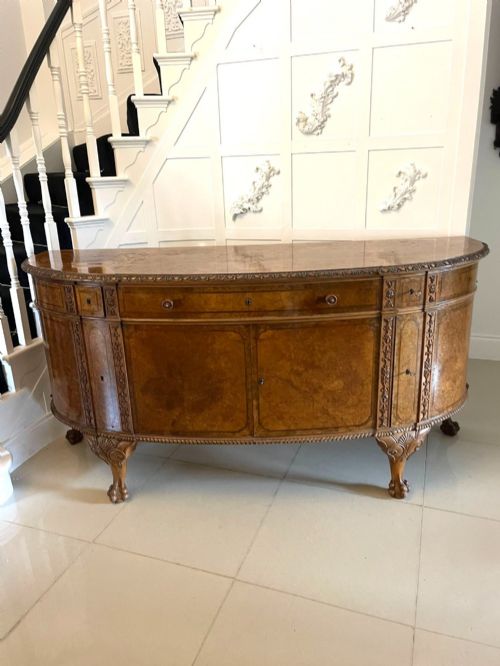
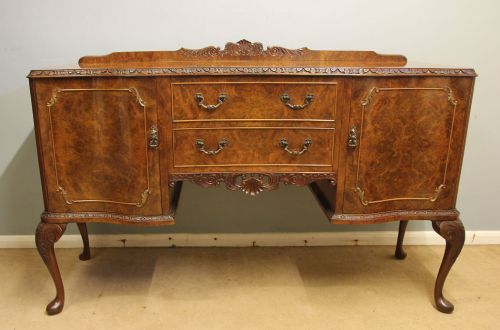
The dominant material across these listings is walnut, frequently shown as burr walnut, figured walnut, or with crossbanding. Makers often employ serpentine or bow fronts alongside dresser base and console formats. These items bridge formal dining room storage and decorative display surfaces.
While traditional forms inspired them, twentieth-century workshops adapted the proportions to suit contemporary homes. You will encounter sideboards and side cupboards that utilise the characteristic cabriole legs and pad feet associated with the style. Each piece balances cabinet storage with a flat top surface for serving.
Materials and construction methods
Construction relies on solid hardwood carcases finished with decorative veneer surfaces. Walnut and burr walnut provide the primary visual grain patterns, often enhanced by intricate crossbanding along the edges. Mahogany occasionally appears as a secondary timber for structural integrity and smaller cabinet formats.
Queen Anne Style Buffet Retail Price Guide 2026
Typical asking prices for queen anne style buffet among the pieces listed under this phrase on Sellingantiques today, from the lower quarter to the upper quarter. They describe what is for sale here now, not the wider market.
Materials across the inventory include brass, marble, mahogany, and various walnut preparations such as burr walnut veneer.
Assessing quality in walnut sideboards
Quality rests primarily in the selection and matching of the timber veneers. Superior examples display symmetrical burr walnut figuring that wraps seamlessly across drawer fronts and cabinet doors. Poorer execution relies on plain timber or mismatched grain patterns that disrupt the visual flow.
Carving detail and joinery precision distinguish workshop tiers. Finer pieces incorporate crisp, hand-carved shell motifs and sturdy dovetail joints in the drawer construction. Lesser versions present softer moulded details and simpler assembly methods that lack structural refinement.
Hille of London·Epstein
The Queen Anne Style Buffet Glossary
- Burr walnut
- A prized wood figuring obtained from the growth warts of walnut trees. It creates intricate, swirling patterns across cabinet doors and tabletops.
- Crossbanding
- A decorative border technique where thin strips of veneer are laid perpendicular to the main grain. This frames the primary panel and emphasises the edges.
- Serpentine front
- A furniture front characterised by a concave central section flanked by two convex curves. It requires advanced woodworking skill to execute properly.
- Cabriole leg
- A furniture leg that curves out and then in, mimicking animal limbs. It typically terminates in a pad foot on traditional revival pieces.
- Dresser base
- A low cabinet featuring drawers or cupboards designed for storage and serving. These form the lower portion of traditional dining room furniture sets.
Queen Anne Style Buffet: Frequently Asked Questions
What is a queen anne style buffet?
A queen anne style buffet is a twentieth-century serving cabinet inspired by earlier eighteenth-century English furniture designs. These pieces typically feature walnut timbers and characteristic cabriole legs.
They serve as both storage units for dining rooms and display surfaces for food or decorative objects during meals.
How do I date a walnut sideboard?
Dating relies on examining construction methods, timber preparation, and stylistic cues within the piece. Edwardian and early twentieth-century examples often combine machine-cut elements with traditional hand-finishing techniques.
Makers active during the nineteen-twenties and nineteen-thirties frequently utilised burr walnut veneers over solid hardwood carcases.
Where were these sideboards used?
These cabinets were designed primarily for formal dining rooms and large living spaces. They provided storage for tableware, linens, and serving dishes while offering a surface for food presentation.
Today, they function equally well in modern hallways, living rooms, and dining areas as general storage consoles.
What is burr walnut veneer?
Burr walnut veneer consists of thin slices of wood cut from distorted tree growths known as burls. This wood yields dense, swirling patterns that are highly decorative.
Cabinetmakers apply these veneers to the primary surfaces of sideboards to create striking visual appeal.