

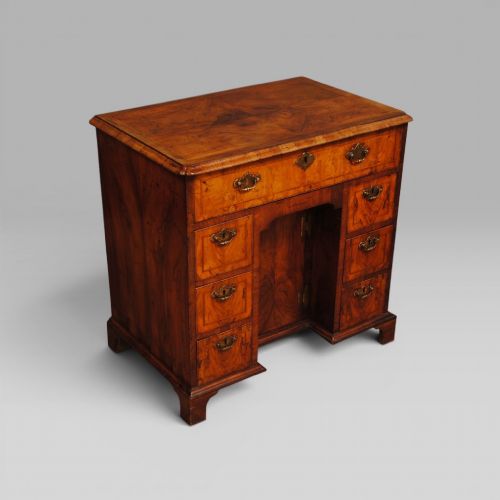
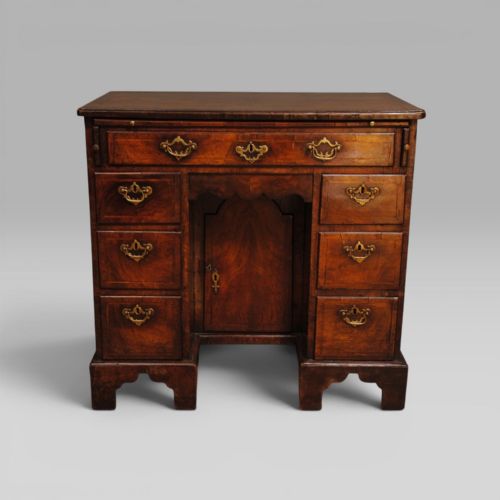

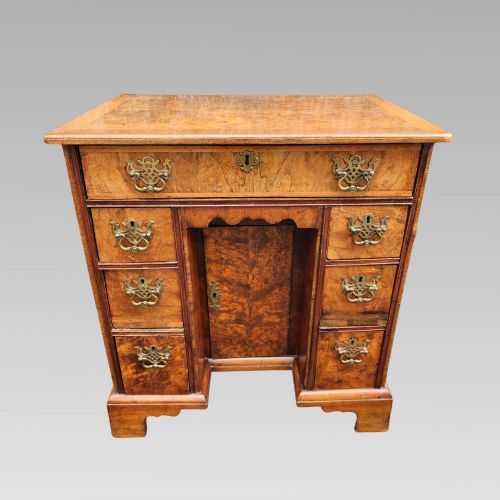


Queen Anne Kneehole Bureau
A queen anne kneehole bureau combines compact proportions with refined writing surfaces, offering practical storage disguised as understated elegance.
Queen Anne Kneehole Bureau
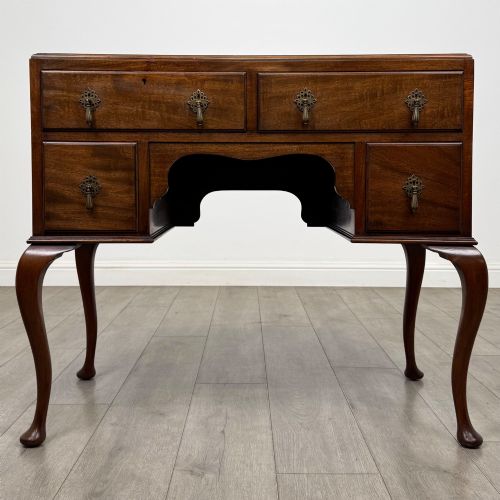
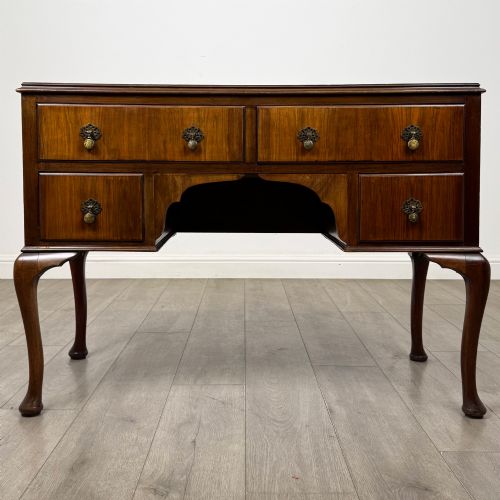
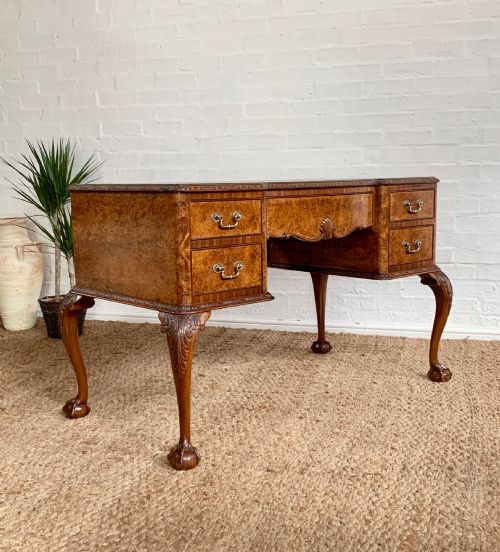
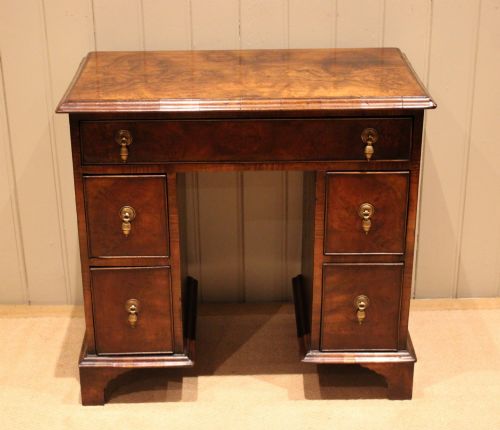
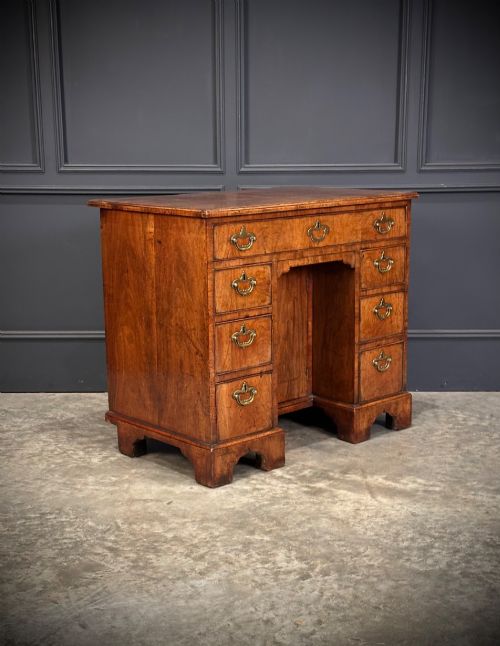
When searching for a queen anne kneehole bureau, buyers encounter pieces primarily spanning the eighteenth century alongside revival interpretations from the Edwardian era and the early twentieth century. These compact writing desks feature a central recess flanked by pedestals of small drawers, designed specifically for domestic correspondence and account keeping.
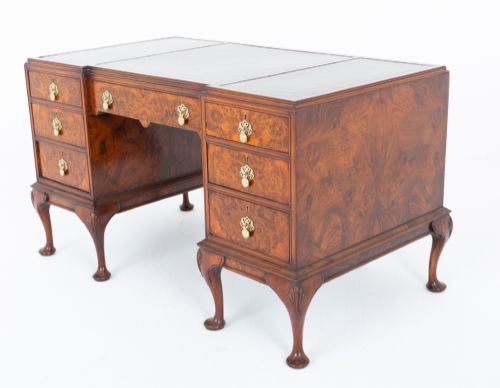
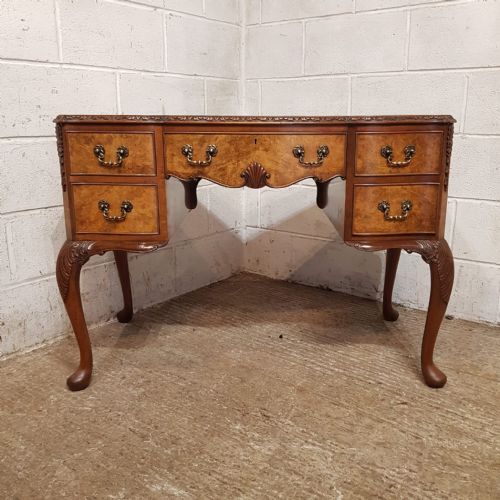
The dominant material visible across these selections is walnut, frequently enhanced by burr walnut veneer to create intricate grain patterns across the primary surfaces. Alongside authentic eighteenth-century examples, the market includes pieces built in the Queen Anne style during later periods such as the nineteenth century and the 1930s.
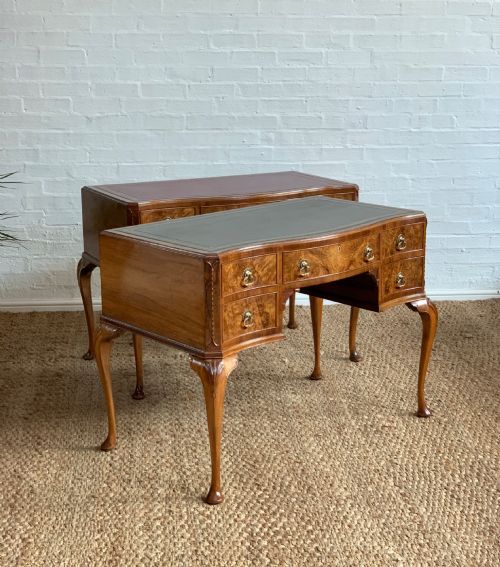
Forms range from traditional pedestal desks with fitted writing compartments to serpentine fronted variations and estate desks. Many incorporate specialised writing surfaces, including green tooled leather inserts set into the top.
Materials and construction methods
Construction relies heavily on walnut and burr walnut veneer applied over secondary timbers, creating rich visual depth across the primary panels. Cabinetmakers utilised carefully selected timber veneers to accentuate the natural figuring of the wood.
Drawer construction and structural framing frequently incorporate oak, providing robust internal support for the smaller pedestal compartments. Details such as brass hardware and bone accents complete the assembly of these writing desks.
Writing surfaces are frequently inset with leather, providing a durable and refined platform for daily correspondence. The integration of veneer work requires precise cutting and matching of the timber grain across multiple drawer fronts.
Materials range from solid oak and mahogany to elaborate burr walnut veneer complemented by leather writing surfaces.
Distinctions in craftsmanship and condition
Quality separates along the precision of the veneer matching and the integrity of the timber selection across the exterior surfaces. Pieces utilising high-grade burr walnut with consistent grain alignment demonstrate superior cabinetmaking standards compared to simpler constructions.
The subtlety of the proportions and the crispness of the detailing define the upper tier of these desks, whether from the eighteenth century or later revival periods. Original brass hardware and well-preserved internal drawer arrangements further distinguish finer examples.
Structural honesty and the preservation of original writing surfaces, such as tooled leather inserts, indicate how carefully a desk has been maintained through successive centuries of domestic use.
Wylie & Lochhead Glasgow·maples of London
The Queen Anne Kneehole Bureau Glossary
- Kneehole desk
- A compact writing table featuring a central recessed space for the user's legs, flanked by two banks of small drawers. This form became popular for domestic studies during the early eighteenth century.
- Burr walnut
- Timber taken from a tree growth where the grain has deformed into a swirling pattern of knots and eyes. Cabinetmakers slice this wood into thin veneers to cover primary surfaces.
- Queen Anne style
- A design movement characterised by restrained decoration, graceful curves, and an emphasis on the natural beauty of walnut timber. Revival versions emerged strongly during the Edwardian period.
- Veneer
- A thin layer of superior wood glued to a base panel of a less expensive timber. This technique allows makers to display striking grain patterns without using solid luxury wood.
- Secretaire
- A desk incorporating a drop-front writing flap that conceals a series of small internal pigeonholes and drawers. These compartments were designed for sorting correspondence.
Queen Anne Kneehole Bureau: Frequently Asked Questions
How do I spot an 18th-century piece?
Eighteenth-century examples display construction methods appropriate to the period, such as hand-cut dovetails and timber shrinkage consistent with age. The patination of the walnut develops a deep, soft lustre over centuries of handling.
Examining the secondary woods inside the drawers helps confirm the period of manufacture, as later revival pieces often utilise twentieth-century timber preparation techniques.
Where were these desks placed?
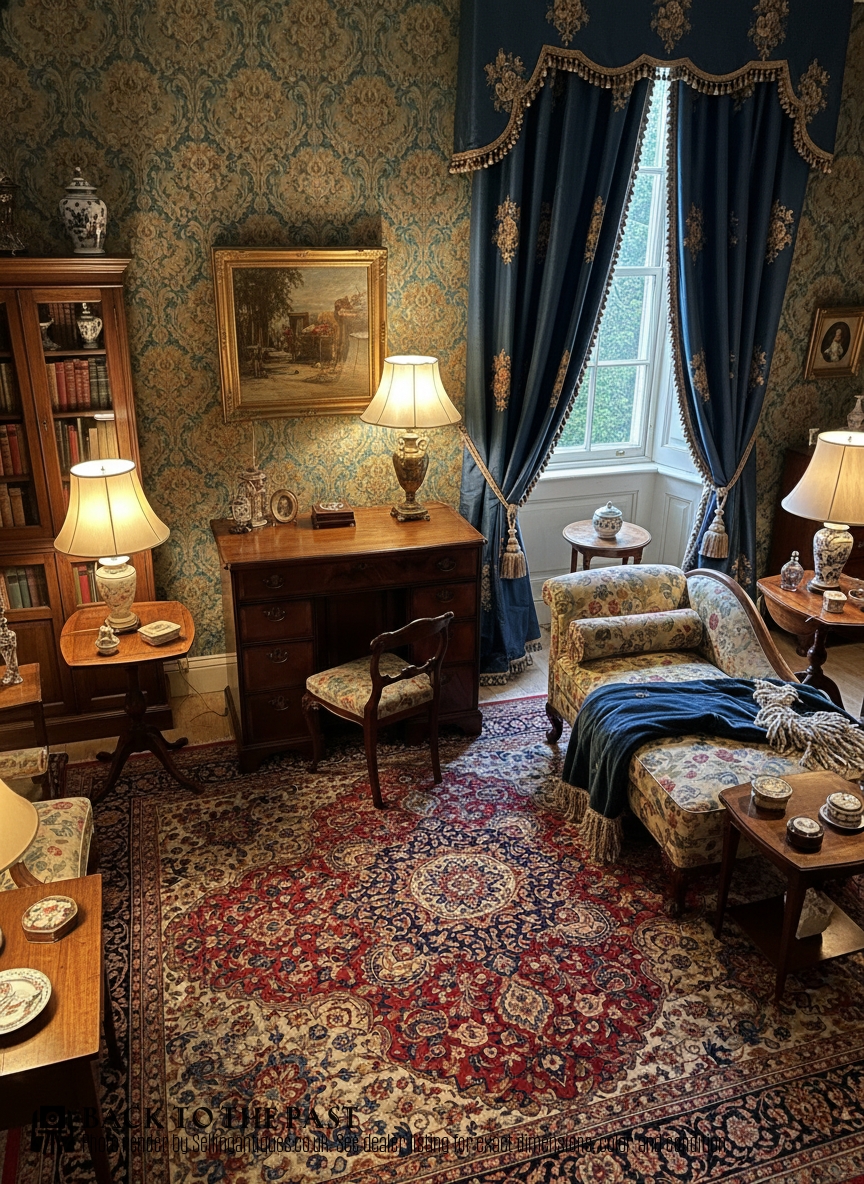
These compact writing tables were typically positioned in private bedchambers, withdrawing rooms, or small estate studies. Their modest proportions allowed them to fit comfortably against walls where larger partner desks would prove too intrusive.
The recessed kneehole design provided a dedicated seating position for writing letters or managing household accounts without requiring a massive architectural footprint.
Are Edwardian copies valuable?
Edwardian and early twentieth-century interpretations demonstrate the enduring appeal of eighteenth-century aesthetics. These revival pieces often exhibit high standards of cabinetmaking using traditional materials like walnut and mahogany.
While they differ in age from original pieces, well-made revival desks are collected for their craftsmanship, utility, and decorative contribution to period interiors.