



Queen Anne Dressing Stool
A queen anne dressing stool brings compact elegance to a bedroom, offering both a practical seat and a refined period silhouette.
Queen Anne Dressing Stool
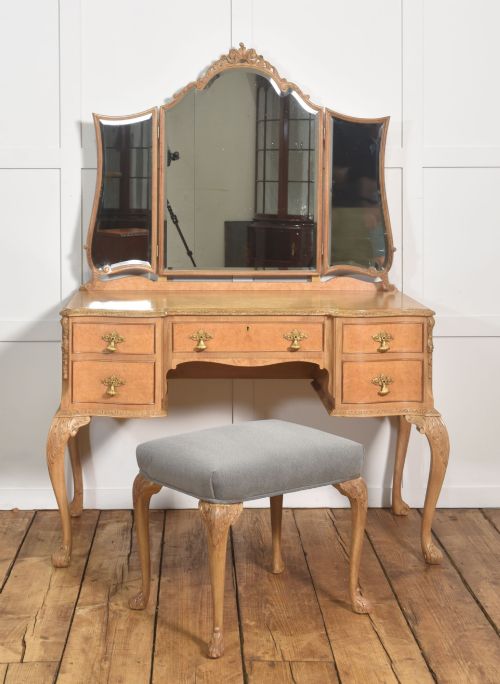
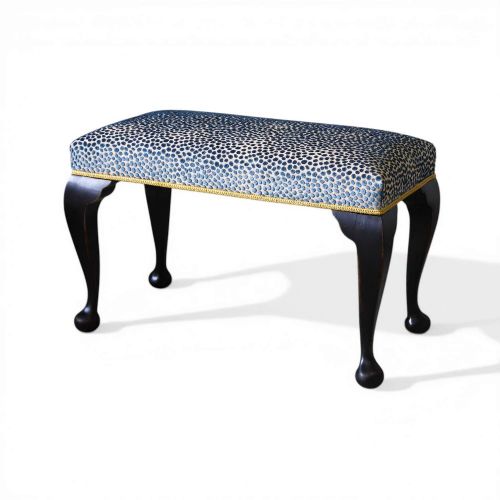
A queen anne dressing stool typically pairs a low frame with upholstered seating designed for a dressing table or vanity space. The forms span original Georgian examples alongside later revival pieces produced across the Victorian and Edwardian eras up to nineteen-twenty.
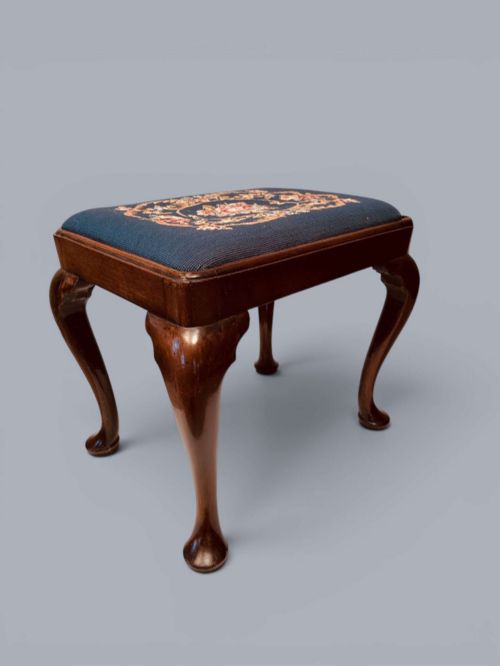
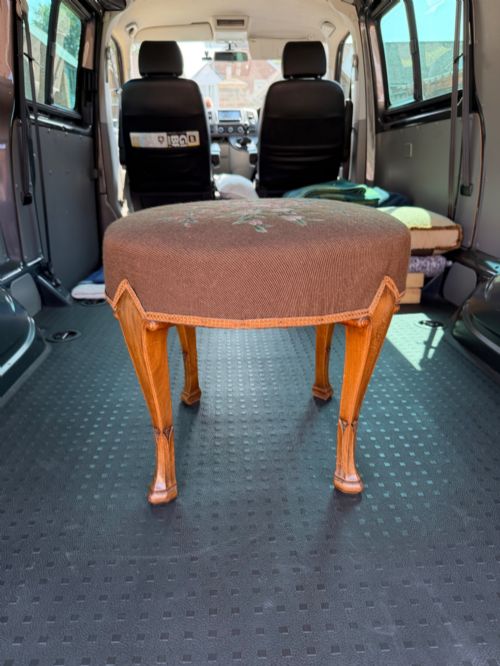
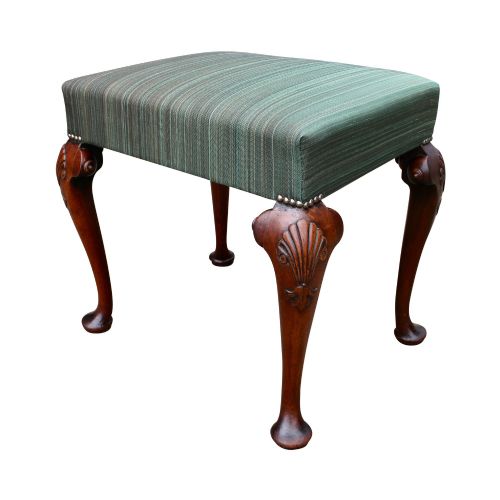
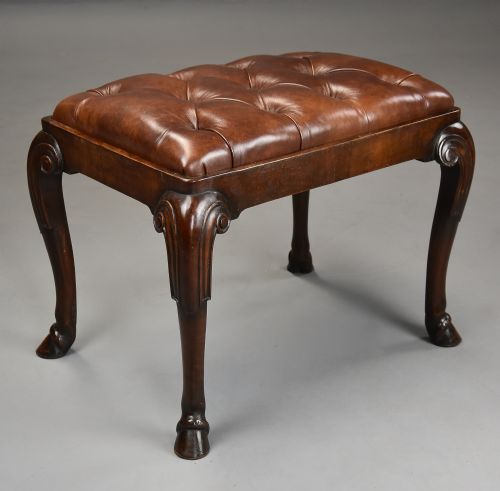
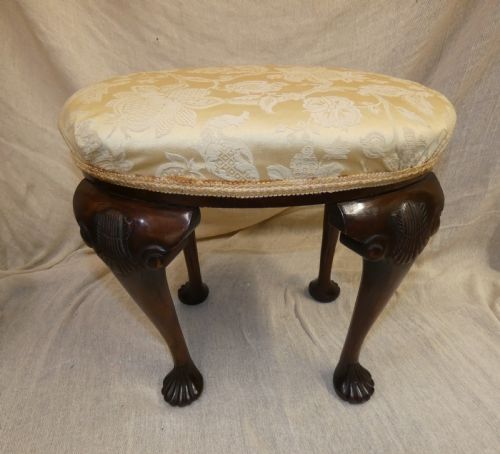
Most examples found here present the characteristic Queen Anne style or revival interpretations in walnut, dark hardwood, or mahogany. These include standard four-legged designs with cabriole legs as well as distinct variations such as X-frame structures.
Materials and construction
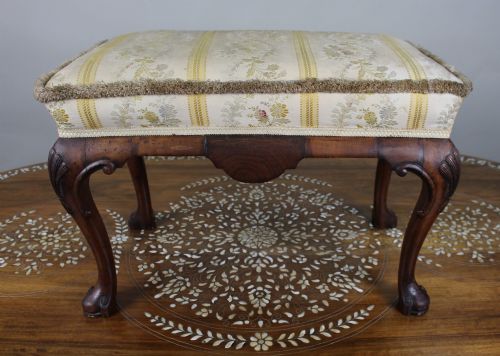
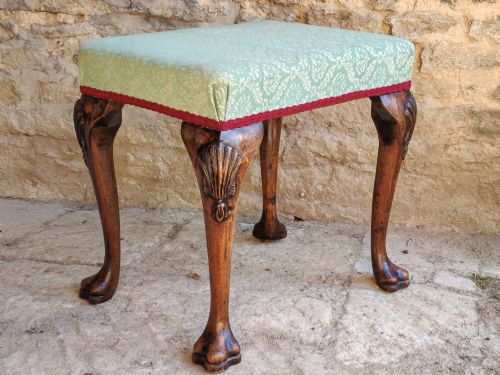
Makers utilised solid timbers, specifically walnut, burr walnut, and mahogany, to shape the structural frames and cabriole legs. Carved detailing frequently appears on the knees and feet of the legs.
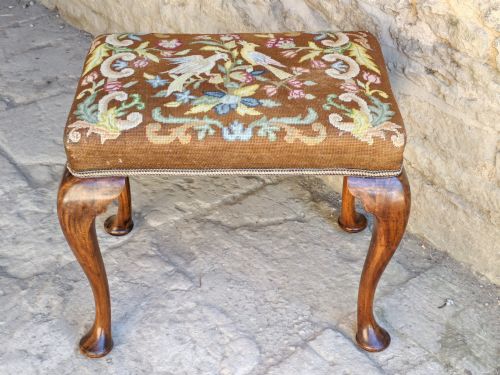
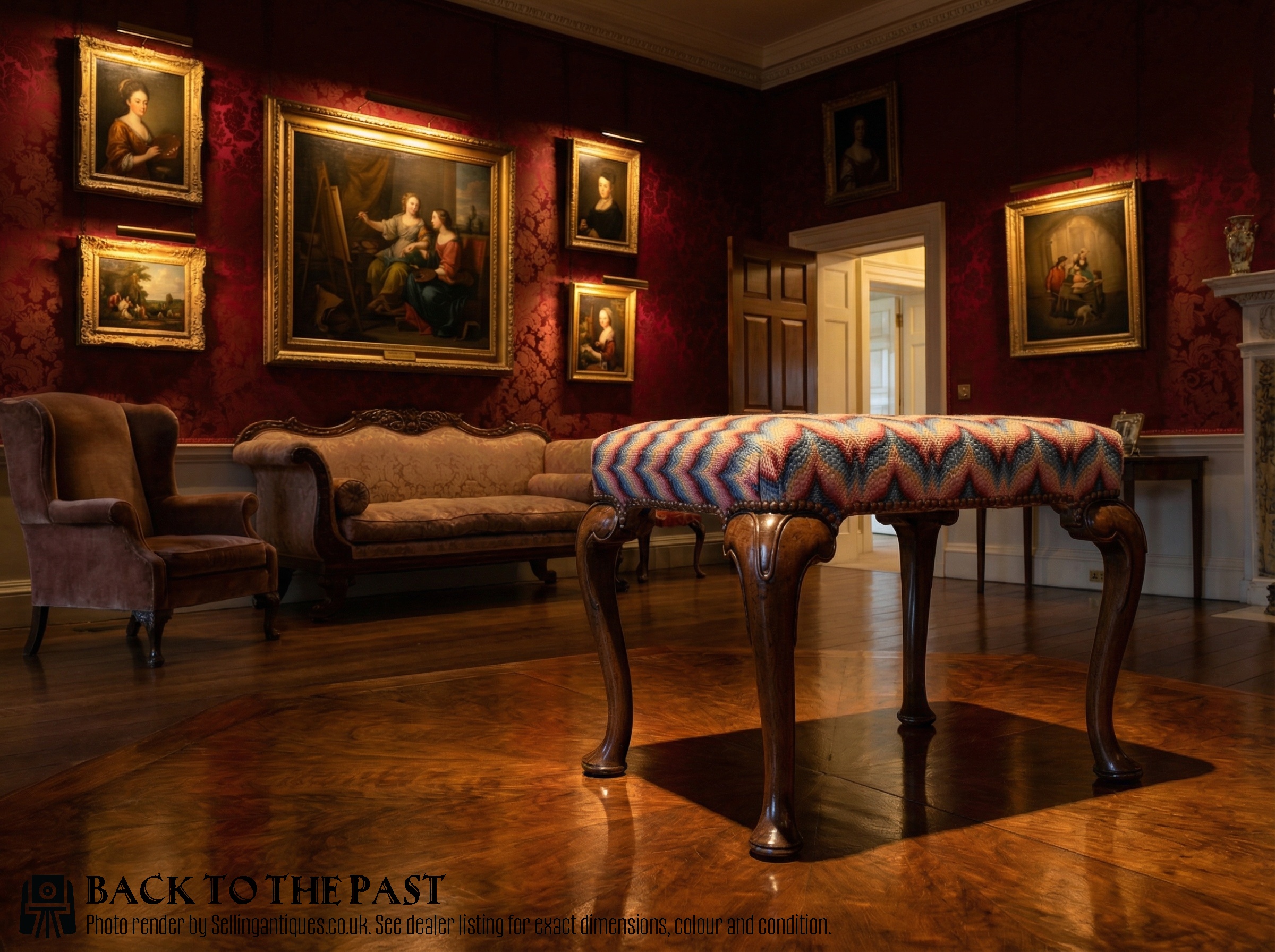
Seats are upholstered in a variety of textiles including fabric, damask, tapestry, and needlepoint. Additional detailing such as fringe trim occasionally completes the perimeter of the cushion.
Queen Anne Dressing Stool Retail Price Guide 2026
Typical asking prices for queen anne dressing stool among the pieces listed under this phrase on Sellingantiques today, from the lower quarter to the upper quarter. They describe what is for sale here now, not the wider market.
Listings span five distinct periods from eighteen-eighty to nineteen-twenty, alongside original Georgian pieces.
Assessing quality in construction and cover
Quality rests in the crispness of the timber carving on the cabriole legs and the selection of the primary wood, with figured burr walnut sitting at the upper end. The joinery of the frame dictates the structural integrity over centuries of use.
The choice and execution of the seat cover define the visual impact. Hand-worked needlepoint or fine tapestry adds considerable depth compared to standard commercial fabric.
The Queen Anne Dressing Stool Glossary
- Cabriole leg
- A furniture leg that bends outward in a convex curve and tapers inward to a concave curve, ending in a pad or foot. This form is central to the Queen Anne aesthetic.
- Burr walnut
- A figured wood veneer derived from the growths on walnut trees. It provides a highly patterned, decorative surface.
- X-frame
- A structural base formed by intersecting diagonal stretchers or legs. This shape provides X-frame stools with distinct architectural support.
- Tapestry
- A heavy woven textile often depicting pictorial scenes. It serves as a durable and decorative seat covering on period stools.
Queen Anne Dressing Stool: Frequently Asked Questions
Are these stools comfortable for daily use?
The upholstered pad provides a firm seat suited for sitting at a dressing table during grooming routines. Most pieces feature padded textile tops that balance support with period proportion.
Because original padding materials vary, comfort often depends on whether the upholstery has been recently renewed using traditional stuffing methods.
How do I spot a true period piece?
Examining the timber age, construction joinery, and wear patterns helps separate eighteenth-century pieces from later revival items. Genuine early examples display distinct tool marks and timber shrinkage consistent with age.
Revival pieces from the Victorian and Edwardian eras often utilise machine-sawn components while faithfully copying the earlier aesthetic.
What is the difference between walnut and mahogany versions?
Walnut is the predominant timber associated with the early eighteenth-century Queen Anne style and subsequent walnut revivals. It offers a warm, rich grain that accepts fine carving.
Mahogany variants emerge more frequently in later revival interpretations, providing a darker, denser timber frame with a different surface texture.
How should I clean the needlepoint upholstery?
Gentle surface brushing removes loose dust from wool needlepoint and tapestry covers without straining the fibres. Professional textile cleaning is advised for deeper marks.
Avoiding direct sunlight prevents the dyed threads in antique fabric and damask from fading over time.