
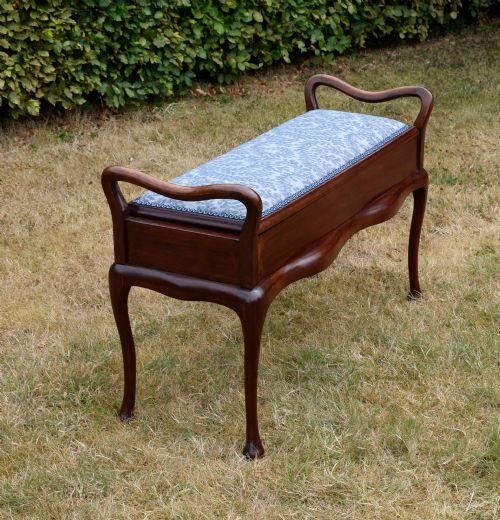
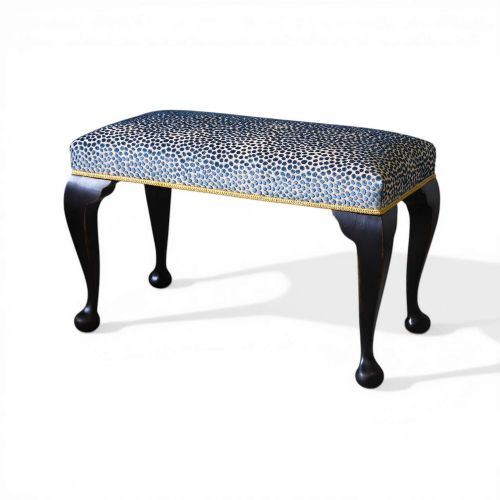


Queen Anne Bench
When you search for a queen anne bench, you are looking at walnut and mahogany seating framed by cabriole legs and upholstered tops.
Queen Anne Bench
When searching for a queen anne bench, buyers encounter a variety of low seating forms, including stools, window seats, long footstools, and two-seater settees. The selection spans the eighteenth century through to the Edwardian period and the early twentieth century, incorporating revival aesthetics.
The majority of pieces seen on this page follow the queen anne style or queen anne revival, alongside george i and george ii revival iterations. These forms frequently feature carved details and upholstered seats designed for domestic utility and comfort.
Materials and Construction
Frames are constructed predominantly from walnut and mahogany, occasionally utilising ebonised finishes or japanning. Timber members are shaped into curved profiles, including cabriole legs finished with ball and claw details.
Seating surfaces are upholstered in diverse textiles such as fabric, velvet, wool, and tapestry, frequently incorporating needlepoint covers and brass fixings.
Listings feature walnut and mahogany frames spanning the eighteenth, nineteenth, and early twentieth centuries.
Assessing Quality and Craftsmanship
Quality separates through the execution of carved woodwork on the frame and the proportion of the cabriole legs. Superior examples display refined hand-carving on the knees and feet rather than cast alternatives.
The choice of upholstery materials and the execution of needlepoint or textile covers dictate the finish of the piece. Period accuracy in timber selection and joinery also marks out finer items.
Morris & Co.
The Queen Anne Bench Glossary
- Cabriole leg
- A furniture leg that curves out and then narrows in, commonly terminating in a foot detail. This form defines much of the seating seen in this category.
- Japanning
- A type of European finish that emulates East Asian lacquer work, seen on decorative frames from the early twentieth century.
- Needlepoint
- A form of canvas work embroidery used for upholstery covers, often worked in wool to create detailed decorative patterns.
- Settee
- A small upholstered sofa or bench designed for two or more occupants, sharing stylistic traits with matching single stools.
Queen Anne Bench: Frequently Asked Questions
What is a queen anne bench?
A queen anne bench encompasses low seating forms such as stools, window seats, and small settees made in walnut or mahogany. These pieces draw on eighteenth-century design traditions and subsequent revival periods.
They generally feature distinctive cabriole legs and upholstered seats, serving functional roles as dressing stools, piano stools, or hallway window seats.
How do I date a queen anne bench?
Dating relies on examining the timber, construction methods, and upholstery styles alongside documented revival periods. Pieces range from genuine eighteenth-century examples to Edwardian and early twentieth-century interpretations.
Revival pieces often replicate earlier proportions while utilising contemporary hardware and machine-assisted joinery techniques characteristic of later workshops.
Where should I place a window seat?
Window seats suit placement beneath low windows, at the foot of a bed, or in hallways and dressing rooms. Their elongated proportions allow them to fit narrow spaces without blocking light.
Consider matching the timber frame, such as walnut or mahogany, to existing furniture within the room to maintain visual continuity.
What is the difference between a stool and a settee?
Stools provide single-person seating or foot support, while settees offer extended seating capacity for two people. Settees often incorporate chair-back configurations or double upholstery pads.
Both forms share similar stylistic vocabulary, including cabriole legs and carved wooden frames.