

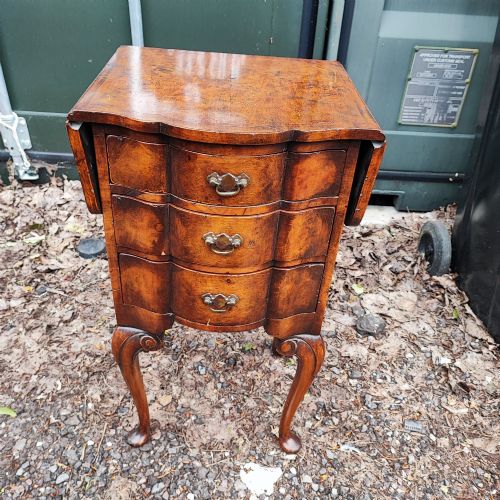


Queen Anne Bedside Chest
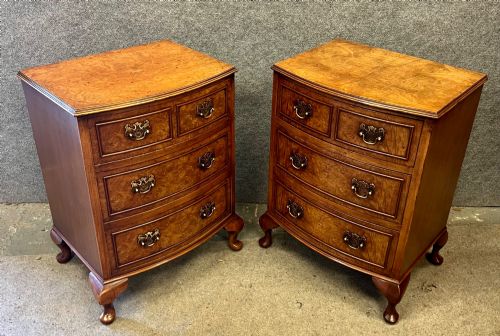
These queen anne bedside chest pieces bring historic form and figured wood into a room, offering practical bedside storage with distinct period character.
Queen Anne Bedside Chest
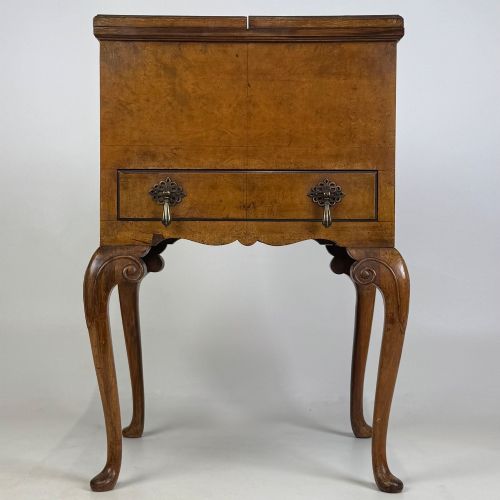
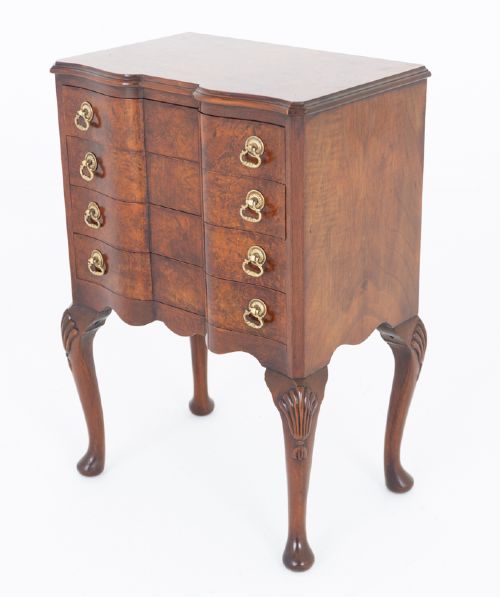
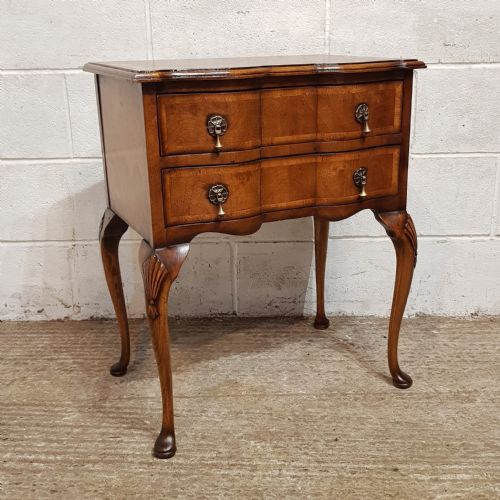
A queen anne bedside chest provides compact storage and display surfaces beside a bed, drawing on eighteenth-century design principles and later revival periods. The pieces appearing here span from the early eighteenth century through the Edwardian era up to the nineteen-thirties, incorporating revival interpretations alongside genuine antique examples.
Forms include small chests of drawers, bedside cabinets, and side tables designed with characteristic proportions and shaped outlines. Walnut and burr walnut dominate the selection, appearing alongside mahogany, oak, brass, and lacquer variations across different decades of production.
Materials and construction methods
Cabinet makers utilised solid timbers alongside burr walnut veneer to achieve rich surface figuring on the fronts and tops of these cabinets. Wood selection determined the visual depth of each piece, supported by secondary timbers like oak and mahogany for drawer linings and internal framing.
Brass hardware such as handles and escutcheons complemented the timber tones, while specialist finishes included clear polish and oriental lacquer work. Construction relied on traditional joinery methods appropriate to the specific decade of manufacture, from Edwardian workshop practices back to eighteenth-century cabinet making.
Distinctions in quality and execution
The degree of surface figuring in the burr walnut veneer dictates much of the visual appeal, with tightly patterned grain commanding greater attention than plain timber. Finely executed serpentine, concave, or bowfront shapes require skilled woodworking to maintain clean lines across drawers and frames.
Original condition and surface patina separate pieces that retain their historic integrity from those with heavily restored or altered surfaces. The subtlety of carved details and the proportional harmony between the top surface and supporting legs reflect the maker's competence.
Whytock and Reid
The Queen Anne Bedside Chest Glossary
- Burr walnut
- A figured veneer sliced from the knotty growth of a walnut tree, prized for its swirling grain patterns. It creates a highly decorative surface on drawer fronts and tabletops.
- Chinoiserie
- European decorative style employing oriental motifs, often executed in painted lacquer. This technique appears on specific lowboy and side table variations.
- Serpentine front
- A piece of furniture featuring a front contour that curves outward at the centre and inward at the sides. It demands precise carpentry to ensure drawers operate smoothly within a curved frame.
- Lowboy
- A small low table with drawers, frequently utilised as a side table or occasional surface. The form shares construction traits with smaller bedside chests of drawers.
Queen Anne Bedside Chest: Frequently Asked Questions
What is a queen anne bedside chest?
A queen anne bedside chest is a compact storage piece or cabinet reflecting the design characteristics popularised during the early eighteenth-century reign of Queen Anne. These items provide surface space and drawer storage next to a bed.
Most examples found today date from later revival periods in the Edwardian era and the early twentieth century, adapting historical proportions for modern bedroom use.
How do I date a walnut bedside chest?
Dating involves examining the construction methods, timber types, and secondary woods used inside the drawers. Eighteenth-century pieces show hand-cut joinery and aged patination, while Edwardian and 1920s revival items display different machining and finishing techniques.
Stylistic details like serpentine fronts and brass hardware also point toward specific manufacturing decades, from 1900 through to the 1930s.
Are these pieces made of solid walnut?
Many pieces combine solid walnut frames with burr walnut veneer applied to drawer fronts and tabletops. Veneering allowed makers to display intricate, swirling grain patterns that solid timber seldom provided.
Secondary woods such as oak and mahogany commonly appear inside the cabinet carcases and drawer linings.
How do I care for burr walnut furniture?
Burr walnut surfaces require protection from direct sunlight and excessive moisture to prevent the veneer from drying or lifting. Regular dusting with a soft cloth maintains the finish without chemical buildup.
Applying appropriate wax polish occasionally preserves the depth and lustre of the timber.