


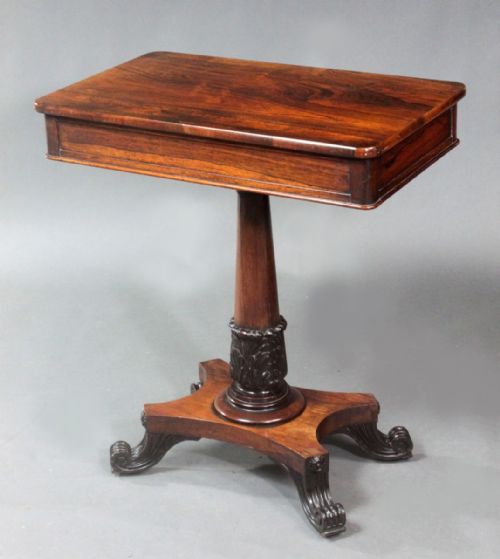


Quadform Base Tilt Table
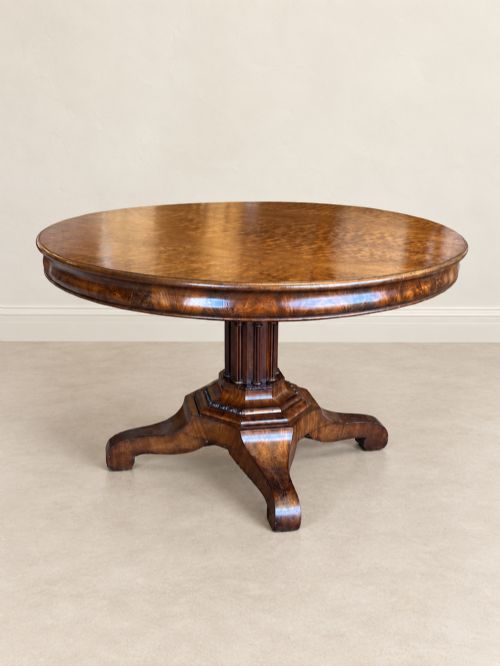
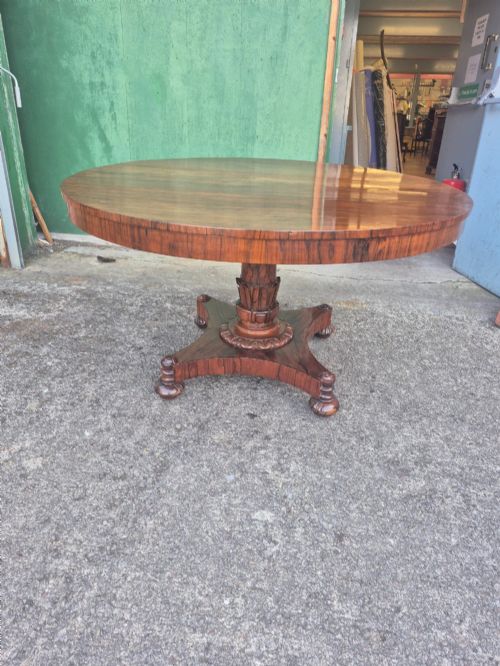
These quadform base tilt table examples are sturdy pedestal pieces designed to flip and stow when space demands.
Quadform Base Tilt Table
A quadform base tilt table is a versatile pedestal design that combines a multi-sided support with a top that pivots vertically. The selection includes dining tables, centre tables, occasional tables, side tables, and reading tables.
The pieces span the nineteenth century, taking shape across Regency, Victorian, Grand Regency, and William IV styles. Buyers encounter forms designed for breakfast, reading, or central placement in a room.
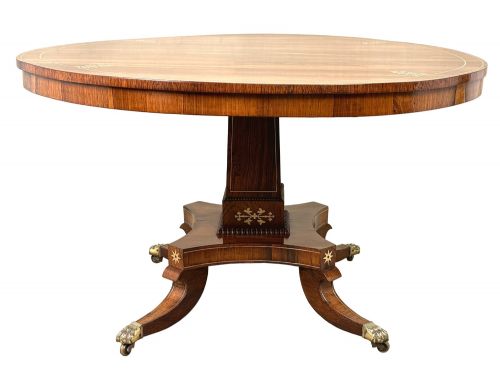
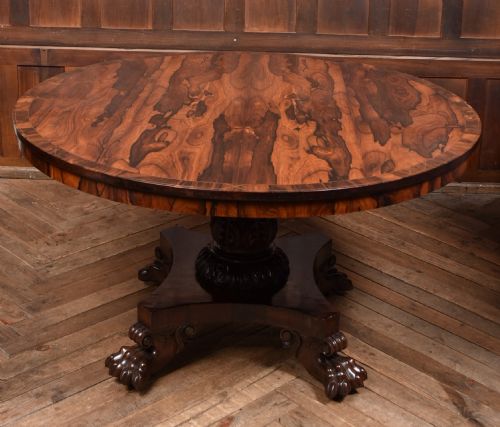
Rosewood, mahogany, and padouk dominate the construction, often paired with brass inlays. These woods provide the rich figure and heavy weight required for a stable pedestal frame.
How they were made
Cabinet makers utilised dense timbers such as rosewood, mahogany, and padouk, selecting heavily figured grain for the primary surfaces. These woods were worked into solid tops and sturdy central pillars supported by four-sided bases.
Brass elements appear as inlay work, adding metallic contrast to dark wood surfaces. Joinery focuses on stable pedestal construction to handle the movement of the tilting mechanism.
Some nineteenth-century readers needed double-sided access, proving that multitasking furniture is far older than the modern office.
What varies in quality
The sophistication of the timber figure and the crispness of the brass inlay set the finer examples apart from simpler pieces. Richly grained rosewood and mahogany command attention through depth of colour and finish.
Proportion and execution of the quadform base define the structural merit of each table. Smoother mechanics in the tilt-top action separate well-engineered specimens from standard utilitarian builds.
The Quadform Base Tilt Table Glossary
- Quadform base
- A four-sided pedestal foot arrangement that provides stable support for a central pillar. This configuration anchors the table firmly to the floor.
- Tilt-top
- A mechanism allowing the tabletop to pivot from horizontal to vertical. This enables the table to be stored flat against a wall when not in use.
- Centre table
- A freestanding piece finished on all sides to sit in the middle of a room rather than against a wall. These items often feature circular tops.
- Breakfast table
- A pedestal dining table typically used for morning meals or smaller gatherings in private rooms. They frequently incorporate the tilt-top feature.
- Padouk
- A dense tropical hardwood known for its deep reddish hue and durability. Cabinet makers utilised it for strong furniture frames.
Quadform Base Tilt Table: Frequently Asked Questions
What is a quadform base tilt table?
A quadform base tilt table uses a four-sided pedestal support combined with a top that pivots vertically. This design allows the furniture to save space when tucked away.
Such items appear across nineteenth-century styles including Regency and Victorian forms.
How do you use a tilt-top table?
The top releases from a horizontal locked position to stand upright on its central pillar. This function historically cleared floor space in smaller parlours or dining rooms.
Modern interiors use this feature for flexible placement and easy movement.
Which woods are common on these tables?
Makers relied heavily on rosewood, mahogany, and padouk for their density and rich grain patterns. Brass inlay often accents these dark timbers.
These materials provided the weight needed to stabilise a central pedestal.
How do I date a Regency tilt table?
Dating relies on stylistic markers such as neo-classical influences, brass inlay work, and specific pedestal turning. Evidence points to nineteenth-century production across Regency, William IV, and Victorian periods.
Comparing timber selection and base geometry helps narrow the era.