





Quadform Base Tea Table
A quadform base tea table brings together the refined timbers of the Regency and Victorian eras to anchor a period interior with practical elegance.
Quadform Base Tea Table
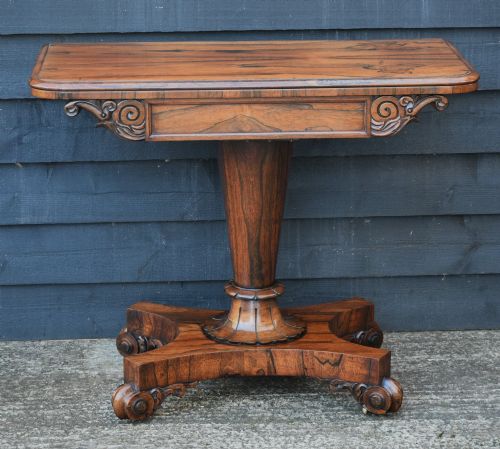
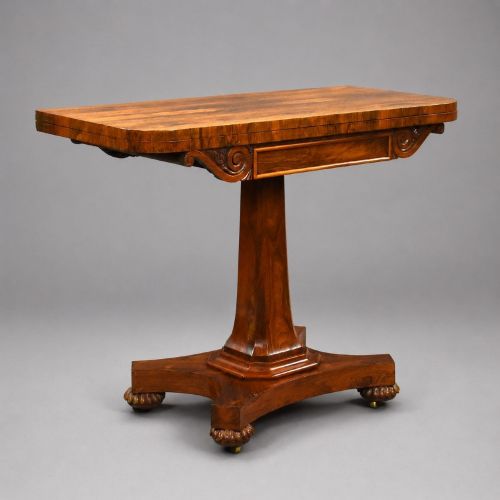
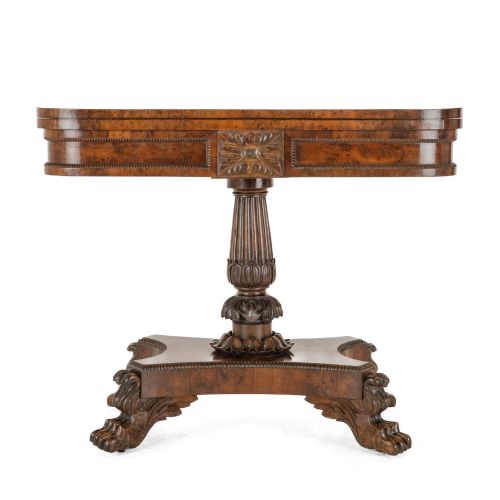
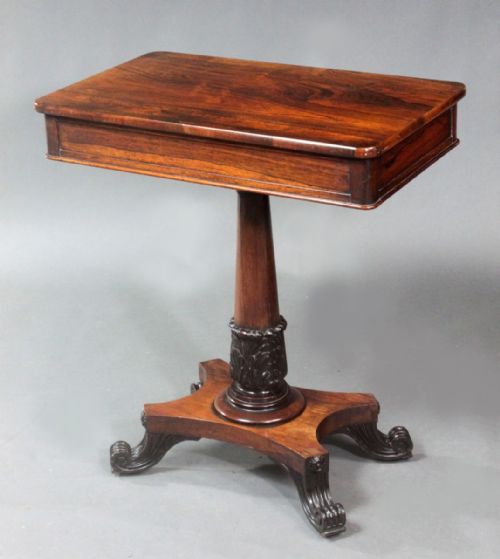
A quadform base tea table typically appears in forms designed for entertaining, such as card tables, games tables, and fold-over tea tables. These pieces span periods from the Georgian and Regency eras through to the Victorian period, reflecting evolving domestic habits in British homes.
The most common examples on this page date from the Regency and William IV periods, frequently executed in rich rosewood or mahogany. They combine substantial central pillars with four-way pedestal supports or plinths that define the quadform silhouette.
Materials and construction
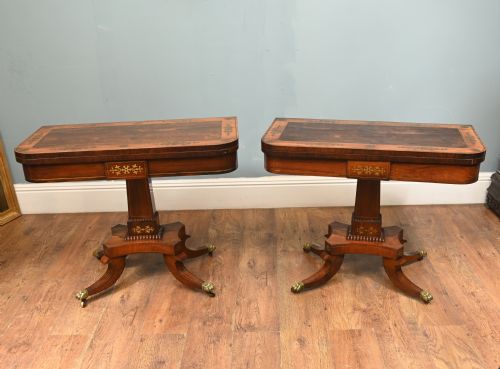
Cabinet makers utilised dense imported hardwoods like rosewood, mahogany, and burr walnut, often enhancing surfaces with contrasting boxwood stringing or brass inlay. These timbers were selected for their stability and capacity to take a deep, polished finish.
Construction methods relied on sturdy pedestal frames supporting hinged fold-over tops designed to convert from compact side tables to full surface areas for cards or tea.
Listings span multiple eras from the eighteenth century to Victorian times, with rosewood appearing as the dominant timber across card and tea tables.
Judging quality and execution
The distinction between standard examples and finer pieces lies in the choice of timber figure, such as burr yew or pollard oak, and the precision of brass inlay. Finer makers integrated carved details and substantial plinths that remained rigid over centuries of folding and unfolding.
Proportion and timber selection dictate the visual weight of the piece, where superior examples exhibit seamless grain matching across the fold-over leaves and robust pedestal joints.
William Trotter
The Quadform Base Tea Table Glossary
- Quadform base
- A four-sided pedestal support or platform foot characteristic of nineteenth-century tables. It provides structural stability while allowing ample legroom.
- Fold-over top
- A hinged table surface that opens to double its area for dining, tea, or card games. When closed, it functions as a side or occasional table.
- Boxwood stringing
- Narrow inlaid lines of pale boxwood set flush into darker secondary timber to create geometric borders. It is typical of Regency cabinet work.
- Burr walnut
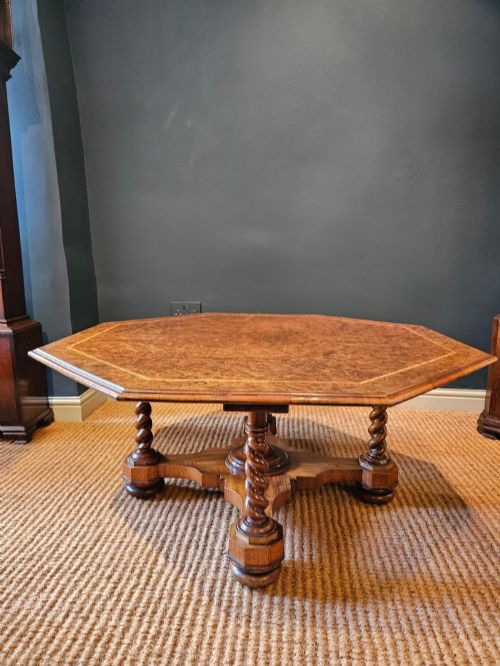
- Timber taken from the gnarled growth of a walnut tree, highly prized for its swirling grain patterns. It was utilised on prominent surfaces of Victorian tables.
Quadform Base Tea Table: Frequently Asked Questions
What is a quadform base tea table?
A quadform base tea table is a nineteenth-century folding table supported by a four-way pedestal structure. These pieces were built to serve as compact side furniture before opening for hospitality.
They represent the cabinet-making standards of the Georgian, Regency, and Victorian periods, favouring dense tropical hardwoods.
How were these tables used originally?
These tables functioned primarily in parlours and drawing rooms for serving tea or hosting card games. The hinged top allowed households to save space when entertainment was finished.
Many designs incorporated green baize surfaces inside the fold-over top specifically designated for card play.
How do I care for rosewood furniture?
Rosewood requires stable indoor humidity and protection from direct sunlight to prevent the timber from drying out. Periodic application of traditional wax helps maintain the lustre of the polished surface.
Avoid placing hot or damp items directly on the antique wood to protect the historical finish.
How do I distinguish Regency from Victorian examples?
Regency and George IV pieces generally display restrained classical lines, brass inlay, and rosewood veneers. Victorian examples often introduce heavier carvings, burr walnut veneers, and octagonal forms.
Examining the secondary woods and construction joints helps confirm the manufacturing period.