








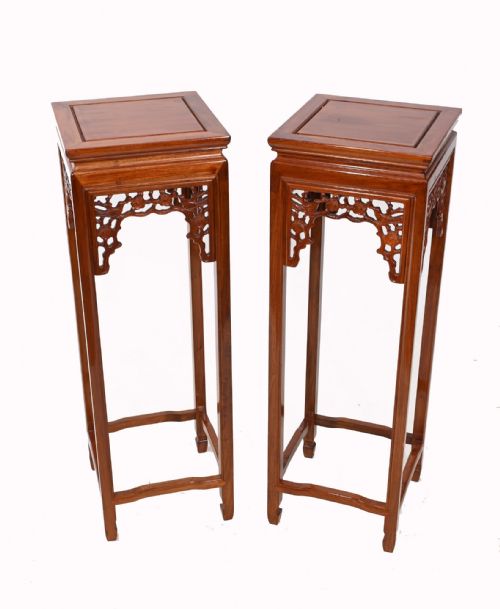


Qing Style Rosewood Stand
A qing style rosewood stand brings architectural balance to a room, supporting porcelain, plants or lamps with dense hardwood and carved detail.
Qing Style Rosewood Stand
When you search for a qing style rosewood stand, you encounter a variety of forms designed to elevate decorative objects within traditional Chinese and Victorian interiors. The selection on this page centres primarily on plant stands, jardiniere stands and pedestal tables, alongside occasional tables and display cabinets.
Most examples originate from the nineteenth century up to the early twentieth century, spanning Victorian periods and the later Qing dynasty style. These furnishings serve practical roles as lamp tables, wine tables or display surfaces while showcasing traditional craftsmanship in dark timber and rosewood.
How they were made
Constructed from dense timbers such as rosewood, hongmu and dark hardwood, these stands rely on solid joinery to support heavy inset materials. Workshops utilised skilled carving techniques to create intricate floral, dragon and geometric motifs along the aprons and legs.
Many tables incorporate contrasting elements like marble top inserts or mother of pearl inlay, combining smooth stone and shell surfaces with deeply carved wooden frames. Brass components occasionally appear on specific hardware or structural fittings.
Qing Style Rosewood Stand Retail Price Guide 2026
Typical asking prices for qing style rosewood stand among the pieces listed under this phrase on Sellingantiques today, from the lower quarter to the upper quarter. They describe what is for sale here now, not the wider market.
Several stands double as multi-tasking surfaces, happily transitioning from holding nineteenth century ferns to serving as an impromptu wine table.
What varies in quality
The distinction between standard examples and finer pieces rests in the depth and crispness of the wood carving, where fluid floral or dragon motifs display deliberate chisel work rather than soft moulding. Dense grain figure in the rosewood or hongmu also elevates a piece visually.
The integration of inset marble and mother of pearl inlay affects the overall finish, requiring precise fitting into the timber frame without excessive gaps. Heavier, more stable hardwood construction separates robust floor stands from lighter occasional tables.
The Qing Style Rosewood Stand Glossary
- Rosewood
- A dense, heavily figured tropical timber prized for its deep colour and durability in traditional furniture making. It forms the primary structural material for many high-status stands.
- Jardiniere stand
- A tall, slender piece of furniture specifically designed to hold a heavy plant pot or floral container. These typically feature an inset marble or wood top to resist moisture.
- Hongmu
- A category of dense, red-brown hardwoods used in traditional Chinese cabinetmaking. Items built from this material possess significant weight and rich natural grain.
- Torchère stand
- A tall pedestal table originally intended to support a candle or torch, now commonly utilised for lamps or urns. They feature elevated platforms atop slender, carved shafts.
- Mother of pearl inlay
- The technique of embedding thin, iridescent slices of mollusc shell into carved recesses within the timber. This decoration creates shimmering floral or geometric patterns.
Qing Style Rosewood Stand: Frequently Asked Questions
What is a qing style rosewood stand used for?
These stands serve as elevated display surfaces for heavy ceramic vessels, bronze urns, lamps or indoor plants. Their sturdy construction allows them to function effectively as side tables or pedestal supports in various rooms.
Historically, they were positioned within reception rooms and halls to showcase valued decorative arts. Today, buyers use them to introduce vertical interest and traditional texture into contemporary or eclectic interiors.
How do I identify a nineteenth century piece?
Nineteenth century examples display dense hardwood construction, hand-carved detailing with distinct chisel marks, and traditional joinery methods. The patination of the rosewood or hongmu develops a deep, rich sheen over decades of handling and wax polishing.
Evidence of age also appears in the natural shrinkage of timber and the manual fitting of marble inserts. Comparing the proportion and weight against later reproductions helps confirm the period of origin.
Are marble top stands delicate?
The marble inserts are heavy and solid, providing a stable, heat-resistant surface that easily supports ceramic planters or lamps. While the stone itself is durable, the underlying wooden frame requires gentle handling to protect the carved aprons and joints.
Routine maintenance involves dusting the timber and cleaning the stone with a damp cloth. Avoiding excess moisture prevents damage to both the marble bedding and the surrounding rosewood.
How do plant stands differ from occasional tables?
Plant stands typically feature a narrower top and a taller, more vertical profile designed to elevate a single pot or jardiniere. Their proportions focus on stability under a concentrated, top-heavy load.
Occasional tables provide a broader surface area intended for daily utility, such as holding books, drinks or portable lighting. Both forms share similar carved motifs and hardwood materials across this selection.