
Purple Gold Pendant
When you search for a purple gold pendant, you uncover amethyst jewels set in gold, predominantly from the Victorian and Edwardian eras.
Purple Gold Pendant
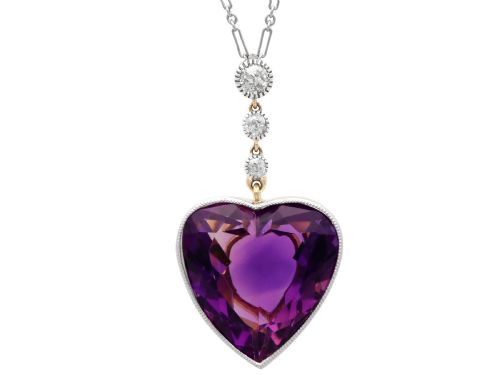
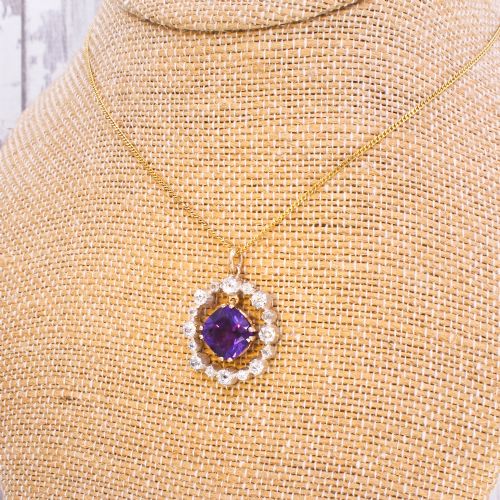
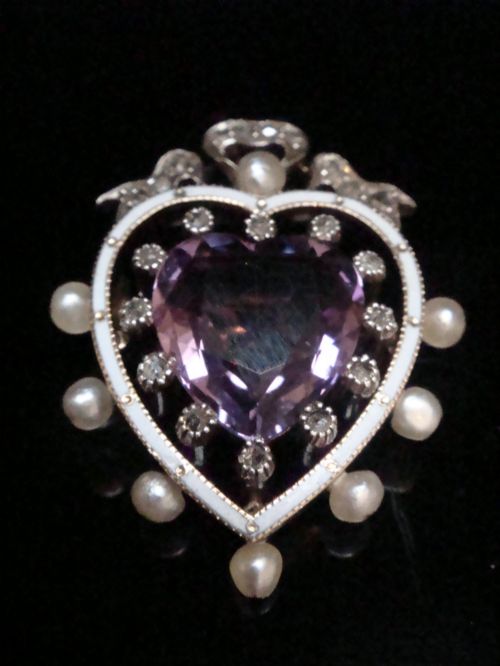
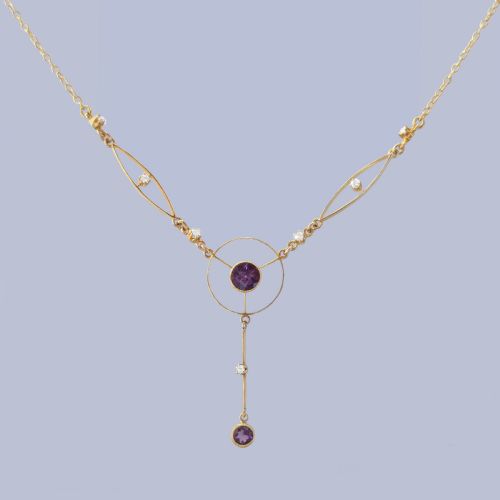
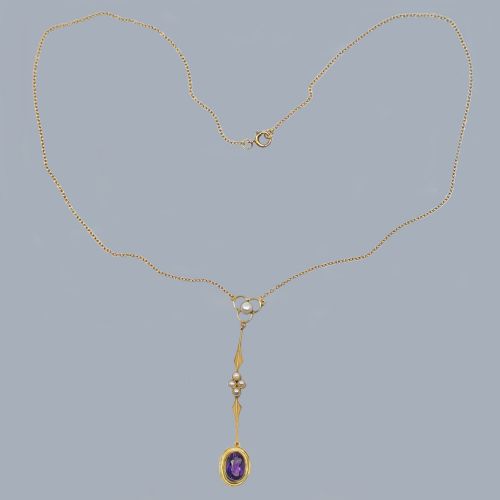
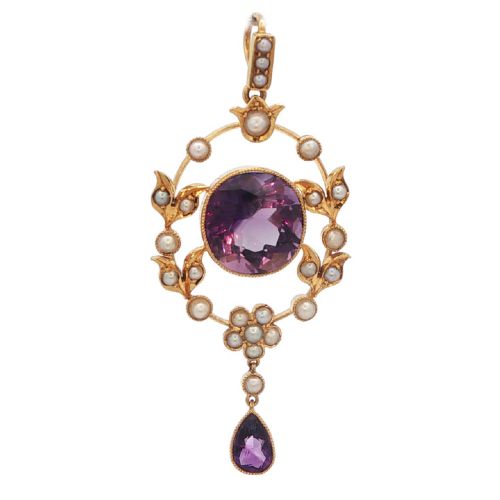
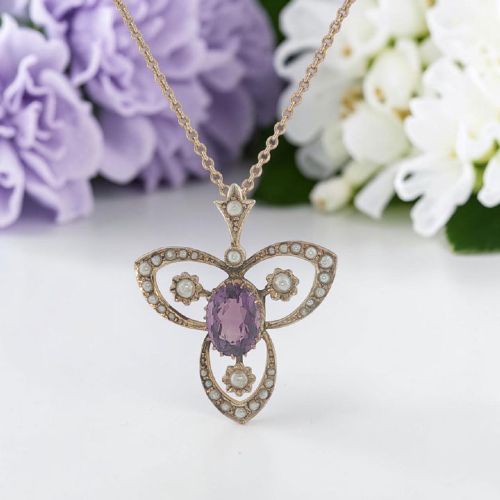
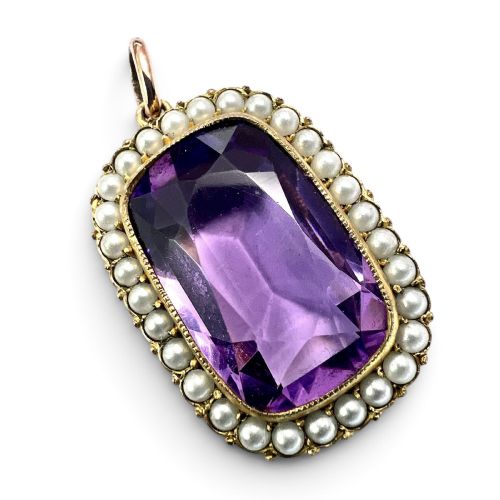
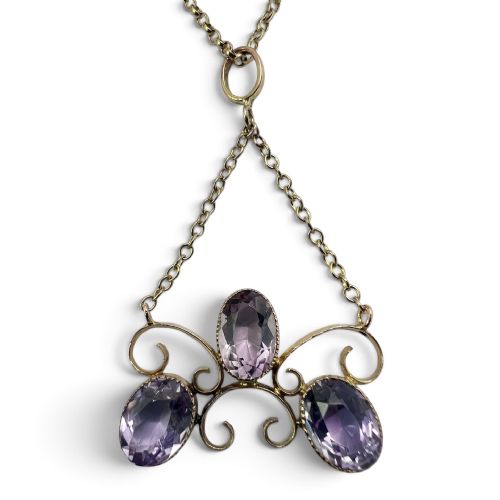
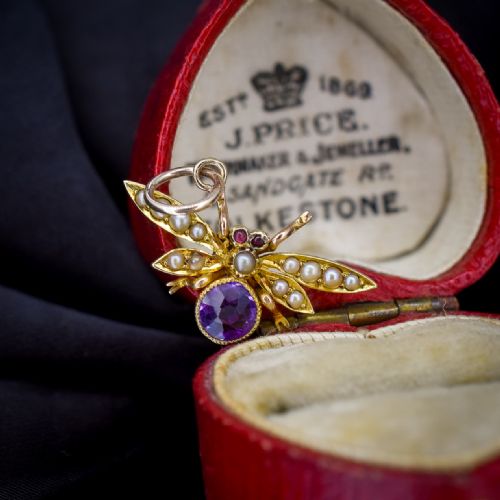
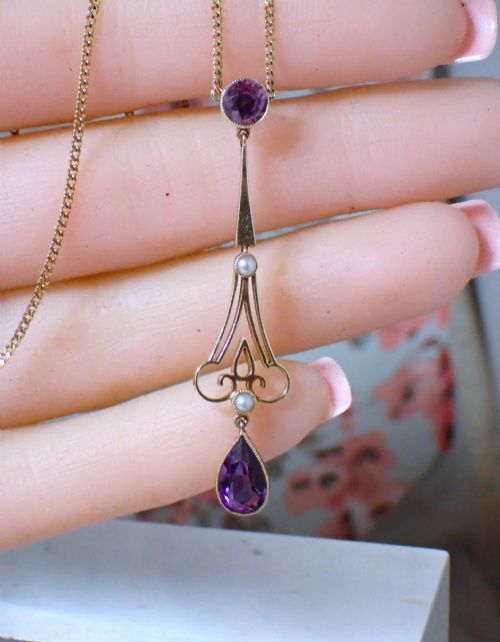
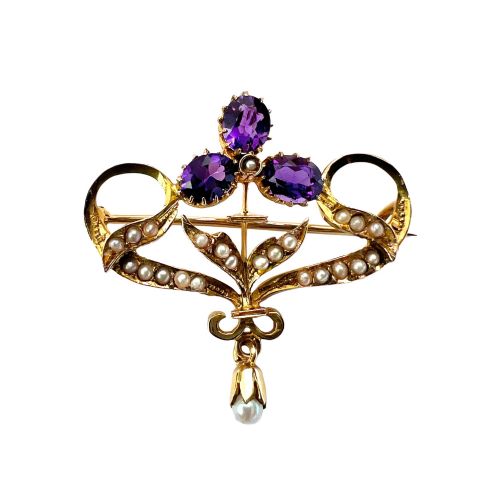
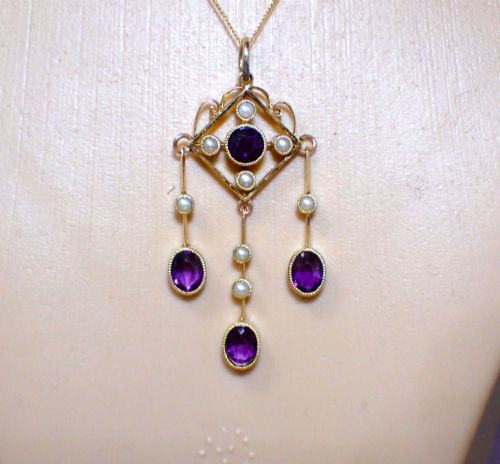
A purple gold pendant typically combines the violet hues of amethyst with yellow, white or gilt gold mountings, spanning periods from the late nineteenth century through to the mid twentieth century. Buyers seeking this style will frequently encounter Edwardian lavalier necklaces, Victorian halo drops and delicate Art Nouveau designs integrating seed pearls.
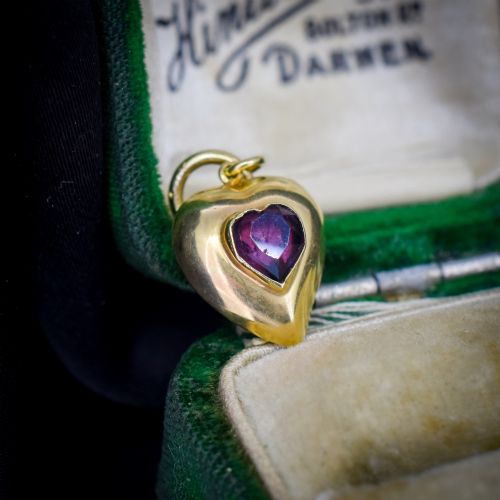
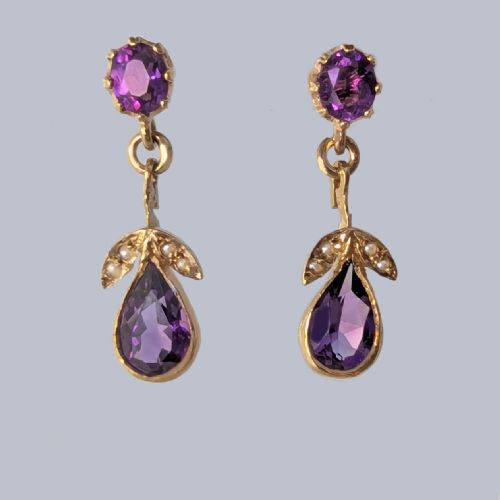
The selections on this page centre heavily on antique pendants, lockets and charms, alongside related drop earrings featuring faceted amethysts or paste stones. Formats range from simple heart motifs to intricate cluster arrangements and insect fly charms suspended on period chains.
How they were made
Craftsmen utilised varying purities of gold, including 9ct, 12ct, 15ct, 18ct and 24ct, shaping the metal into intricate bezels, prong settings and hollow locket cases. Seed pearls and diamonds were frequently grain-set or pinned around the central purple stones to accentuate the geometric contours.
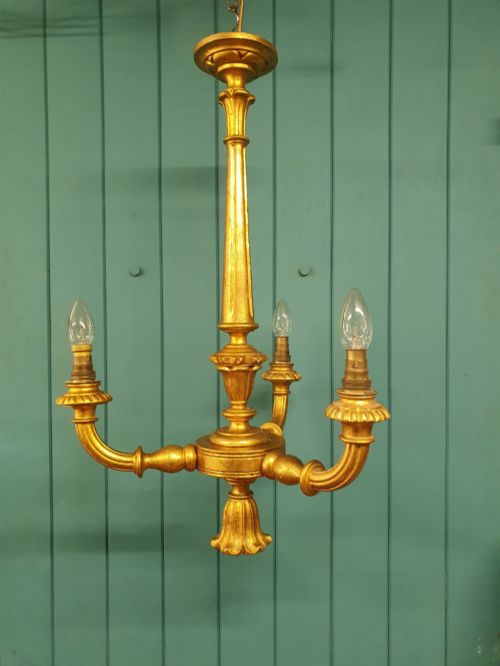
Techniques such as guilloche enamel and carved giltwood appear alongside traditional claw and collet mountings to secure large faceted amethysts, paste, and natural pearls. These construction methods reflect the hand-finished standards typical of British workshops from the Victorian and Edwardian periods.
Listings feature yellow gold, white gold, and gilt mounts spanning the Victorian, Edwardian, and Art Deco eras.
What varies in quality
The distinction between standard commercial pieces and finer items rests upon the depth of the gold carat, the clarity and saturation of the purple stones, and the delicacy of the surrounding wirework. Pieces featuring high-carat gold mounts alongside well-matched natural pearls and old-cut diamonds demonstrate superior craftsmanship.
Structural integrity and the originality of the setting also dictate overall standard, particularly in delicate Art Nouveau lavaliers where seed pearls are individually pegged. The presence of maker marks, original boxes and clean soldering points further elevates the standing of an antique pendant.
S. Blanckensee & Son·Hamilton & Co
The Purple Gold Pendant Glossary
- Lavalier
- A pendant style featuring a central stone with one or more dangling drops suspended below it. This form gained immense popularity during the Edwardian era.
- Seed Pearl
- Tiny, naturally occurring pearls, often un-drilled or half-drilled, used to frame larger centre stones in Victorian and Edwardian cluster jewellery.
- Guilloche
- A decorative technique where a precise, intricate pattern is mechanically engraved into a metal surface beneath a translucent enamel coating.
- Paste
- Hand-cut and polished lead glass used historically as a gemstone substitute to mimic amethysts or diamonds in period jewellery.
Purple Gold Pendant: Frequently Asked Questions
How do I date an antique pendant?
Dating relies on stylistic clues such as the flowing asymmetrical lines of Art Nouveau or the symmetrical cluster work typical of Victorian design. Hallmarks stamped on the gold mount or chain also help pinpoint the exact assay office and year.
Examining the type of stone cuts, such as old-cut diamonds or rose-cut amethysts, further clarifies the manufacturing era.
How should I wear an antique pendant?
Antique pendants look best suspended from fine gold chains that match the carat and colour of the original mounting. You can wear them individually as a focal point or layered with other period necklaces.
Ensure the clasp and bale are secure before daily wear, particularly with delicate Edwardian lavaliers.
Are seed pearls fragile?
Seed pearls used in antique jewellery can be delicate because they are often held by tiny pins or natural adhesives rather than modern heavy settings. Exposure to moisture, perfumes and ultrasonic cleaners can weaken them over time.
Store these pendants carefully in lined boxes and avoid soaking them in liquids during cleaning.