

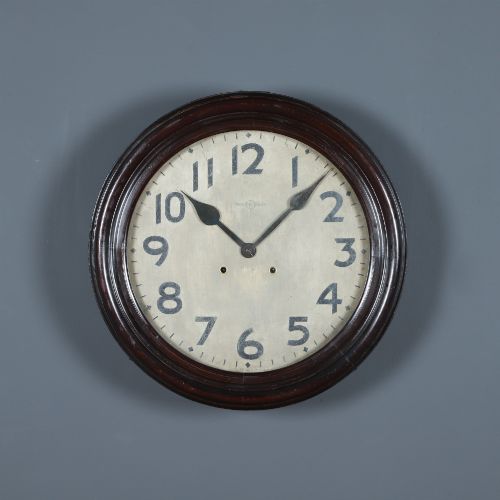


Pub Dial Clock
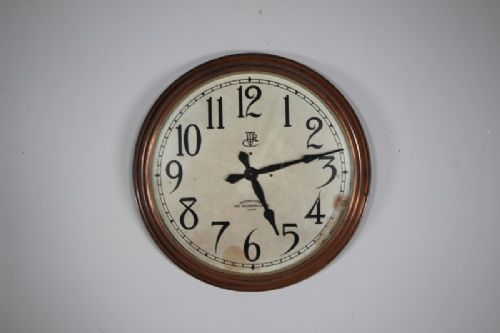
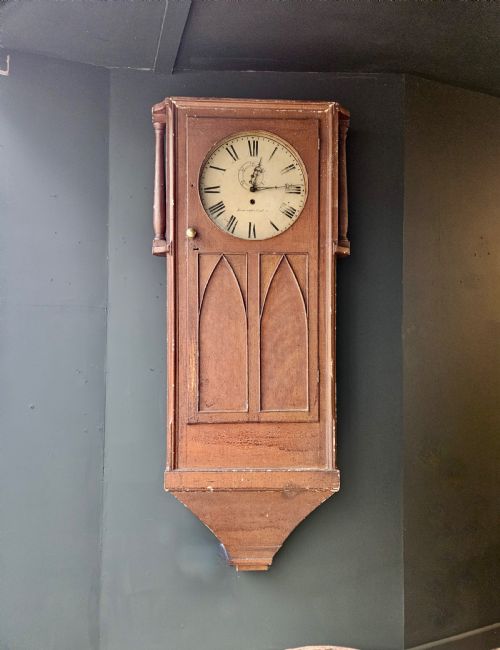
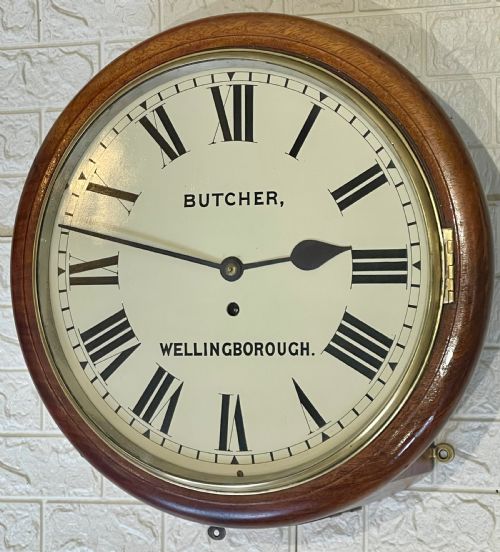
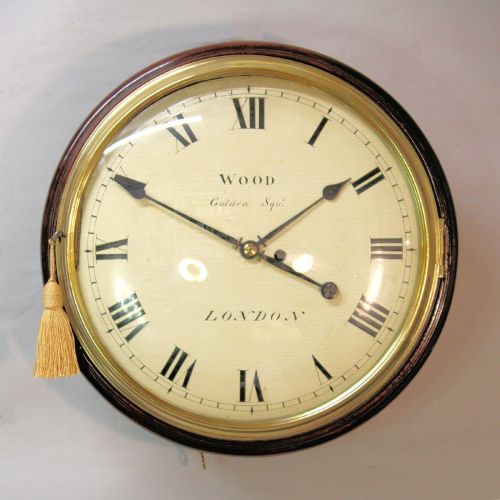
A pub dial clock brings heavy timber cases and clear painted faces into a room, offering the bold presence of a working timepiece built for public spaces.
Pub Dial Clock
A pub dial clock sits flat against the wall, driven by a weight or a chain-driven fusee movement that keeps the time steady across the day. These pieces come in various sizes, from compact room clocks to large factory and railway wall clocks that measure significant diameters.
The versions most commonly met on this page date from the Georgian and Victorian eras through to the Edwardian period and the 1920s. Cases appear in mahogany, oak, pine, and metal, often paired with a wooden convex dial or a traditional painted clock face display.
Makers and retailers varied from local workshops to major department stores, as seen in examples retailed by Harrods. Styles range from plain utility pieces to those bearing Sheraton style bezels, Gothic pine tavern clock designs, and Japanese Meiji railway station models.
Construction and Materials
Cabinetmakers built the sturdy circular or drop-down cases using solid hardwoods such as mahogany and oak, alongside pine for painted tavern clocks. These woods were chosen to withstand the heavy atmosphere of public houses and commercial rooms while housing the mechanical weight-driven or spring-driven movements.
Dial construction typically involved painted wood, metal, or glass protected by a hinged brass or wooden bezel. Fusee movements utilised chains or gut lines to maintain an even pull on the mainspring as it unwound, ensuring accurate timekeeping for busy establishments.
Pub Dial Clock Retail Price Guide 2026
Typical asking prices for pub dial clock among the pieces listed under this phrase on Sellingantiques today, from the lower quarter to the upper quarter. They describe what is for sale here now, not the wider market.
Listings feature woods spanning mahogany, oak, pine, and copper, reflecting diverse origins from English taverns to Japanese railway stations.
Judging Quality
Quality rests in the crispness of the movement and the untouched character of the dial face. A superior fusee dial wall clock displays original painted numerals and hands that match the period of the case, free from heavy modern repainting.
Cabinet work distinguishes standard utility pieces from finer examples. Look for well-proportioned mahogany and oak housings with tight joints, original bezels, and clean glass that frames the dial without distortion.
Harrods
The Pub Dial Clock Glossary
- Fusee
- A conical pulley used with a chain or cord in a clock movement to equalize the power of the mainspring as it runs down. This mechanism ensures consistent timekeeping from the moment the clock is fully wound.
- Bezel
- The ring of brass, wood, or metal that holds the glass door protecting the clock dial. It is usually hinged to allow easy access for setting the hands.
- Drop dial
- A clock case featuring an extended lower section below the main circular dial, often housing a pendulum window. This form became popular in public spaces during the Georgian and Victorian periods.
- Tavern clock
- A large wall-mounted timepiece designed for public houses and inns, typically featuring a prominent dial and a pendulum trunk below. They were built large so patrons could read the time easily from across a crowded room.
- Sheraton style
- A neoclassical furniture design style characterised by straight lines, tapered legs, and refined proportions. Applied to clock bezels, it brings a lighter geometric elegance to the frame.
Pub Dial Clock: Frequently Asked Questions
How do I wind a fusee wall clock?
Use the appropriate winding key on the dial arbor to turn the mechanism clockwise until it resists. Take care not to overwind the spring.
Ensure you support the weight or chain properly depending on whether the movement uses a fusee or weight-driven system.
Where should I hang a large pub dial clock?
Mount the clock on a solid masonry or well-anchored stud wall capable of supporting the substantial weight of hardwood cases and brass movements. Ensure the height allows easy access for weekly winding.
Keep the clock away from direct heat sources and damp areas to protect the wooden case and painted dial.
How do I tell Victorian clocks from Georgian ones?
Georgian clocks often display finer cabinet timbers like figured mahogany and subtle decorative details such as Sheraton style bezels. Victorian examples frequently show robust proportions and heavier oak or mahogany frames suited to expanding public houses.
Examine the construction of the case interior and the lettering on the dial face for period-specific typography.
Why does my clock have a convex dial?
A wooden convex dial curves outward toward the viewer, a design popular in early English fusee clocks to reduce glare from windows and gas lighting. This shape allowed patrons to read the time clearly from various angles in a busy room.
Cabinetmakers paired these curved wooden faces with deep bezels to accommodate the projection.